
Areas · the eastern shore
Pest control in Belmont
Belmont sits on the lake's eastern shore, a boating suburb of established homes with the water close by. That's two things a termite likes at once: timber-framed houses on subfloors, and the humid lake air that keeps the ground under them damp. It's why the standing round treats Belmont as subfloor country, and why the boat, the shed and the gear stacked beside them get a look too.
What the work looks like here
Established timber, and humid lake air
Belmont's streets are the established eastern-shore kind: single-storey weatherboard and brick homes, plenty of them timber-floored on subfloors, on blocks that run down toward the water. On a home like that the inspection starts underneath, before anything else. The first twenty minutes are on the ant caps, the pier and bearer lines, the subfloor ventilation, and the moisture, because a suburb this close to the lake keeps the air humid and the ground under the house damp for longer than a drier suburb inland would.
That damp is the quiet half of the termite story here. Coastal Lake Macquarie sits on the year-round side of the termite calendar, and a waterfront setting adds its own edge: a subfloor that never quite dries out, a garden watered by lake breezes, drainage that has to work harder on a low block. None of that means termites are present, but all of it is the kind of conducive condition an inspection notes and a report explains, so you know what deserves an eye between visits.
The gardens finish the picture. Older homes near the water carry the usual history: a garden bed built up against the cladding, mulch heaped where the weep holes are meant to breathe, a stack of leftover deck boards that found a home beside the shed years ago and never left. Where timber meets damp soil is where the inspection drops its pace and looks harder, and on the eastern shore there's usually a bit of it to read.
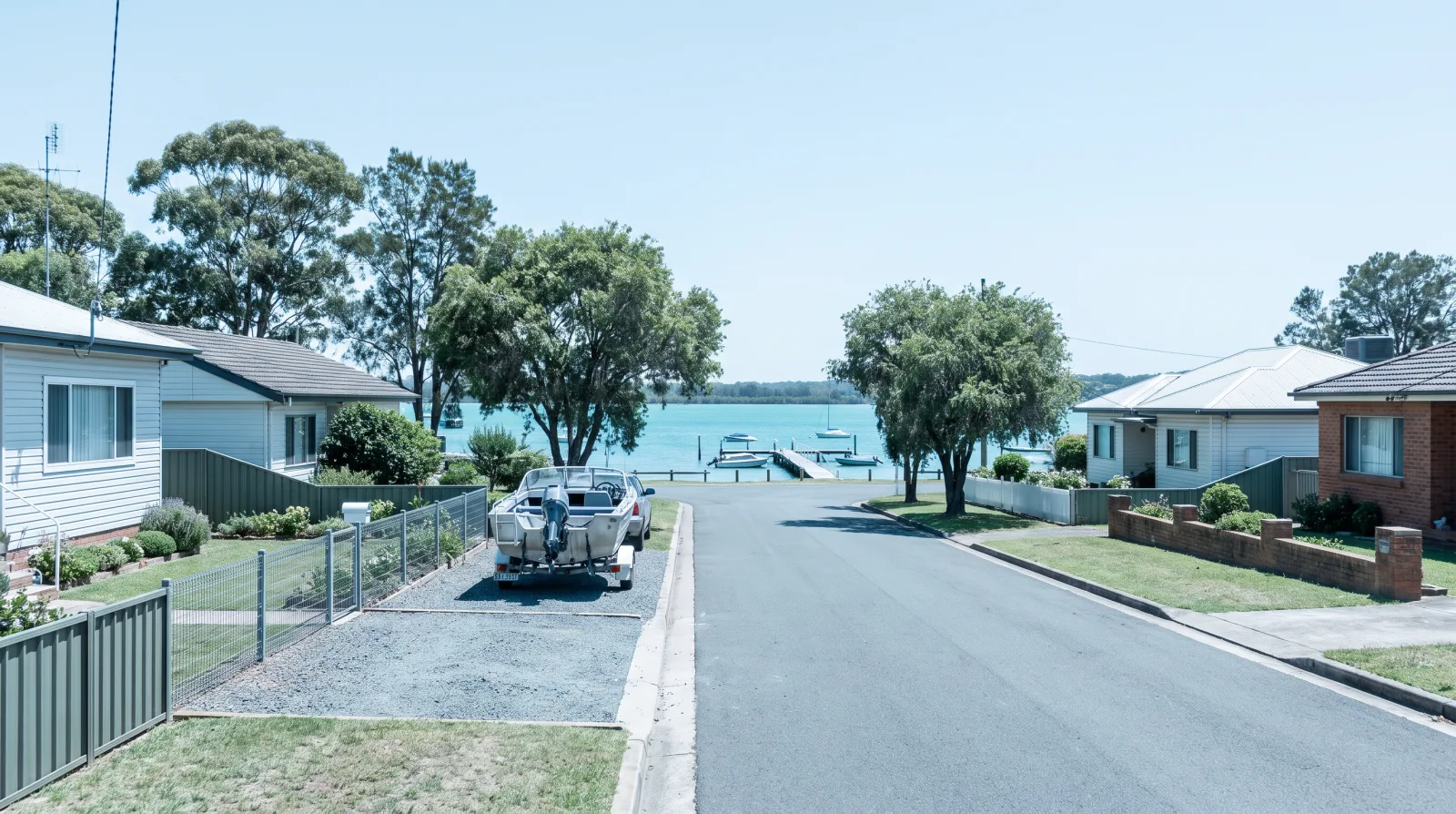
A boating suburb's harbourage
The shed, the boat and what shelters in them
A boating suburb keeps things a drier suburb doesn't: the boat on its trailer, the marine gear in the shed, the rope and the tarp that only move a few times a year. Pests read all of it as shelter, and it's the part of a Belmont property most worth a proper look.
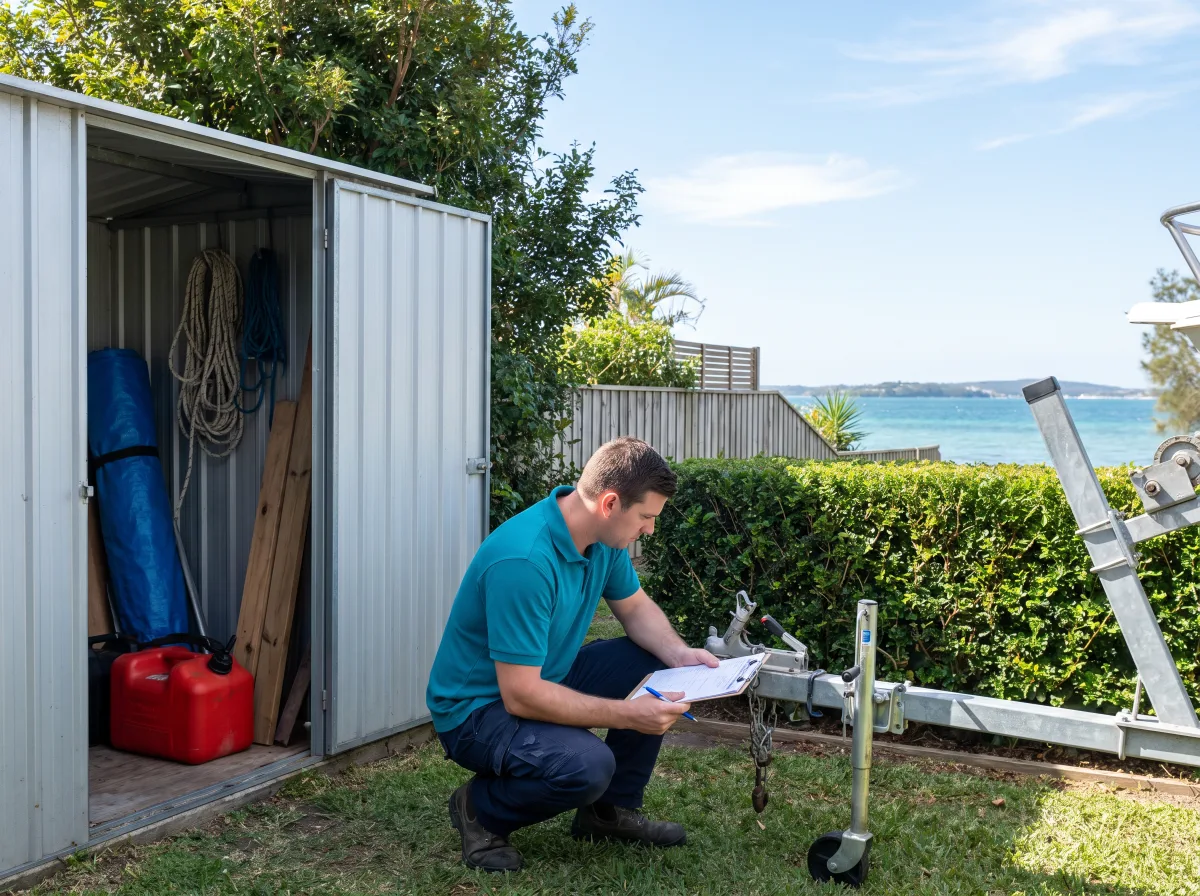
The redback is the honest name to know here, not a scare. Redbacks turn up right across the district, and they favour exactly the dry, sheltered, undisturbed cavities a boating yard is full of: the underside of a trailer draw-bar, the frame of the trailer itself, the fold of a cover, the corner of a shed. We won't tell you your shed has them, because no one honest can say that from a distance. What a spider treatment goes at exactly that harbourage around the property, cutting the odds of an encounter where hands go.
Stored timber is the other half of it, and this one is a termite conversation as much as a spider one. Offcuts, old decking and a firewood stack sitting in soil contact against a shed or a fence are a conducive condition and a rodent nest in one, which is why the same gear turns up on the termite report and in the rodent work. The spider work covers the redbacks and webbing spiders across the whole property.
The dry cavities redbacks favour: under the draw-bar, inside the trailer frame, in the folds of a cover. Treated as harbourage, not sprayed at random.
Offcuts, old decking and firewood in soil contact against a shed or fence: a termite-conducive condition and a rodent shelter at the same time.
Coiled rope, folded tarps and gear that rarely moves are classic spider shelter. Shifting them a few times a season does more than any bench spray.
A damp floor and the gap under the door are how rodents get in and stay. Proofing the entry points beats laying bait and hoping.
On the register here
What Belmont books us for
-
01
Termite inspections, and management where findings justify it
Belmont's standing rhythm for the eastern shore's established subfloor homes, where humid lake air and a damp subfloor are the conditions to watch. The look to book before a renovation opens a wall, or in the first weeks after you move in.
the service → -
02
Spiders, redbacks included
Webbing spiders and redbacks across the property, with the harbourage a boating yard collects, the trailer, the shed, the stored gear, given the look it needs.
the service → -
03
The annual home round
General pest treatment in step with the season: cockroaches and ants before the warm months, rodent work as autumn closes the shed doors, and the yearly termite inspection kept in the same round.
the service → -
04
Rodents in the shed and roof void
Autumn work in a suburb of sheds and older homes: the entry points proofed in the shed and the house alike, so bait is never asked to do a builder's job.
the service →
Asked in Belmont
Local questions
We keep a boat and trailer in the yard. Is that really a pest issue?
It's worth knowing about, not worth worrying over. A trailer and the gear around it give redbacks the dry, sheltered cavities they like, under the draw-bar, in the frame, in the folds of a cover. We won't tell you your trailer has them from a distance, but treating that harbourage and moving the rarely-touched gear a few times a season are the two things that actually help. Tell us it's a boating yard in the enquiry and we'll factor the shed and trailer into the look.
Our place is close to the water. Does the damp make termites worse?
The lake air keeps a subfloor damper for longer, and a subfloor that never quite dries out is a conducive condition, one of the things an inspection reads and a report explains. It isn't a verdict on your house: only an inspection establishes what's actually there. What a waterfront setting does mean is that the subfloor, the drainage and the garden line against the wall are where the inspection spends its time.
It's an older weatherboard near the lake. When should the inspection happen?
A year on from the last one, wherever that lands, and before the walls close up on any renovation. No inspection ever sees a home this age better than through an open frame, and nothing found at that stage is ever cheaper to put right. An established weatherboard also gives an inspection plenty to read, which is a good thing, not a worry.
Do you treat funnel-webs in Belmont?
The spider to know here is the redback, not the funnel-web. The Newcastle funnel-web's known range sits over the LGA's northern suburbs, closer to the Newcastle boundary; Belmont is down the eastern shore, outside that band. Redbacks and webbing spiders are the district-wide ones we handle, and the harbourage a boating yard collects is exactly where that work earns its place. The spider work lays out the whole picture, funnel-web note and all.
What will an inspection cost, and can you get here today?
Pricing is plain: the termite inspection runs at a set fee you'll have before we book it, and any management work is quoted from what the report actually finds, never sight unseen. We book properly instead of promising a same-day dash; a proper inspection is not a job to hurry. Send the enquiry form through with a note on getting to the yard and shed, and we'll be in touch to settle on a time.
Sources worth your time
- Australian Museum: Redback spider. The species, where it shelters, and the honest picture of its bite. The source for the harbourage note on this page.
- NSW EPA: pesticide and pest management licensing. Pest management is licensed trade work in NSW, and termite work carries its own endorsement. This is the regulator that administers it.