
Services · the rest of the register
Wasps, fleas, bed bugs and other pests in Lake Macquarie
The pests that keep no season of their own. A wasp nest builds where the eave shelters it, a flea cycle rides in on the dog, bed bugs travel in a suitcase, and silverfish just follow the damp. They turn up off the calendar, so we handle them off the calendar, one at a time, by what each one actually is.
The off-season register
One page, because none of these keep a diary
The season wheel schedules the pests that run on the year: cockroaches into summer, rodents into autumn, termites all year round. These don't take a schedule. What they share is a trigger, not a month, so each one gets read on its own terms and treated for what it is.
| Pest | What sets it off | How it's handled |
|---|---|---|
| Wasps | A sheltered eave, pergola or wall cavity in the warmer months | Find and treat the nest at the source, not the wasps in the air |
| Bees | A swarm looking for a home, or a colony already in a wall | Rehoming first, through a swarm collector; treatment is the last resort, not the first |
| Fleas | A pet, a warm floor, and a house that sat empty for a stretch | Treat the whole environment, not just the pet, and plan for the follow-up |
| Bed bugs | A hitchhike home in luggage or second-hand furniture | A methodical harbourage treatment over more than one visit, with real preparation |
| Silverfish | Humidity, paper and stored fabric in a still, dark spot | Treat the harbourage, dry the space out, protect what they feed on |
| Mosquitoes | Standing water and the wetland edges of a saltwater lake | Cut the breeding sites, treat where they rest, and be honest about the lake |
Most of these are a general pest treatment priced per visit. Two of them, fleas and bed bugs, honestly aren't a one-and-done job, and we say so before we start rather than after. Whatever it is, the price is confirmed with you before anything is booked.
Wasps
Treat the nest, not the air around it
A can of surface spray waved at flying wasps does nothing but stir them up. The job is the nest: finding it, working out what built it, and treating it at the source so the colony goes with it.
Around the lake the warmer months bring three you'll actually meet, and the right move differs for each. Knowing which one you've got is half the work, which is exactly why the table below is where we start.
Leave the nest alone, especially if it's near a door, a play area, or anyone in the house reacts badly to stings. Knocking a nest down or spraying it half-heartedly turns a settled colony into a defensive one. Note where it is, keep people and pets clear, and book the treatment. If someone has a known sting allergy, treat it as urgent in the enquiry.
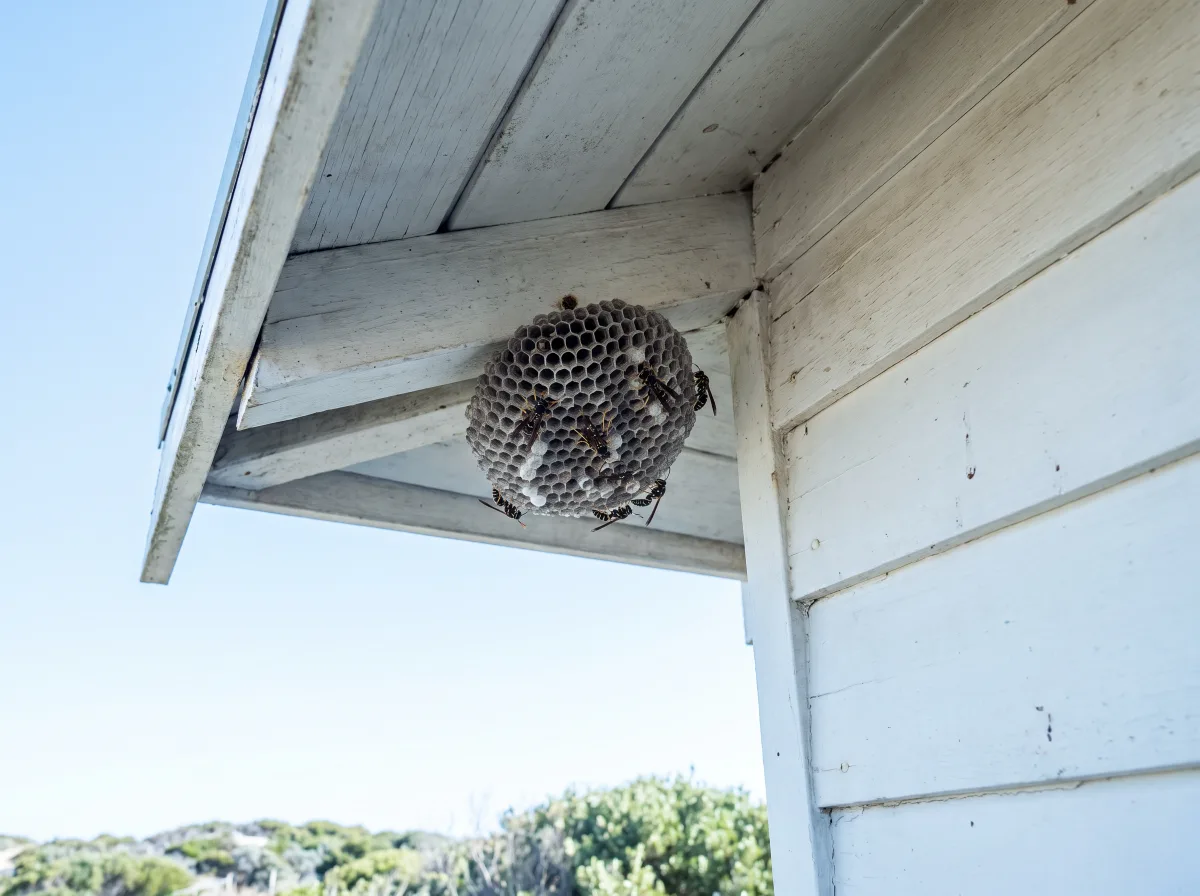
| What it is | How you'll know it | The approach |
|---|---|---|
| Paper wasp | A small open, upside-down umbrella of grey papery cells under an eave, pergola or railing, a handful of wasps on it. Native, and a slow-tempered neighbour until you crowd it. | Treated directly at the comb, usually in one visit. Low-set nests near everyday paths are the ones worth dealing with. |
| European wasp | A bigger, more aggressive introduced wasp that hides its nest in a wall cavity, roof void, or a hole in the ground, so you see a steady stream of traffic to one point rather than the nest itself. | Trace the traffic to the entry, then treat the concealed nest at that point. Not a nest to go looking for yourself. |
| Mud-nest wasp | Neat little pipes or lumps of dried mud on a sheltered wall or under the eaves, built by a solitary wasp. Almost never aggressive. | Often no treatment needed at all. If it's a nuisance we'll remove it and clean the spot, and tell you honestly when it can simply be left. |
Bees, handled honestly
A bee is not a wasp, and we don't treat it like one
Bees pollinate a third of what we eat, and a healthy colony is worth saving, not spraying. So the first question isn't how to kill them, it's whether they can be moved on or moved out alive. Most of the time they can.
Tell a bee from a wasp and the whole plan changes. Bees are hairy, rounded and mostly brown, and they don't hang around you at a barbecue. Wasps are smooth, shiny, waisted, and they will. If you're honestly not sure, send a photo with the enquiry and we'll sort it out before anyone does anything.
What we see splits two ways. A swarm is a temporary cluster, a soft mass of bees hanging off a branch or a fence while they look for a permanent home. It usually moves on within a day or two on its own, and while it's there it's about as docile as bees ever get. That's a job for a swarm collector or a local beekeeper, not for us, and we'll happily point you to one. An established colony living in a wall cavity, a roof void or a chimney is the harder call: a beekeeper can sometimes cut it out and relocate it, and that's the outcome we push for first.
Treatment as a pest, killing the colony in place, is genuinely the last resort here, and even then it comes with a warning: a dead colony left in a wall means abandoned honeycomb that can ferment, stain and draw other pests, so removing the comb matters as much as the bees. We'll walk you through all of that plainly before you decide.
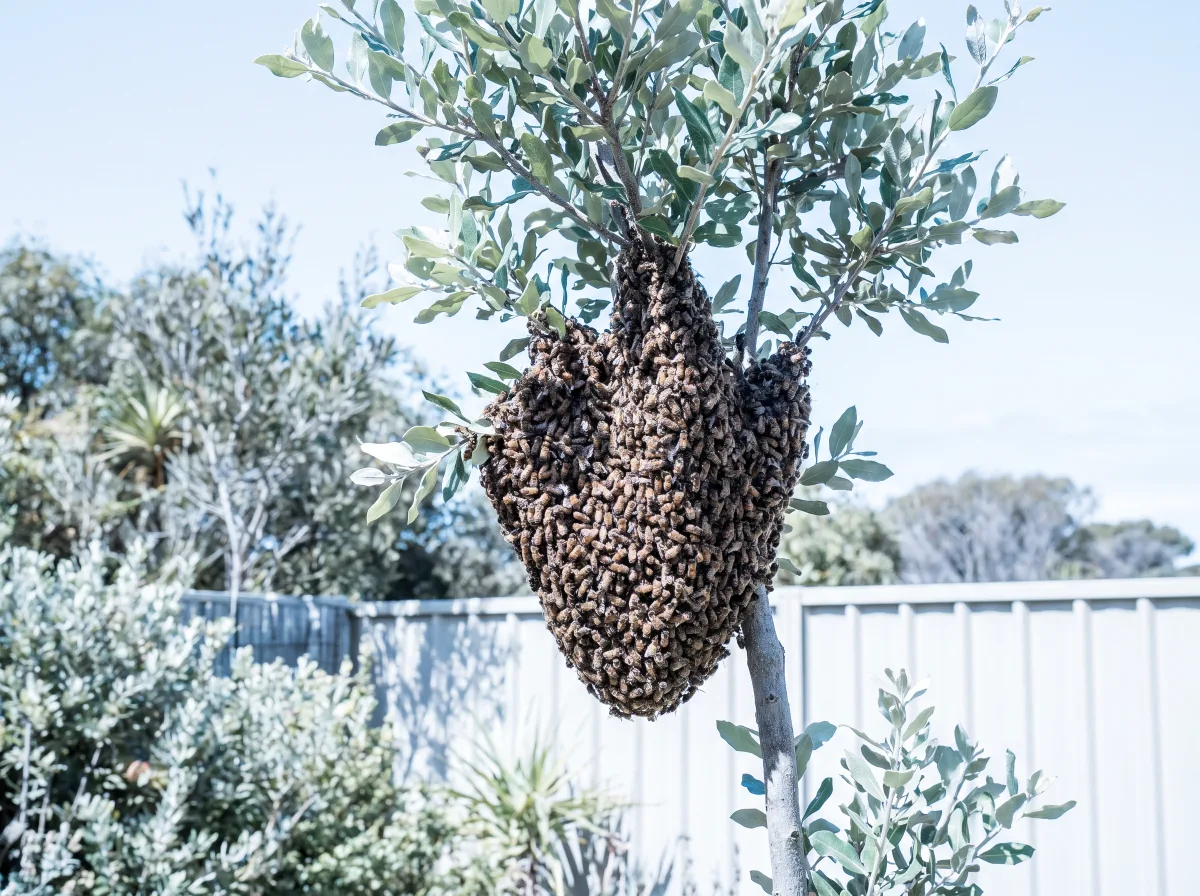
Passing cluster on a branch or post. We refer you to a swarm collector or beekeeper to take it away alive, no charge from us for the pointer.
Established comb in a cavity. First option is a beekeeper cut-out and rehoming where the access allows it.
Treatment in place only where rehoming isn't feasible, always paired with removing the comb so the cavity doesn't cause a second problem.
Reach for a spray because it's quicker. A bee call gets the honest options first, every time.
Fleas
The flea you can see is the small half of the problem
Washing the dog and vacuuming once feels like it should fix it, and it doesn't, for a reason worth understanding: the adult fleas biting ankles are a fraction of what's actually in the house. The rest is out of sight, in the carpet, the bedding and the subfloor, waiting.
A flea's life runs through four stages, and only one of them is the biting adult on the pet. The eggs roll off into the carpet and the cracks in the floor, the larvae feed down in the pile and under the house, and the pupae sit inside a tough little cocoon that most sprays cannot touch. Those pupae can lie dormant for weeks, and they hatch on a cue: warmth, movement, the carbon dioxide of something walking past.
That cue is why a house that sat empty erupts. You come home from a fortnight away, or a holiday rental turns over between guests, and suddenly the hallway is jumping, because a whole waiting generation hatched at once when the floor felt footsteps again. Around the lake, a warm humid climate and a good number of homes with pets under a subfloor keep the cycle ticking most of the year.
So the treatment is the environment, not just the animal. We treat inside, the subfloor where it applies, and the outdoor spots the pet rests, using a product that includes a growth regulator to break the cycle rather than just knock down the adults. A thorough vacuum before and after does real work here: it lifts eggs and, usefully, the vibration coaxes those stubborn pupae out of their cocoons where treatment can reach them. Because of that pupal window, one visit often isn't enough, and a follow-up is part of the plan, not a sign it failed.
Laid on the pet, rolls off into carpet, bedding and floor cracks. The bulk of the population, and nowhere near the animal.
Feeds down in the carpet pile and the subfloor, away from light. Not what a surface spray reaches.
Sealed in a tough cocoon that shrugs off most treatments. Waits for warmth and movement, which is the empty-house trap.
The biting flea you actually see. The visible, and smallest, share of the problem.
Environmental treatment and your vet's flea product on the animal are two halves of one job. Treat the house without treating the pet and it re-seeds; treat the pet without the house and the carpet keeps supplying more. Book them close together and tell us there's a pet in the enquiry.
Bed bugs
A travel problem, not a cleanliness problem
Bed bugs hitchhike. They come home in the seams of a suitcase, on a second-hand bed frame, in a swapped couch, and they turn up in spotless houses as readily as anywhere else. There is no shame in them and no quick spray for them, and pretending otherwise just lets them spread.
They hide by day within a few feet of where you sleep: the mattress seams and tag, the bed frame joints, behind the headboard, under skirting and loose edges of carpet, in the piping of a lounge. They come out at night to feed, which is why the first sign is usually you, not them.
Treating them is patient, methodical work, and it's honest to say up front that it's rarely one visit. Every harbourage has to be found and treated, and because eggs are shielded from a single application, a follow-up visit catches what hatches after the first. Heat is often part of it, since sustained high temperature kills bugs and eggs together where a treatment can be applied that way. What you do beforehand matters too: laundering bedding and clothing on the hottest safe cycle, reducing clutter around the bed, and above all not shifting the problem.
The instinct to throw the mattress out or move to the spare room usually backfires: dragging an infested mattress through the house sheds bugs along the way, and sleeping elsewhere just invites them to follow you to a new room. Leave things where they are, stop the spread, and let the treatment do its work.
Small itchy welts, often in a line or cluster, on skin exposed while you sleep. Not proof on their own, but the usual first flag.
Tiny dark ink-dot marks on sheets, the mattress seam or the bed frame: droppings. Small blood smears from a squashed feed.
Pale shed skins in the seams and joints as the bugs grow. A sign of a settled, breeding harbourage.
Within a few feet of the bed or lounge: seams, joints, behind the headboard, along skirting. Tell us where you've seen them.
Silverfish
Quiet damage in the dark, dry spots you don't check
Silverfish won't bite you or make you sick. They eat your things instead: paper, book spines, wallpaper paste, cardboard, natural fabrics and stored documents, working through them slowly in the still corners nobody opens for months.
They love what a humid coast supplies: damp, dark, undisturbed air. That's the wardrobe against an external wall, the bookshelf in a spare room, the boxes in a roof void, the linen at the back of a cupboard, the garage shelf. On a lake with well over a metre of rain a year, the moisture that feeds them is rarely far away, which is why they're a steady low-level presence around here rather than a seasonal one.
The treatment reads their harbourage rather than chasing individuals. A residual treatment through the roof void and the wall and floor voids reaches where they shelter and breed, backed by targeted work in the cupboards and shelving where you've actually seen the damage. Beyond the treatment, the lasting fix is drying the space out: better ventilation, keeping stored paper and fabric up off the floor and, where it earns its place, sealing prized documents into airtight containers so there's nothing left for them to feed on.
Stored boxes, insulation edges, old paper and cardboard: a prime, undisturbed harbourage.
Natural fibres and folded linen against a cool external wall, especially where air doesn't move.
Spines, page edges and the paste in bindings. The classic silverfish signature.
Documents, photos and cardboard in boxes. What people notice too late, once it's already grazed.
Mosquitoes
Cut the breeding, treat the resting spots, be honest about the lake
Living on the largest coastal saltwater lake in the country comes with mosquitoes, and anyone who promises to rid you of them entirely is selling you something. What genuinely works is smaller and more honest: take the pressure down around your own home, and know where it's coming from.
Mosquitoes breed in standing water, and most of what breeds them at a house is closer than the lake: a blocked gutter, a pot-plant saucer, a forgotten bucket, a rainwater tank without a screen, the tarp folded over the trailer. Source reduction, finding and emptying those, is the single most effective thing done at a property, and a lot of it is yours to do for free between visits.
On top of that, a barrier treatment of the shaded, damp vegetation where adult mosquitoes rest during the day, the dense shrubs, the fence lines, the under-deck, knocks the local population down through the warmer months. It's a management approach, repeated as the season asks, not a one-off cure.
The honest health note: in coastal wetland areas of NSW, mosquitoes can carry viruses such as Ross River, so NSW Health's personal-protection advice, screens, repellent and covering up around dusk, is worth following alongside anything done at the property. We treat to reduce the pressure; we don't claim to make a lakeside backyard mosquito-proof.
Where these sit in the year
Off the calendar, but not outside the round
None of these pests keep to the season wheel, and that's the point of grouping them here: they answer to a trigger, a nest, a pet, a suitcase, a wet cupboard, rather than a month. But they're still part of the same standing service. If you're already on the annual round, one of these turning up is a call, not a fresh start, and we know your place.
If you'd rather see how the pests that do keep a season line up across the year, the pest year planner builds a schedule around your home, and the year-round calendar lays the whole thing out month by month. This page is the register for everything that refuses to fit either one.
Straight answers
Questions we actually get asked
Is it a bee or a wasp? I can't tell.
Send a photo with your enquiry and we'll tell you before we do anything. As a rough guide: bees are hairy, rounded and mostly brown, and they leave you alone; wasps are smooth, shiny and narrow-waisted, and they don't. It matters, because a bee gets rehoming options first and a wasp nest gets treated. We never spray a colony of bees just because it's the faster answer.
Can you just remove a wasp nest today?
Wasp work is available to book, and we'll get to a nest promptly, but we won't put a guaranteed time in writing that we might not keep. Tell us where the nest is, how close it is to a doorway or play area, and whether anyone in the house has a sting allergy, and we'll prioritise accordingly. In the meantime, leave it undisturbed.
Why does flea treatment need a second visit?
Because of the pupae. Flea pupae sit inside a tough cocoon that most treatments can't penetrate, and they hatch over days to weeks. The first visit clears the adults, larvae and eggs it can reach; the follow-up catches the generation that hatched afterward. It isn't the first treatment failing, it's how the flea's own life cycle works, and any honest quote builds the follow-up in.
We've got bed bugs. Should we throw the mattress out?
Usually no, and not before you've booked. Dragging an infested mattress through the house scatters bugs along the way, and buying a new one before the room is treated just gives the survivors something fresh to move into. Leave everything where it is, don't start sleeping in another room, and let the treatment work. Laundering bedding on the hottest safe cycle beforehand does help.
Do you treat bed bugs and fleas in rental properties?
Yes, and we'll document the treatment for the file, which agents and landlords usually need. Tell us in the enquiry that it's a rental and whether it's a changeover between tenants; an empty property is often the moment a flea population erupts, so the timing is worth getting right. See residential pest control for how the ongoing side works.
Can you get rid of the mosquitoes so we can use the yard?
We can take the pressure down a long way, not to zero. On a saltwater lake this size, nobody honestly can. Clearing standing water around the house and a barrier treatment of the damp, shady spots where mosquitoes rest makes a real difference through the warmer months, repeated as the season asks. Alongside that, NSW Health's advice on screens and repellent around dusk is worth following, since coastal mosquitoes can carry viruses like Ross River.
Do the silverfish in my books mean the house is damp?
Often, in that spot. Silverfish follow humidity, so where they've settled usually tells you the air isn't moving and the moisture is sitting. Treating the harbourage deals with the population; improving the ventilation and keeping stored paper and fabric off the floor is what keeps them from coming back to the same shelf.
Sources worth your time
- Australian Museum. The reliable Australian reference on wasps, bees, silverfish and the other insects named here, if you want to identify what you've found before you call.
- NSW Health: mosquitoes and health. The state's guidance on mosquito-borne viruses including Ross River, and the personal-protection steps that sit alongside any property treatment.
- NSW EPA: pesticide and pest management licensing. Pest management is licensed trade work in NSW; the treatments described here are applied by a licensed technician. This is the regulator that administers it.