
Services · the humid coast's summer constant
Cockroach control in Lake Macquarie
Warm, wet and coastal is exactly the weather cockroaches want, so from spring the calls climb. The one that matters most doesn't wait for summer, though: the German cockroach lives in the kitchen all year. Either way, the fix is the same and it isn't a can of spray on the bench. We treat the harbourage, the warm cavities where they actually live, and we treat the whole building when the building is the problem.
Know which one you've got
Two roaches, two completely different jobs
"Cockroach" covers two problems that look alike and are treated nothing alike. Naming the species is the first real decision, because the wrong method on the wrong one wastes your money and your patience.
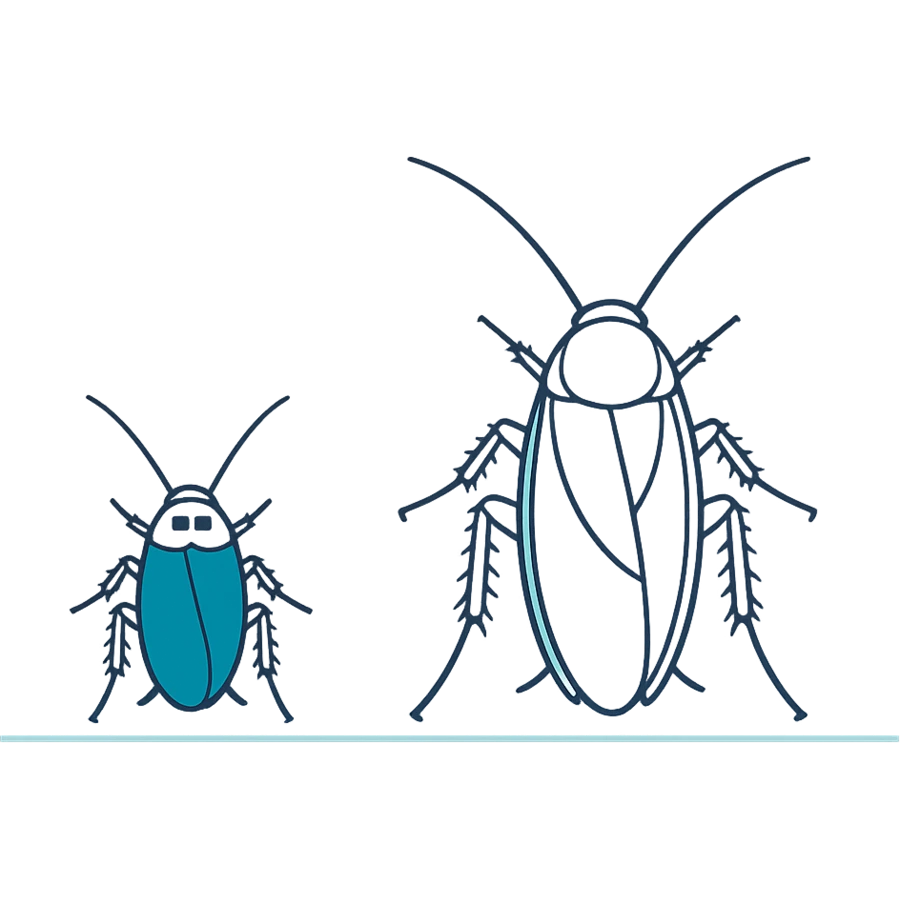
The small tan one with two dark stripes behind its head is the German cockroach. It lives and breeds indoors, in the warm cracks of the kitchen, and it is the reason "spray the skirting" almost never works. A colony hides in places a spray can never reaches, and it comes back from the ones you missed.
The big brown ones, 30 to 40 mm, are the native and American cockroaches. They live outdoors, in garden beds, drains, subfloors and sewer lines, and wander inside on warm nights or up through the plumbing. They are unpleasant but they are a different, more straightforward job: exclude them and treat where they come from.
The honest reason we ask what you've seen, and where, is that the answer changes the whole treatment. A photo in the enquiry helps, if you can get one.
Most cockroach calls spike in the warm months. The German cockroach is the exception: a heated, well-fed kitchen is summer to it all year round, which is why a bad one shows up in July as readily as January.
| Cockroach | Size & look | Where it lives | What it takes to shift |
|---|---|---|---|
| German | 12 to 15 mm, tan, two dark stripes behind the head | Indoors, breeding in kitchen and bathroom harbourage: the hard one | A gel-bait program worked into the harbourage, then a follow-up. A perimeter spray alone will not clear it. |
| Australian | 30 to 35 mm, brown with a pale margin on the wing fronts | Outdoors and peridomestic: garden beds, subfloors, mulch, moving in seasonally | Exclusion plus a targeted perimeter treatment on the paths and entry points they use. |
| American | 35 mm and up, reddish-brown, can fly a little | Drains, sewers and warm sub-slab voids, common in older sewer-connected homes | Treating and proofing the drain and cavity routes they travel, not just the room you saw one in. |
Harbourage
You see one; the rest are in the walls and warm cavities
A cockroach on the bench at night is the visible edge of a colony living somewhere warm, dark and close to water. The treatment goes to that harbourage, which is why finding it matters more than chasing the one you spotted.
German cockroaches pick the warmest, most sheltered spots in the room: the motor housings of appliances that run hot, the gaps a spray was never going to enter. Half our work is knowing where to look, then getting the treatment into those places rather than onto the surfaces you wipe every day.
| Harbourage | Why there |
|---|---|
| Kickboards & hinges | The warm, dark cabinet voids under and behind the kitchen joinery. |
| Appliance motor housings | Behind and under the fridge, dishwasher, microwave and kettle base: warm all day. |
| Cracks & crevices | Where two surfaces meet: bench edges, splashback gaps, cupboard corners. |
| Drains & floor wastes | The moisture and the route the big outdoor species use to get in. |
| Wall & subfloor voids | Cavities behind tiling and under the floor, especially near plumbing. |
| Bin & recycling stores | Food, warmth and cardboard: the classic re-introduction point. |
Cockroaches are nocturnal. Seeing them out in the day usually means the harbourage is crowded, so numbers are already high.
Specks like coarse pepper or ground coffee in drawers, on kickboards and along the tops of cupboards.
Brown, irregular marks where they run in humid, well-used areas.
Shed skins and small purse-shaped egg cases tucked into cracks, a sign they're breeding on site.
A heavy infestation carries a distinctive stale, oily odour.
The method
Bait the harbourage. Don't just spray the bench.
For the German cockroach, a gel-bait program is the method that actually works, and it works precisely because it is not a fog of spray across the kitchen. It's targeted, patient, and it uses the colony against itself.
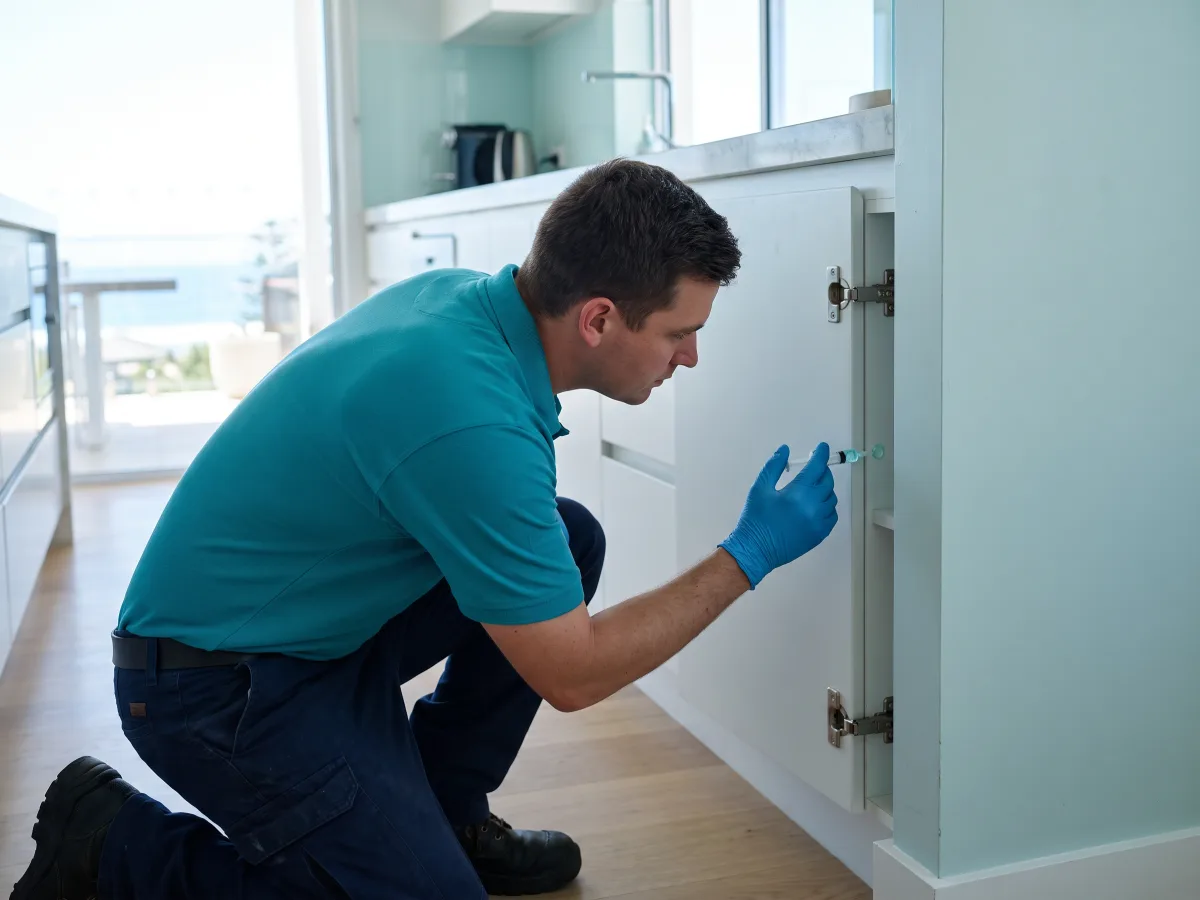
We place small dabs of bait right into the cracks and cavities where the cockroaches shelter. They feed on it, carry it back, and the effect passes through the harbourage as other roaches and nymphs feed in turn on the residue. It reaches the ones you would never find with a spray nozzle, which is the whole point.
A blanket surface spray does the opposite of what people hope. It kills the few in the open, scatters the rest deeper into the building, and coats the very surfaces where bait needs to stay attractive, so it can actually make a German cockroach job slower and harder. Where spray does belong is on the outdoor species: a targeted perimeter and entry-point treatment for the big ones coming in from the garden and drains.
Then we come back. A heavy German cockroach infestation is rarely a one-visit job, because egg cases already laid will still hatch. The follow-up clears that next generation before it can breed on, and it's part of the treatment, not an upsell.
| Approach | What it does | Where it fits |
|---|---|---|
| Gel bait at the harbourage | Placed into the cracks and cavities; carried back through the colony as they feed and re-feed. | The German cockroach indoors: the only approach that reliably reaches a breeding kitchen colony. |
| Targeted perimeter treatment | Applied to the outside paths, entry points and harbourage the outdoor species travel. | The big Australian and American cockroaches coming in from gardens, subfloors and drains. |
| A bench spray on its own | Kills what's in the open, scatters the rest, and can foul the surfaces bait needs. | Almost nowhere for a real German cockroach problem, which is the honest reason we don't lead with it. |
A cockroach treatment is priced per visit, or folded into a standing annual round if you'd rather keep the whole home on a schedule. Whichever it is, we tell you what we're using and what to do while it settles before we start. The annual home round is where most people land once they've had one bad summer.
Units and shared buildings
In a shared building, the cockroaches belong to the building
Around the lake's town centres, a good share of homes are units and townhouses: nearly two in five dwellings at Warners Bay, better than a third at Toronto. In a shared building a cockroach problem is rarely one kitchen's problem, and treating it as though it is just moves the traffic next door.
German cockroaches travel the connections a block gives them: shared walls, common waste and bin rooms, service risers, and the stack of plumbing and drains that ties the kitchens together. One unit can do everything right and still be re-seeded from the flat behind the wall or the bin store downstairs.
So for strata we treat the pattern, not the postcode on the door. Depending on the job that can mean looping in the strata manager and treating the affected run of units and the common areas together, so the colony has nowhere to retreat to and come back from. Tell us it's a unit in the enquiry, and whether an agent or strata manager is involved.
It's the same logic behind our commercial work: a cafe or shared kitchen is a building-wide job with paperwork to match. And it's why the round genuinely runs the strata pockets, from Warners Bay to Toronto.

Before we come, and after
Take away the food, the water and the hiding places
A treatment does the hard part, but cockroaches only stay gone where the kitchen stops being a good address. None of this is a substitute for the work; it's what makes the work last.
-
Deny them water
Fix the dripping tap and the sweating pipe, wipe the sink dry at night, and clear the condensation cockroaches rely on far more than food. A dry kitchen is a hostile one.
-
Clean where you can't see
The grease and crumbs behind and under the fridge, oven and dishwasher feed a colony for weeks. That hidden film matters more than a spotless benchtop.
-
Close the harbourage
Seal the obvious gaps around pipes, kickboards and splashbacks, and keep bins lidded and emptied. Fewer cracks means fewer places a treatment has to reach.
-
Check what comes in the door
German cockroaches hitch in on cardboard, grocery boxes and second-hand appliances. Break boxes down and get them out, rather than storing them warm under the sink.
Foggers, bombs and DIY sprays feel like doing something, but on a German cockroach they usually make it worse: they scatter the colony deeper into the building and coat the surfaces a bait program then has to work against. If a real infestation has started, the cheapest path is usually to stop spraying and book the treatment.
Straight answers
Cockroach questions, answered plainly
How long until they're gone?
The outdoor species usually settle down fast once the perimeter and entry points are treated. A breeding German cockroach colony takes longer and honestly should: you'll see numbers drop within days as the bait moves through, but a follow-up is needed to catch the eggs that hatch after the first visit. Anyone promising a one-spray fix for a bad kitchen infestation is guessing.
My kitchen is spotless. Why do I have German cockroaches?
Because they almost never arrive because of mess. They hitch in on cardboard, grocery deliveries and second-hand appliances, or come through a shared wall in a unit, then settle into the warm cavities behind clean cupboards. A tidy kitchen makes them easier to clear, but it doesn't keep them out on its own.
Are the treatments safe around kids and pets?
Safety depends on the product and how it's applied, so we won't hand out a blanket promise. Gel bait is placed into cracks and cavities out of reach rather than sprayed across open surfaces, which is one of its advantages in a family kitchen. We'll tell you exactly what we're using, where, and what to do while it settles, before we start.
I still see the odd one after treatment. Did it not work?
Usually the opposite. Bait draws them out to feed, so a little activity in the first days is the treatment working. It's also why the follow-up matters: eggs already laid will hatch, and the second visit clears that generation. If numbers are still climbing after the follow-up, tell us, because that points to a harbourage or a re-introduction we need to find.
We're in a unit. Can you just treat ours?
We can, and sometimes that's all it takes. But if the building is the source, treating one kitchen alone often just moves the problem next door and back again. Tell us it's strata in the enquiry; depending on what we find we may suggest looping in the strata manager and treating the affected units and common areas together.
Do I need to empty the cupboards first?
Not the whole kitchen. We'll let you know if a particular cupboard needs clearing for access when we confirm the booking. Gel bait is targeted, so the disruption is usually much less than people expect from a cockroach treatment.
Sources worth your time
- Australian Museum: German cockroach. The species identification, size and indoor-breeding behaviour described on this page. The Museum's native cockroaches page covers the harmless bush species people sometimes mistake for pests.
- NSW Health: public health pests. The honest reason cockroaches are worth clearing beyond the nuisance: they can carry disease organisms on their bodies and contaminate food and surfaces.
- NSW EPA: pesticide and pest management licensing. Applying pest-control products commercially is licensed trade work in NSW. This is the regulator that administers it.