
Field guide · the inspection, start to finish
What to expect during a termite inspection in Lake Macquarie
A detailed visual termite inspection is a methodical, unhurried look at your home: arrival, a walk around, the subfloor, the roof void, room by room, the grounds, then a written report you can keep. Here is the whole of it, from the knock on the door to the document that lands afterwards, so booking one feels like a known quantity rather than a leap.
The short version
If you only read one part
A termite inspection is not a dramatic event. A licensed technician arrives, spends an hour or two working around your home in a set order, and leaves you with a written report. The order is the whole point: every accessible part of the property gets looked at, and everything gets recorded, including the spots that could not be reached.
Two things are asked of you, and both are easy. Give us access to the subfloor, the roof manhole and the perimeter. And if you have already found something that looks like termites, leave it exactly as it is. That is genuinely the most useful thing you can do before we arrive, and the reason is in the next section.
Everything below walks the day out in full. If you would rather just get it in the book, the enquiry form is here.
An hour or two, depending on the size of the home and how the subfloor and roof read.
A written report, every time. Not a verdict from the driveway.
Clear access, and leave anything you have found undisturbed.
Yearly is the floor on this coast, more often where the findings say so.
Before the day
Getting the property ready
A little access clears the way for a thorough inspection. None of it is heavy work, and if something cannot be cleared, tell us and we will note it as a limitation rather than skip it quietly.
The inspection reaches as much of the home as it can safely get to, so the more of these that are open, the more of your home the report can actually speak for:
- The subfloor access. On the district's timber-floored homes this is the most important door of the lot. Clear whatever is stacked over the hatch, and unlock it if it is bolted.
- The roof manhole. Move anything stored under it, and clear a spot for a ladder. It is usually in a robe, hall or garage.
- The perimeter. A clear path around the outside walls helps: trim back anything grown hard against the house, and shift bins or stored timber off the wall line if you can.
- Inside walls and wet areas. Pull stored goods a little off the skirtings in cupboards, the garage and the laundry, so the technician can sound and read the timber behind them.
- Pets and parking. Secure dogs, and leave a spot to park close by. That is the whole list.
You do not need to be home yourself, only to arrange access. For rentals we routinely sort access out with the agent.
Leave it exactly as it is. Don't spray it, don't break the mud leads open, and don't peel the timber back to see more. Disturbed termites abandon the workings and re-route, which makes the colony far harder to trace and treat, and can turn a straightforward job into a slow one.
Note the spot, keep everyone away from it, and put it in your enquiry so we know to look there first. That single piece of restraint is worth more than anything else you could do.
The day itself
Arrival to report, step by step
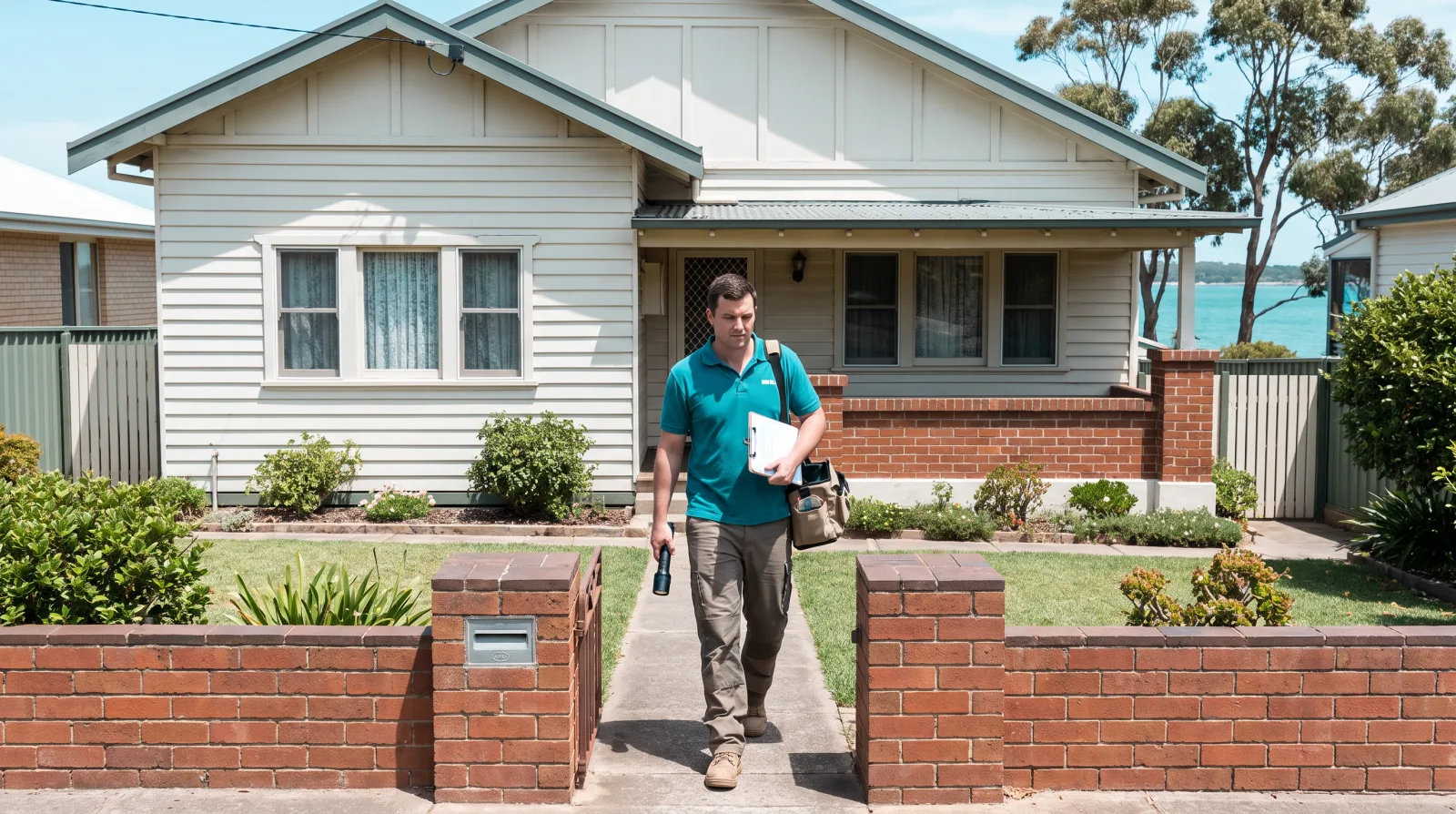
The same sequence runs on every full inspection, so nothing gets missed and the report can account for the whole home. On a subfloor home in a suburb like Cardiff or Toronto it looks like this.
Seven stages, in order, from the knock on the door to the document that lands afterwards. None of it is rushed, and each stage earns its place in the report.
-
Arrival and the walk-around
A knock, a quick word about anything you have noticed, then a slow lap of the outside. Before going anywhere near a torch, the technician reads the form of construction, the garden levels against the walls, the drainage and where water goes in a wet week. That first lap decides where to look hardest.
-
The subfloor
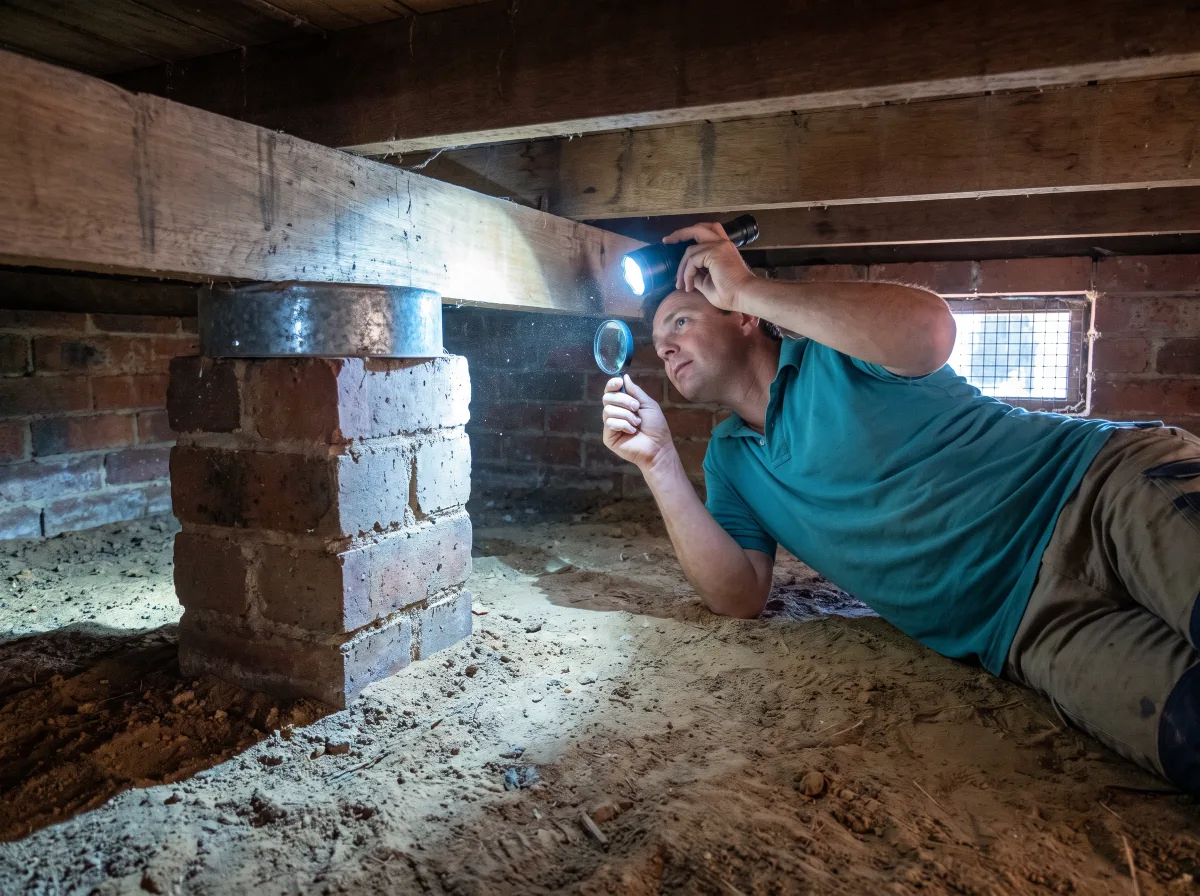
On the district's timber-floored homes, this is the first real stop and often where the story is. Ant caps on the piers, the pier lines themselves, bearers and joists, ventilation, moisture in the ground, and any mud leads bridging up toward the timber. A humid lakeside year keeps damp in the subfloor, and damp is exactly what termites are looking for.
-
The roof void
Up the manhole and into the roof: top plates, rafters and purlins, the timber where the frame carries the load. The job here is telling fresh activity apart from old, repaired damage, so past workings are not mistaken for a live problem, or the other way round.
-
Through the interior
Room by room, in order: skirtings, architraves, door jambs, window reveals, and the wet areas where moisture collects. A moisture meter reads what the eye cannot, and a light sounding of suspect timber says where to slow down. Nothing is cut open; the reading tells us where to look closer.
-
The exterior and grounds
Weep holes, slab edges and wall lines, then attached structures: decks, pergolas, the garage. Out into the grounds for fences, retaining walls, tree stumps, and any stored timber or firewood stacked against the house, a classic way in.
-
The findings talk
Before leaving, a plain summary of what was found and what it means for your home. If something needs immediate care, you hear it now. Nothing is sold to you on the spot: the written report comes first, then any conversation about what to do.
-
The written report
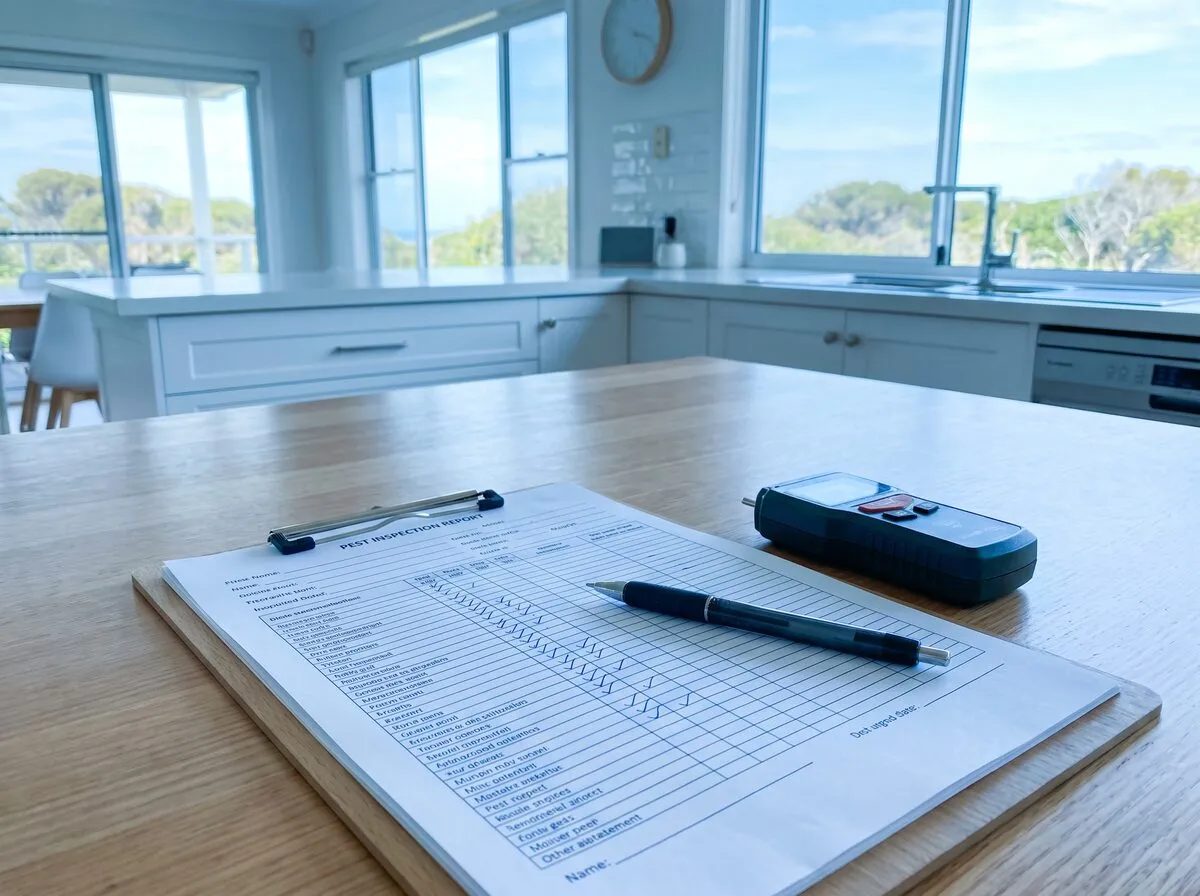
The document lands afterwards, usually within a day or so. It sets out the findings, the conducive conditions, the limitations and the recommendations, in a form you can file, hand to a conveyancer, or pull out next year to compare. That report is the real product of the day.
Where the story usually starts
In the subfloor
Lake Macquarie carries a deep bench of established timber-framed subfloor homes, through Charlestown, Toronto, Cardiff, Warners Bay, Belmont and Swansea. On those homes the subfloor is the first place a termite inspection earns its keep, because it is where the timber meets the ground and where the earliest evidence tends to show.
Down there the technician is reading a few plain things. Are the ant caps on the piers intact, or has something bridged past them. Is the ground damp, and is the ventilation moving air or sitting still. Are there mud leads, the pencil-thin earthen tunnels termites build to cross open ground, running up a pier or a wall. On a humid coast where the rain runs heaviest from autumn into June, subfloor moisture is a standing condition, not a one-off, which is why this zone gets the most careful light.
Slab homes are not exempt, they just read differently: the same pressure arrives through joints and penetrations instead of piers. The termite service page covers how the inspection changes shape on a slab.
What's in the bag
The tools, and what each one reads
The kit is ordinary and proven. None of it sees through walls; each piece just helps a trained eye read the timber and the moisture more honestly than the eye alone.
| Tool | What it reads |
|---|---|
| Torch | The whole job runs on it. Raked low across a surface, light throws up workings, staining and subtle damage the flat view hides. |
| Moisture meter | Reads damp inside timber and plaster where nothing shows. High readings mark where termites would want to be, so they say where to look closer. |
| Sounding | A light tap. Timber hollowed from the inside answers with a papery, drummy note instead of a solid one. |
| Probe | Gentle pressure on suspect timber only, never breaking sound timber open. It confirms what sounding suggests. |
| Ladder | Roof void and high external access. Part of every full inspection, not an extra. |
| Thermal camera | Where used, it flags moisture and temperature differences behind linings. It points to where to look; it does not see termites or prove them on its own. |
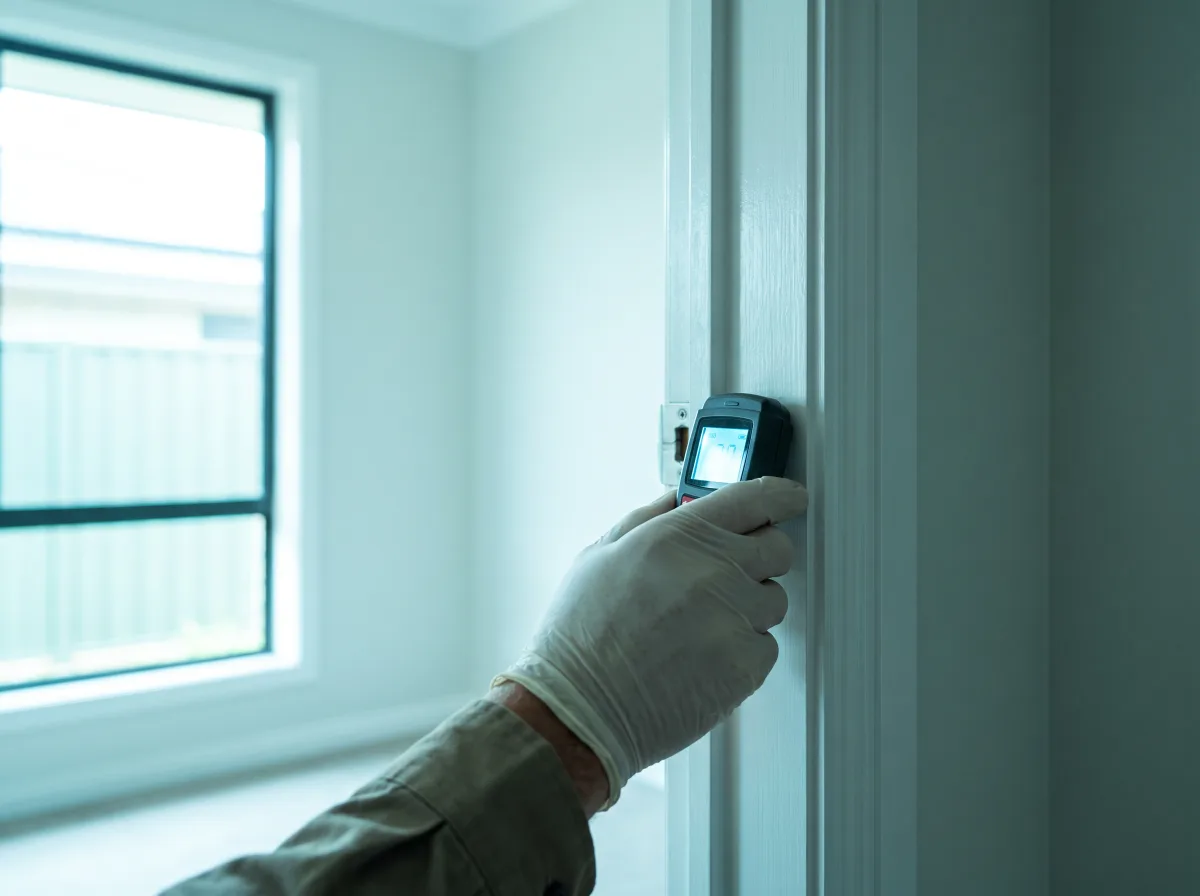
Where the readings justify a closer look inside a wall or void, the technician says so and explains why, rather than opening anything up on the day. That recommendation goes in the report, and the decision stays yours.
What lands afterwards
The report you receive
Every inspection ends in writing. Here is the shape of that document, and the one section most people skip that deserves the closest read.
The written report is built from four parts, and each answers a different question about your home. Read together they give you the true condition of the place, not a yes or a no.
The section worth pausing on is limitations. No inspection can see inside an unopened wall, under a fixed cabinet, or into a subfloor too tight to safely enter. An honest report says exactly where it could not look, so those spots are never mistaken for cleared ones. If you are ever handed someone else's report and it has no limitations section at all, treat that as a reason to be careful, not reassured.
How to read a timber pest report takes each of the four sections apart in full.
Active termites, workings, damage, and evidence of previous treatment, each located and described.
The conditions inviting trouble: garden beds over weep holes, subfloor moisture, timber in contact with soil, stored firewood on the wall.
What could not be accessed, and why: furniture, stored goods, sealed voids, insufficient height.
What the findings justify, from "fix the drainage and re-inspect in twelve months" through to a management program.
The next move
Acting on the findings
A report is only worth what you do with it. Most inspections land on one of three outcomes, and the recommendations tell you which.
-
01
Nothing active found
The common and welcome result. The recommendation is usually to tidy up any conducive conditions noted and re-inspect in twelve months. "Nothing active" is worth exactly one year, which is why next year's look still happens.
re-inspect in 12 months -
02
Conducive conditions, but no termites
The report flags the invitations before they are accepted. Most of the fixes are yours to make and cost little: improve subfloor drainage, pull garden beds back off the weep holes, move stored timber off the walls. The conducive-conditions guide runs through them.
fix, then re-inspect -
03
Active termites, or fresh damage
Leave the workings undisturbed. The report sets a path: usually targeted treatment of the activity first, then a considered management decision, barrier or baiting, once the pressure is understood. Barrier or baiting walks that choice through, and the termite service covers management.
treat, then manage
Don't wait for the annual
Signs it's time to book now
An annual rhythm is the plan. These are the things that mean don't wait for it. Any one of them is worth an inspection sooner rather than later.
- a
Mud leads or tubes
Pencil-thin earthen tunnels on piers, wall lines or slab edges. The clearest sign of the lot, and the one to leave completely undisturbed.
- b
Timber that sounds hollow, or paint that ripples
A skirting or door frame that answers with a papery, drummy note, or blistered, rippling paint over what should be solid timber.
- c
Doors and windows suddenly sticking
Frames that jam where they used to swing freely can mean moisture and movement in the timber behind them.
- d
Discarded wings after a warm, humid evening
Small shed wings on window sills or caught in cobwebs, left behind when winged termites fly and pair off. Spring and early summer here.
- e
A neighbour has just found termites
Colonies do not respect fence lines. A find next door is a good reason to check your own place while you are thinking about it.
- f
A renovation has opened up a wall or floor
An open frame is the best look an inspection will ever get. Book it before the walls close up, and if demolition has turned something up, leave it be and call.
- g
It has simply been more than a year
On this coast, twelve months is the honest limit on a clean bill of health. Past that, you are overdue, whatever last year found.
Don't disturb it, and don't spray it. Note where it is, keep everyone clear, and book an inspection. Scattering a colony with a can of surface spray is the single most common way a manageable problem becomes an expensive one.
Keeping the calendar
How often to inspect
AS 3660.2 recommends an inspection at least every twelve months for buildings in termite-prone areas, and more often where the risk or the construction warrants it. On this coast we treat annual as the floor, not the target. Homes carrying a management system also run their own monitoring schedule on top of that, and a home that read "nothing active" last year still gets the same look next year, because that is precisely what the finding was worth: one year.
The good news is you do not have to hold the calendar in your head. A standing service notes when your next inspection window falls due and gets in touch ahead of it. Or you can work yours out in a couple of minutes with the pest year planner, which turns your suburb, your construction and your garden into a schedule you can keep.
Straight answers
Questions, answered plainly
Do I need to be home for the inspection?
Someone needs to give us access, but it does not have to be you. For rentals we routinely arrange access through the agent, and the report still comes to you. Just make sure the subfloor and roof manhole can actually be reached.
Does the inspection damage anything?
No. A timber pest inspection is non-invasive: we sound and gently probe suspect timber, we do not cut into sound timber or open up walls. Where the findings mean a wall or lining really should be opened for a closer look, we recommend it in the report rather than doing it on the day, so the call stays yours.
How soon do I get the written report?
Usually within a day or so of the inspection.
What if it rains on the day?
Most of the inspection goes ahead regardless. Heavy weather can limit safe roof or subfloor access, and if it does, that gets recorded as a limitation rather than glossed over, and we can arrange to revisit the affected area.
The subfloor or roof is really tight. Will you still go in?
We access what can be safely reached. Anything too low or too tight to enter safely is recorded as a limitation in the report, named plainly, so you know exactly which parts of the home the inspection could and could not speak for. Nothing gets quietly skipped.
Is a termite inspection the same as a building inspection?
No, and it is a common mix-up. A termite inspection is about pests and the conditions that invite them. A building inspection is about the structure and its defects. They are different reports, and many buyers sensibly arrange both before they commit.
My home is on a slab. Do I still need one?
Yes. Termites reach slab homes through expansion joints, cracks and service penetrations, out of sight until they surface at something visible. The inspection simply reads different evidence: slab edges, wall lines, wet areas and moisture patterns rather than piers and ant caps.
Can you inspect a tenanted rental?
Yes. Give us the agent or tenant contact in the enquiry and we arrange access around the tenancy. The report comes to you for the file, which is exactly the paperwork a well-run rental wants on record.
Sources worth your time
- NSW EPA: pesticide and pest management licensing. Pest management is licensed trade work in NSW, and termite work carries its own endorsement. This is the regulator that administers it.
- Standards Australia. AS 3660.2 covers termite management in existing buildings, including the at-least-annual inspection recommendation named on this page. The document is published commercially.
- CSIRO. Australia's long-running research base on subterranean termite species and their behaviour, if you want the biology under the building advice.