
Services · 01 · the lead entry
Termite inspections and management in Lake Macquarie
The inspection comes first, always: a detailed visual one, reported in writing. Management, barrier or baiting, follows only where the findings justify it. That order is the whole method, and we don't skip steps in it.
Leave it exactly as it is. Don't spray it, don't break the mud leads open, don't peel the timber back further. Disturbed termites abandon the workings and re-route, which makes them far harder to trace and treat. Note the spot, keep everyone away from it, and book the inspection.
The inspection
What a termite inspection covers
A detailed visual inspection means each accessible part of the property is looked at in a set order, and everything is reported, including the places we couldn't reach.
| Zone | What we're reading there |
|---|---|
| Subfloor | Ant caps, pier lines, bearers and joists, ventilation, moisture, mud leads. On the district's established homes this is where the story usually starts. |
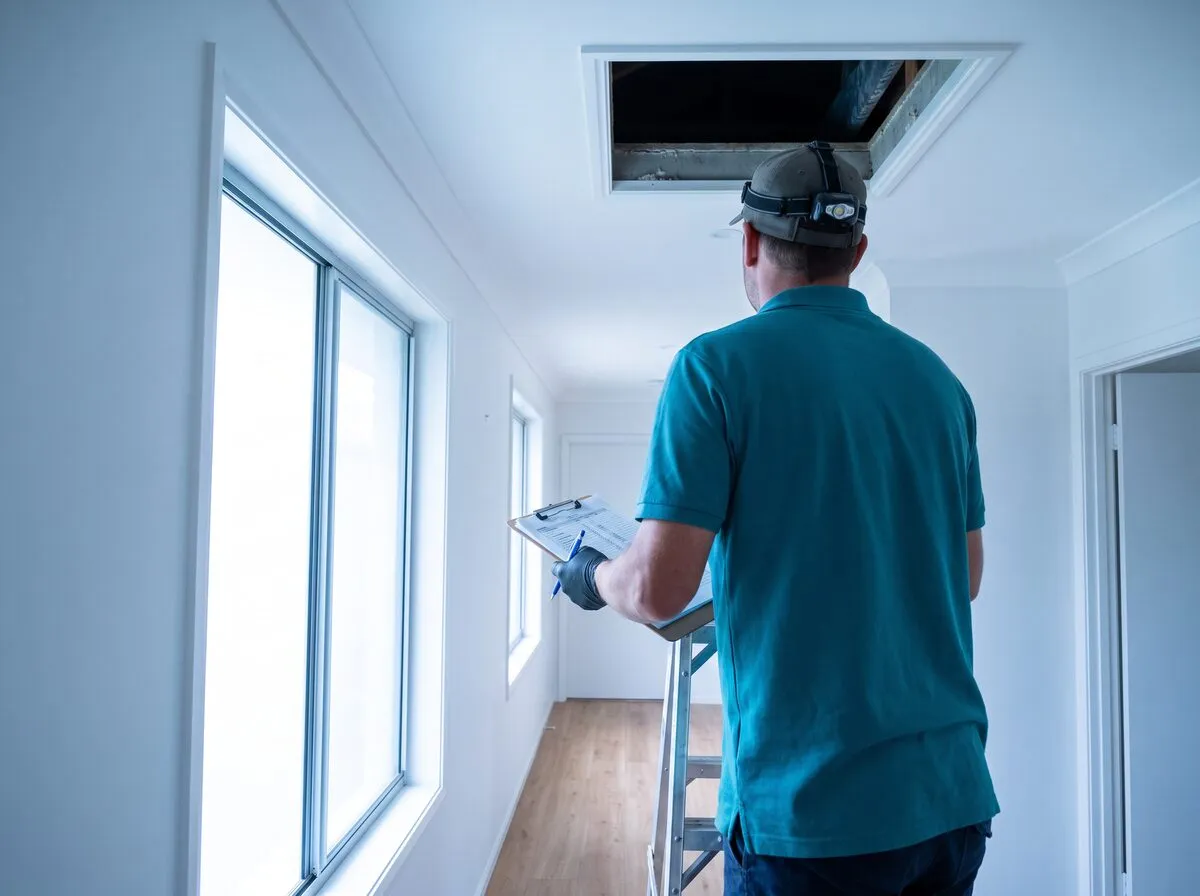
| Roof void | Top plates, rafters, evidence of workings in the frame, past damage against fresh activity. |
| Interior | Skirtings, architraves, door jambs, wet areas, sounding and moisture readings where the readings say to look closer. |
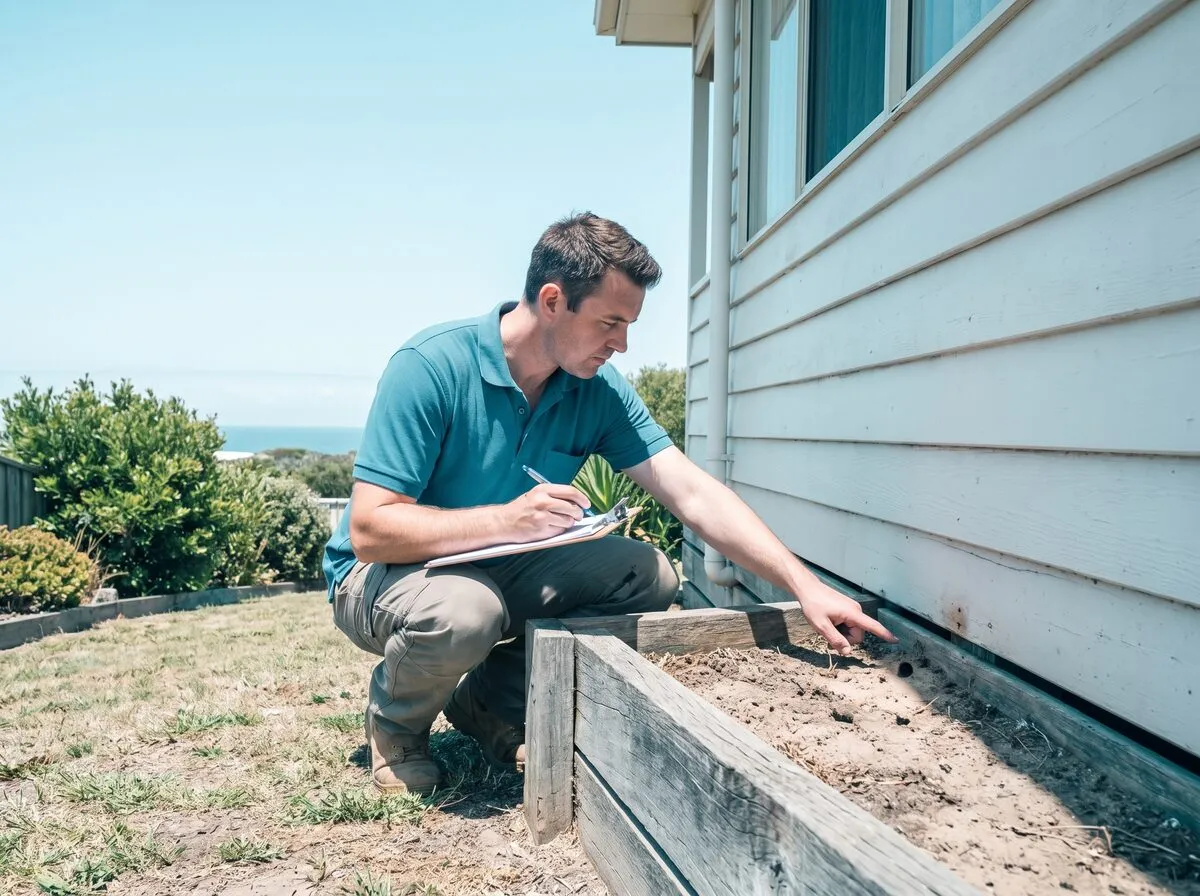
| Exterior | Weep holes, slab edges, wall lines, attached structures, paths and garden levels against the house. |
| Grounds | Fences, retaining walls, stumps, trees, stored timber and firewood. |
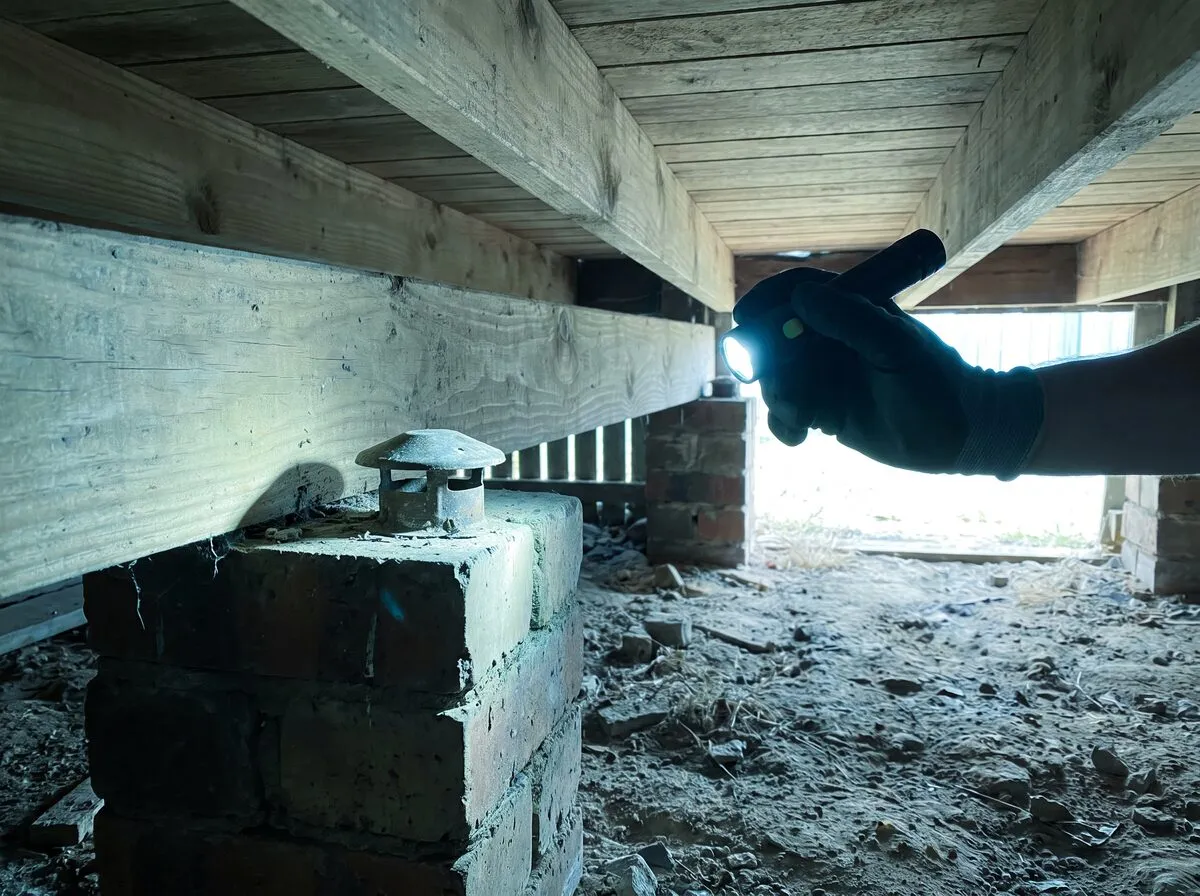
The tools are ordinary and proven: torch, moisture meter, sounding, and a technician who knows what this district's homes do. Where the readings justify it we'll recommend closer investigation, and say exactly why. The full walkthrough, from arrival to report, is written up in what to expect during a termite inspection.
The report
The report is the product
Every inspection ends in writing. Not a text message, not "all good, mate" from the driveway: a report you can put on file, pass to a conveyancer, or dig out in two years to compare against the next one. Here is the shape of it.
The limitations section matters more than people expect. No inspection can see inside an unopened wall or under a locked cabinet, and a straight report names exactly where it couldn't look, so those spots aren't mistaken for cleared ones. If you're reading someone else's report with no limitations section at all, be suspicious of it.
How to read a timber pest report breaks each section down properly.
Live termites, workings, damage and any sign of earlier treatment, each located and set down.
What is inviting trouble: beds crowding the weep holes, subfloor damp, timber touching soil.
What couldn't be accessed and why: furniture, stored goods, sealed voids, height.
Where the findings lead, from a drainage fix and a repeat look in 12 months to a management program.
Management, when findings justify it
Barrier or baiting, chosen by the findings
AS 3660 governs how termite management is designed and installed in existing buildings. Two approaches do most of the work, and which one fits depends on what the inspection found and how your home is built, which is why we never quote one from the footpath.
| Approach | How it works | Where it suits | What it asks of you |
|---|---|---|---|
| Chemical soil barrier | A continuous treated zone laid through the soil at the perimeter and beneath entry points. Modern non-repellent chemistry lets termites cross it unknowingly and carry the effect back to the colony. | Homes whose perimeter allows a continuous treated zone, trenched or drilled, with no gaps. | Keeping the treated zone undisturbed: no new garden beds over it, no re-grading soil against the walls. |
| Baiting and monitoring | Stations placed around the property, checked on a schedule. Interception feeds a growth-regulator bait back to the colony itself. | Sites that can't carry a continuous barrier, or jobs where eliminating the colony is the aim. | Patience and the monitoring rhythm: stations only work when they're actually checked. |
Both are legitimate, both are standards-governed, and neither is a set-and-forget. Whichever way the findings point, the system's design, the products' names and the inspection schedule that follows all go to you in writing. Barrier or baiting walks the choice through in full.
Why the calendar never clears
Year-round pressure is the local condition
Coastal NSW sits in the high termite-hazard band: activity all year, not a summer visitor. Lake Macquarie compounds it with the kind of housing termites are built for, a deep stock of established timber-framed homes on subfloors through Charlestown, Cardiff, Toronto, Warners Bay, Belmont and Swansea, and bushland corridors where garden timber meets house walls.
On a subfloor home in Cardiff, that means we check the ant caps, and how the garden line sits against the piers, before anything else. On a slab home in a newer estate it means the expansion joints, service penetrations and the soil line against the slab edge. The pressure is the same; the entry points move.
The evidence is written up in why termites are a year-round threat here, and only one caveat matters: a hazard band describes the district, never your house. Establishing what's actually at your place takes an inspection, nothing less.
Just bought here?
The first inspection sets the baseline
Pre-purchase reports are a separate job for a pre-purchase inspector, and we don't do them. Once the keys are yours, book the first inspection: it records the house as you took it on, so every report after it has something to compare against.
What the report gives you isn't a yes or no on the house. It's the true condition of it: active termites or none, damage old or fresh, the conducive conditions you've inherited, and what managing them would involve.
Still buying? Pre-purchase timing covers the cooling-off and auction clock, and what to ask the inspector you book.
The rhythm
Annual is the floor, not the ceiling
AS 3660.2 puts the minimum at one inspection every twelve months in termite areas, more frequently where the risk or the construction demands it. On this coast annual is the floor we work to. Homes with a management system in place also carry their own monitoring schedule, and homes that had "nothing active" last year still get the same look next year, because that's what the finding was worth: twelve months.
The calendar isn't yours to carry. That's what a standing service is for: your next inspection window gets noted, and we come to you ahead of it. Or work it out yourself in two minutes with the pest year planner.
Straight answers
Termite questions, answered plainly
What does a termite inspection cost?
It's a set fee, confirmed with you when we confirm the booking. Termite management is different: that's quoted from the inspection findings, because an honest price depends on what's there and how the home is built. Anyone pricing a barrier without inspecting first is guessing with your money.
How long does an inspection take?
Long enough to do it properly, commonly an hour or two depending on the size of the home, the subfloor and roof access, and what turns up. We'd rather tell you it ran long than skip a zone.
My home is on a slab. Am I off the hook?
No, and it's a common and costly assumption. Termites enter slab homes through expansion joints, cracks and service penetrations, hidden from view until they reach something visible. The inspection just reads different evidence: slab edges, wall lines, wet areas and moisture patterns.
What happens if you find live termites?
We show you what we found, leave it undisturbed, and report it with a recommended path: usually the activity treated directly first, with the management decision, barrier or baiting, made once the pressure is understood. Nothing gets sold to you on the spot; the report comes first, then the conversation.
Can I just buy a DIY termite spray?
Surface sprays kill the termites you can see and scatter the thousands you can't, which usually makes professional treatment harder and slower. Termite management chemistry and design are licensed work under NSW law for good reason. The one genuinely useful DIY move is fixing conducive conditions: drainage, garden lines, stored timber. That guide is here.
Do you inspect units and townhouses?
Yes. Strata construction changes the scope, common property boundaries and all, so tell us it's a unit in the enquiry and whether the strata manager is involved. Warners Bay and Toronto keep us used to it.
Sources worth your time
- NSW EPA: pesticide and pest management licensing. Pest management is licensed trade work in NSW; termite work carries its own endorsement. This is the regulator that administers it.
- Standards Australia. The AS 3660 series covers termite management, and AS 3660.2 sets the at-least-annual inspection recommendation this page names. The documents themselves are published commercially.
- CSIRO. The long-running Australian research base on subterranean termite species and their behaviour, if you want the biology under the building advice.