
The district's standing pest and termite service
Pest control across Lake Macquarie
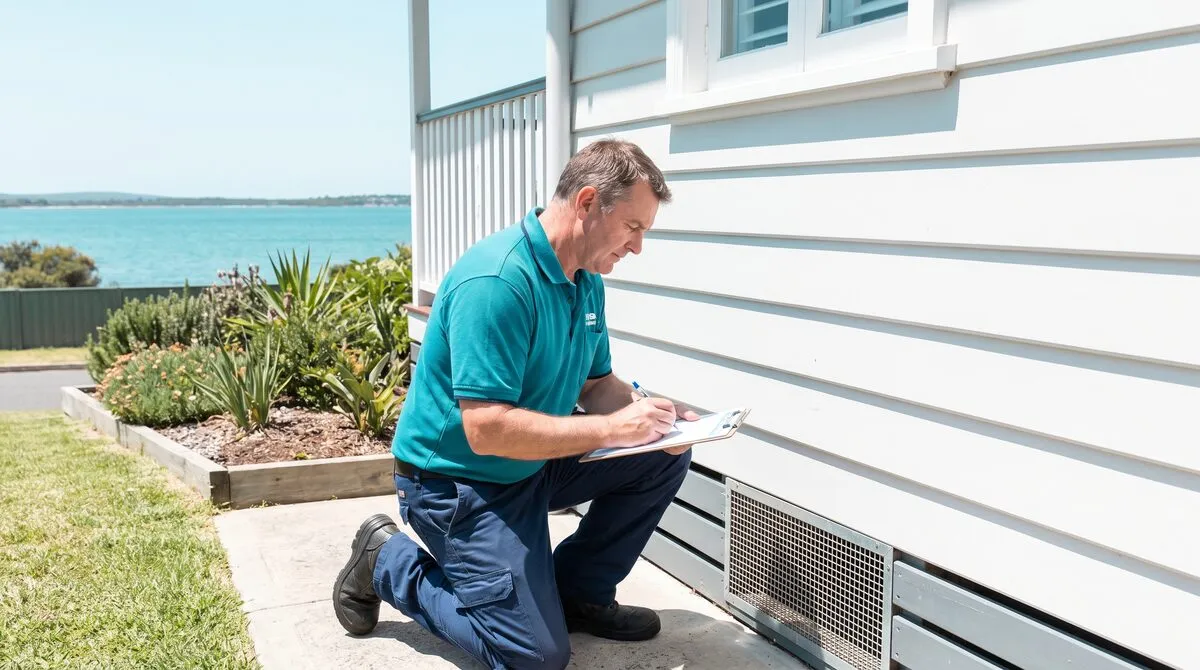
Detailed visual termite inspections. Barrier and baiting termite management. General pest work for the homes and businesses around the lake. We tell you what we found, in writing, and we come back when the calendar says.
Services
Termites first. Everything else in its season.
Most of our week is inspections and termite work. The rest of the register runs on the same discipline: put a name on it, treat it properly, write it down.
-
01
Termite inspections and management
The front door of the business. A detailed visual inspection, findings put in writing, and management only where the findings justify it.
read more → -
02
Residential pest control
Your home's yearly rhythm: general pest treatment matched to this coast, one visit at a time or on a standing annual round.
read more → -
03
Commercial pest control
Scheduled, documented service for shops, cafes, offices and warehouses, with the paperwork an audit asks for.
read more → -
04
Cockroaches
The humid coast's summer constant. Treated at the harbourage, kitchens, drains and warm cavities, not just where you saw one.
read more → -
05
Rodents
From April they move indoors. Proofing, baiting and follow-up for roof voids, wall cavities and sheds.
read more → -
06
Ants
We trail them back and treat the colony. Spraying the line on the bench just moves the problem sideways.
read more → -
07
Spiders
Redbacks and webbing spiders wherever they set up, and straight answers about funnel-webs in the LGA's north.
read more → -
08
Wasps, fleas and other pests
Wasp nests down to silverfish: named properly, found properly, treated properly.
read more →
The calendar
Pest pressure here runs on a calendar, not a crisis
- peak
- active
- quiet
- rings, outside in: termites · cockroaches · ants · spiders · rodents
Coastal NSW sits in the high termite band: activity all year, not a warm-weather visitor. That outer ring never goes quiet, and it is why the inspection is an annual habit here rather than a response to trouble.
The rest of the year turns with the seasons. Cockroaches and ants ride the warm humid months. Spider activity runs summer into autumn. Rodents come indoors when the nights cool in April and stay through winter. The wettest stretch, autumn into June, loads the subfloors with the moisture termites like.
We keep the whole district's work on that wheel. Answer four short questions and it re-draws for your place, then hands you the plan in writing.
How the work runs
Inspect. Report. Treat what the report justifies. Return on schedule.
-
Inspect in a set order
A detailed visual termite inspection: interior, roof void, subfloor where there is one, exterior walls, fences, trees and grounds.
-
Put it in writing
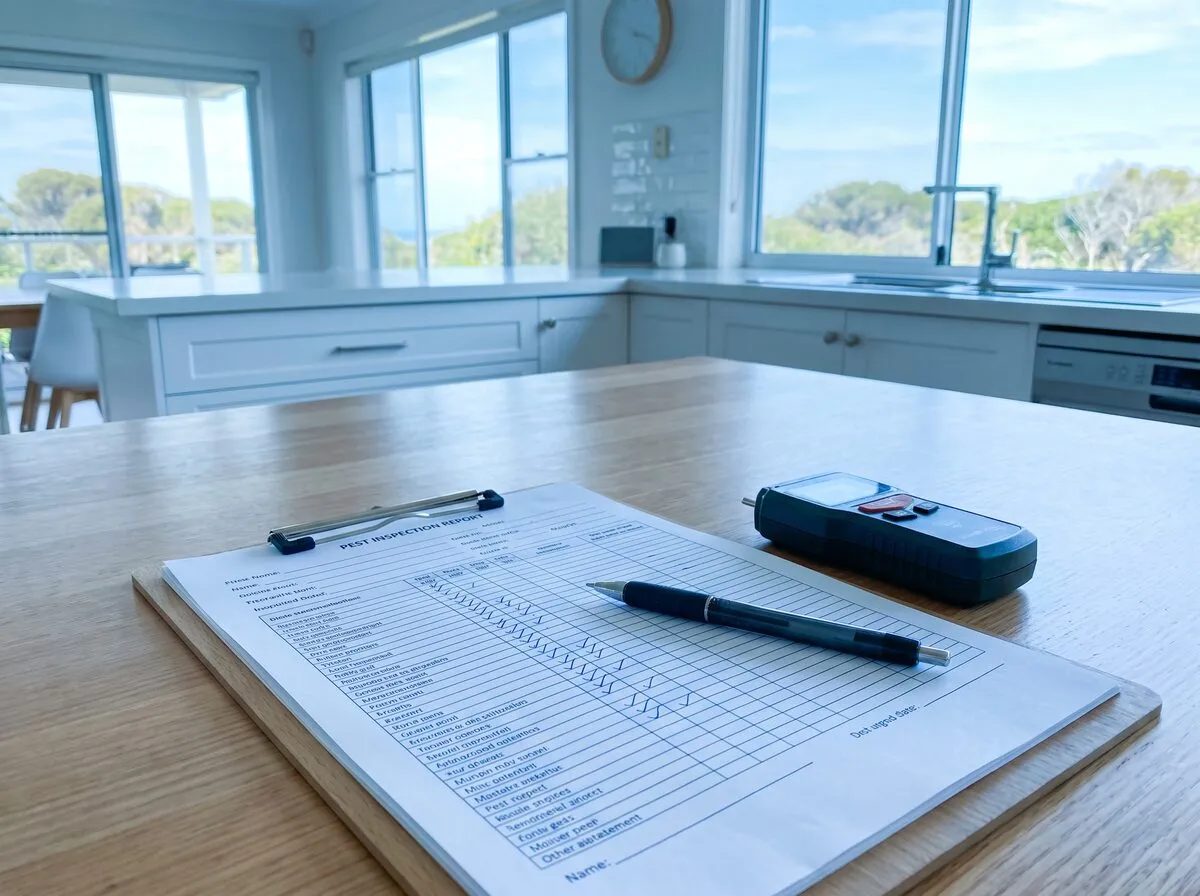
You get a written report the same way we found it: what's active, what's conducive, what we couldn't access, and what we recommend. Documentation is half the product.
-
Treat what the findings justify
Barrier or baiting for termites, targeted treatment for the seasonal pests. Recommended from the report, priced before we book it, never sold on the doorstep.
-
Come back when the calendar says
Annual inspections on homes, scheduled rounds on commercial sites, monitoring checks where they're installed. The rhythm is the protection.
Where we work
The whole Lake Macquarie LGA
On a subfloor home in Cardiff we check the ant caps and the garden line against the piers. On the bushland-fringe streets out toward Martinsville it's stored timber and firewood stacks. Same inspection everywhere; different things to look at.
Straight answers
The questions we get across the counter
What does it cost?
A termite inspection is booked at a set price. General pest treatments are priced per visit, or as an annual program. Termite management is quoted from the inspection findings, never sight unseen, because the right method depends on what's actually there. Every price is confirmed with you before the work is booked.
How often should a home here be inspected?
At least annually. AS 3660.2, the Australian Standard for termite management in existing buildings, recommends inspections at least every 12 months, and more often where the pressure or the construction warrants it. On this coast, in the high termite band, annual is the floor, not the ceiling. Source: Standards Australia.
I think I've found termites. What do I do right now?
Leave them alone. Don't spray them, don't pull the mud leads apart, don't open the timber further. Disturbing the workings scatters the colony and makes it harder to trace and treat. Book an inspection and keep the area as you found it.
Why is there no phone number on this site?
The enquiry form is the channel, and it is watched closely. It takes your details down right the first time, suburb included, instead of leaving them to a voicemail. Send it through and we'll sort a time.
Do you do pre-purchase inspections?
No. A pre-purchase timber pest report is a job for a pre-purchase inspector, booked before the contract binds you. Once the home is yours, the first yearly inspection gives you the baseline for every report after it.
Are the treatments safe for kids and pets?
Safety depends on the product and how it's applied, so we won't hand out a blanket promise. What we will do is tell you exactly what we're using, where, and what to do while it settles, before we start. Ask us about your situation in the enquiry.