
Services · a per-pest entry
Ant control in Lake Macquarie
The trail across the bench is a symptom, not the problem. The nest is somewhere you can't see, and it's the nest we're after. We identify the species first, because on this coast the species decides the treatment, then we take it to the colony instead of the foragers you happen to catch.
Wiping the trail down with warm soapy water is worth doing, it lifts the scent line the foragers are following and buys you some quiet. A repellent surface spray is the one to hold off on. It kills the ants on the bench and leaves the nest untouched, and with a few of the species common here it can prod the colony into splitting and setting up again a metre away. If you can, leave one live trail for us to read on the day: it points straight at where they're getting in.
Trail to colony
The trail is the symptom, the nest is the job
A worker ant on your benchtop is one of thousands, and it's the disposable part of the operation. Behind it sits a nest, and often a queen or several, tucked in a wall cavity, under the slab, beneath the pavers or out in the garden bed against the wall.
Ants forage in lines because they lay a scent trail the moment one of them finds food or water. Kill the line and the colony simply sends more, along a slightly different route, within a day or two. That is the whole reason "I sprayed them and they came back" is the most common thing we hear about ants: the spray only ever met the foragers.
Our work runs the other way down the trail. We read where the line goes, find or infer the nest, and use a treatment the foragers carry back to it, so the colony takes the dose it can't see coming. That is slower than a can of spray for the first day, and far more final by the end of the week.
It also means the useful thing you can do before we arrive is nothing dramatic: note which room, which time of day, and whether the trail leads to a window, a power point, a weep hole or the pantry. Those four details tell us more than a photo of the ants themselves.

Identify first
The species decides the treatment
"Ants" is not one job. What's trailing across a Charlestown kitchen wants a different answer from what's nesting in a Belmont garden wall, and getting that wrong is exactly how a treatment fails. So the first thing we do is work out what we're actually dealing with.
| What it is | Where you notice it here | What it's after | What actually works |
|---|---|---|---|
| Black house & sugar ants | The classic trail on the bench, along skirtings and up around windows; worse through the warm months and after rain drives them indoors. | Sweet food and moisture. Kitchens, pantries, pet bowls, bins. | Gel or liquid bait matched to a sugar-feeder, placed on the trail so the workers carry it home. Spray alone leaves the nest intact. |
| Coastal brown ant (Pheidole megacephala) | Fine soil or sand pushed up between pavers, along path edges and slab joints; an invasive coastal species that's very much at home around the lake. | Both sweet and protein food, and it spreads by forming large linked super-colonies rather than one tidy nest. | Baiting, patiently and across the whole run, not a spot spray. A repellent spray is the classic trigger for this one to bud and multiply. |
| Carpenter ants | Larger black ants near damp timber, decks, subfloors and around old roof leaks; sometimes a faint rustling and small piles of timber shavings. | They don't eat wood, they hollow out already-damp or decayed timber to nest in. A moisture problem usually sits underneath. | Treating the nest and, just as importantly, fixing the moisture that invited it. Worth confirming it isn't termites first (see below). |
Identification is done properly, from a look at the ant and the trail, not guessed from a description over the phone. It changes the bait, the placement and how long the job takes, which is why a licensed technician sorts it before anything is applied. Whichever species it turns out to be, the method and the products used go to you in plain words, not a mystery aerosol.
Why the shortcut backfires
Why a bench spray moves the problem sideways
Nothing wrong with a supermarket spray for the three ants in front of you tonight. The trouble starts when it's the whole plan, because a repellent kills what it touches and warns off the rest.
A repellent spray does two things at once, and only one of them helps. It drops the foragers on the bench, and it lays down a barrier the colony reads as "danger here". So the nest reroutes around it, and with the super-colony formers on this coast it can respond to the pressure by splitting, one nest becoming two or three, each rebuilding somewhere quieter. A week later you have ants in two rooms instead of one and no idea why.
A colony treatment is the opposite trade. A non-repellent product or a matched bait is one the ants can't detect, so they walk through it or feed on it and carry it home before anything seems wrong. The dose reaches the nest, the queen included, and the whole line goes quiet because the source is gone, not just the messengers.

| Approach | What it reaches | What happens next |
|---|---|---|
| Off-the-shelf surface spray | The foragers you can see, and a repellent line the rest avoid. | Quiet for a day or two, then a fresh trail on a new route, sometimes a split colony in more rooms than you started with. |
| Species-matched colony treatment | The nest, through bait or non-repellent product the workers carry back undetected. | Slower to look dramatic, but the source is treated, so the line dies off rather than moving house. |
Ants, timber and a costly mix-up
"White ants" in the wall are not ants at all
Two very different things get called ants around a house. One is a real ant that shelters in damp wood. The other is a termite, which people still call a white ant, and which is a licensed timber-pest job on a different page. Telling them apart is worth two minutes.
Carpenter ants are true ants. They don't eat timber, they excavate damp or already-rotting wood to nest in, so where you find them there's usually a leak, a drainage problem or a subfloor holding moisture. Treat the nest, fix the water, and they've no reason to come back.
Termites, the "white ants" of the back fence, do eat the timber, and they work out of sight until real damage is done. If you've pulled back a skirting or opened a wall and found pale insects, mud packed into the timber, or galleries following the grain, stop and leave it exactly as it is. Don't spray it, don't break it open further. That's not an ant treatment, it's a termite inspection, and disturbing the workings only makes it harder to trace.
The quick tell in the field: an ant has an obvious pinched waist and bent antennae; a termite has a straight, broad body and straight, beaded antennae. When you're not sure, treat it as termites and book the inspection, because that's the mistake that's expensive to get wrong.
Leave it undisturbed and book a termite inspection instead of an ant treatment. Only a licensed inspection can confirm what's there.
- Teal marks the tell: the ant's narrow waist against the termite's straight, even body.
- Antennae too: bent at an elbow on the ant, straight and beaded on the termite.
Why here, why now
Where ants come from around the lake
Lake Macquarie gives ants a good year. It's a humid coast, better than a metre of rain over twelve months (about 1,100 mm at Toronto, a touch more at Warners Bay), warm through a long summer, with the heaviest rain running autumn into early winter. Colonies stay active far longer here than they would somewhere colder, and every heavy downpour flushes them out of the wet ground and toward the nearest dry, food-rich building, which is usually your kitchen.
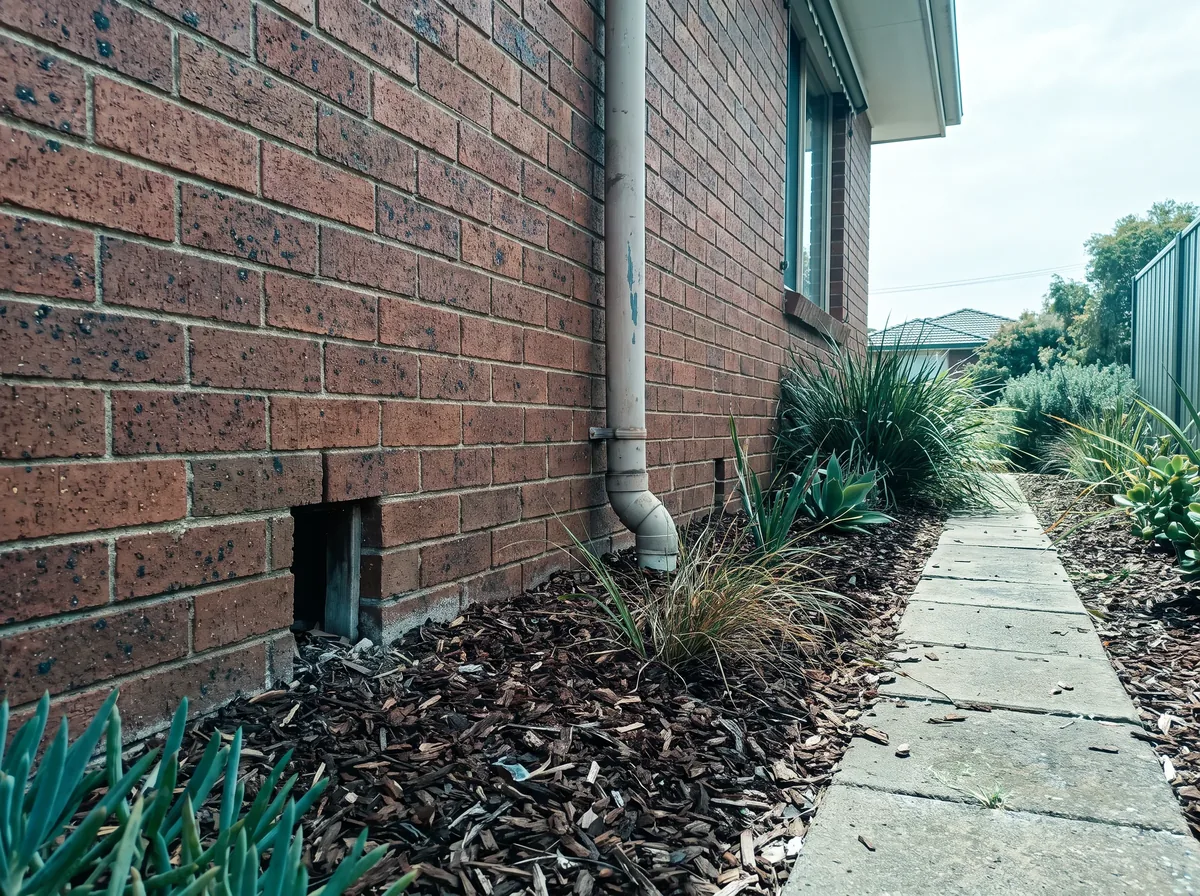
The other half is how the houses sit. A district of established detached homes means mature gardens, timber-edged beds and mulch banked against walls, paths and pavers laid over sand, weep holes at the brick line and subfloors that hold moisture. Every one of those is an ant highway or an ant nest waiting to happen, and they're the first things we look at, outside before in.
So the honest fix is rarely just "spray the kitchen". It's treat the colony, then close off the run: trim the garden back off the wall, clear the mulch from the weep holes, sort the drainage that keeps a subfloor damp. We'll point out the ones we can see while we're there.
Where it fits the year
A one-off, or a line in the annual round
Ants have a season. They peak through the warm months and surge indoors after summer storms, so a spring or early-summer treatment gets ahead of the worst of it. You can book a single ant job whenever they turn up, priced per treatment, and that's plenty for a lot of homes.
For homes that get them every year, or that already have us in for the general pest round, ants are simplest handled as one line in that annual visit, treated as a package alongside cockroaches and spiders rather than as separate call-outs. That's the residential pest round, and the yearly rhythm usually costs less bother than fighting the same trail every February.
Not sure where ants fall in your year? The pest year planner sets it against everything else your place is likely to see, so you book the visit at the moment it does the most good.
Straight answers
Ant questions, answered plainly
I sprayed them and they came back. Why?
Because the spray met the foragers, not the nest. A trail is the tip of a colony that's living somewhere out of sight, and it just sends fresh workers along a new route once the old one clears. The only way to stop the trail for good is to treat the nest itself, which is what a bait or a non-repellent product is for: the ants carry it home.
Do you really need to identify the species? They're just ants.
It genuinely changes the treatment. A sugar-feeding house ant, a protein-and-sugar coastal brown ant and a timber-nesting carpenter ant each take a different bait in a different place, and the wrong match is how a job fails. It's a quick call for a technician looking at the ant and the trail, and it's the difference between one visit and three.
Are ants in the wall the same as white ants?
No, and it's an important difference. "White ants" is the old name for termites, which eat timber and are a licensed inspection job. Real ants that live in wood, like carpenter ants, hollow out damp timber to nest but don't eat it. If you've found pale insects or mud packed into timber, leave it undisturbed and book a termite inspection rather than an ant treatment.
The ants come up between my pavers and along the path. What are they?
Very often the coastal brown ant, an invasive species that's thoroughly settled in around the lake. It pushes fine soil up through paving joints and spreads by linking up into large colonies, which is exactly why spot-spraying makes it worse, it just prompts a split. It's handled with patient baiting across the whole run, not a squirt at one spot.
Is ant baiting safe around kids and pets?
Ant work is licensed for a reason, and part of the licence is placing products where they do the job and stay out of reach, in cracks, along runs, behind kickboards, not broadcast across a floor. A technician will talk you through where anything's been placed and what to keep clear of. We don't make blanket "safe" claims, we place things responsibly and tell you what and where.
What does an ant treatment cost?
A single ant treatment is priced per visit and confirmed with you before we book it. If ants are a yearly thing at your place, folding them into the annual home round usually works out easier and better value than repeat one-offs. We don't put a figure on it here because it depends on the property and the species, and an honest price needs both.
Can you get rid of them for good, guaranteed?
We can clear the colony that's there and close off the runs we can see, which is what "gone" looks like in practice. What we won't do is promise no ant ever crosses your boundary again, because on a humid coast with mature gardens they'll always be in the landscape. The realistic goal is a treated nest and a home they're kept out of, kept that way with a bit of seasonal upkeep.
Sources worth your time
- Australian Museum: ants. Background on Australian ant species, their colonies and behaviour, if you want the biology under the treatment advice.
- NSW EPA: pesticide and pest management licensing. Pest management is licensed trade work in NSW. This is the regulator that administers the licences the work is done under.
- CSIRO. Australia's long-running research base on insects and their management, for the science behind baiting and colony behaviour.