
Services · for premises
Commercial pest control in Lake Macquarie
A scheduled program, not a one-off callout. We service your premises on a set rhythm, treat and proof what the visit finds, and file the paperwork the way an auditor wants to find it: a service report every visit, a station map, and a logbook that builds year on year.
Tell us the date in the enquiry. If an auditor, a council officer or a franchisor is due, or a customer or staff member has reported something during trading, say so and we work back from it: an inspection booked, the premises brought onto a program, and the documentation in your hands before the visit. Book a commercial inspection.
The product is the file
A documented program, kept on schedule
Commercial work is judged on its records. The treatment matters, but what an auditor, an insurer or a landlord actually asks to see is the paperwork behind it. So the paperwork is the point, not an afterthought.
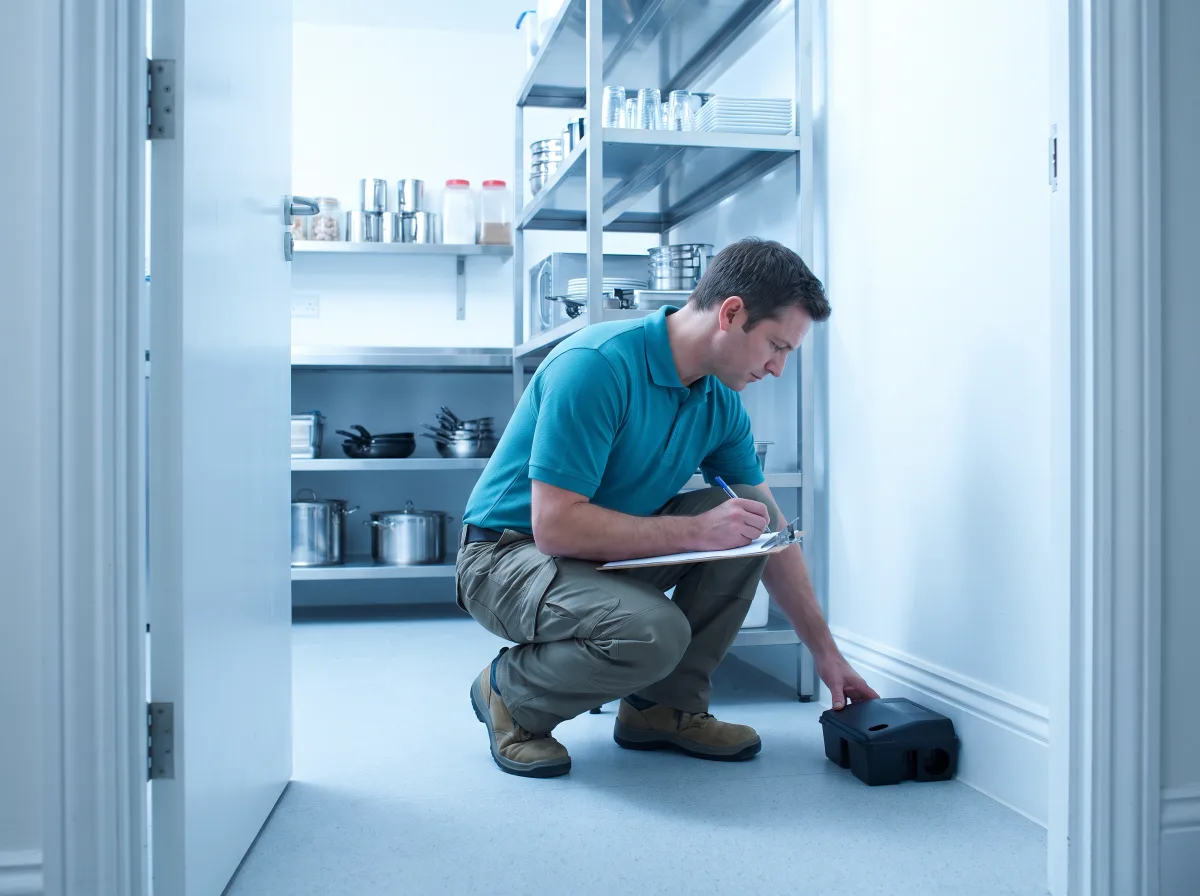
Every visit ends in a written service report: what was inspected, what was found, what was done, and what needs doing before the next visit. Monitoring stations sit where the risk sits, mapped so anyone can see the coverage at a glance. Between visits, that logbook is the answer to a knock at the door, whether it is a food safety auditor, an aged-care assessor or an insurer reviewing a claim.
Pricing follows the program, not a per-callout meter. A commercial site is quoted as a scheduled agreement, the visit frequency and the scope set to the premises, with the initial inspection a set fee. The frequency, the coverage and the reporting are all confirmed with you in writing before the first visit, so there are no surprises in either the service or the file.
Pest management is licensed work in NSW, and the products and methods used on your site go into the record by name. That is not box-ticking: it is what lets the next person, an auditor or your own new manager, read exactly what has been done here.
Date, technician, areas inspected, activity found, treatment and proofing carried out, products used, and actions for you before next visit.
A floor plan marking every monitoring and bait station, numbered, so coverage is visible and each station's readings are traceable.
Station readings visit on visit, so a rising count is caught as a pattern, not as a surprise on the day of the audit.
The conducive conditions we can see, from a propped delivery door to a leaking floor waste, and what fixing them would do.

Who runs a program with us
The premises we look after
Different premises carry different pressure, and different people ask to see the file. The program is shaped to both. These are the site types the district's programs run on.
| Premises | The pressure here | Who reads the file |
|---|---|---|
| Food premises cafes, restaurants, takeaway, bakeries |
German cockroaches in warm kitchen harbourage, rodents on stored food, activity around drains and waste. The humid coastal year keeps the pressure on. The lake's cafe strips, from Warners Bay to Toronto's main street, run on this. | Food safety auditors and council officers. A current pest program is part of a food safety program. |
| Retail and shopfronts Charlestown, the main streets |
Deliveries and shared loading docks bring rodents and stored-product insects into back-of-house storage. A busy centre like Charlestown moves a lot of goods and a lot of people. | Centre management and landlords, often as a lease condition. |
| Offices and workplaces | Ants and spiders around entries and courtyards, the occasional rodent in a kitchenette or ceiling space. Lower frequency, still worth documenting for the building and for staff. | Facilities managers and building owners. |
| Warehouses and logistics Cardiff industrial fringe, the M1 corridor |
Large perimeters, roller doors left open, pallets and stored product. Rodents and stored-product pests are the standing risk, so the program runs a perimeter station line and a tight logbook. | Insurers, auditors and the businesses receiving the stock. |
| Medical, dental and aged care | A low tolerance for any activity, discreet methods, and real sensitivity around treatment near patients and residents. The pest record is part of the accreditation the site already carries. | Accreditation assessors and clinical governance. |
| Strata common areas Warners Bay, Toronto town centre |
Shared bin rooms, basements and roof voids, where a cockroach or rodent pattern belongs to the building rather than one lot. Treating one unit on its own just shifts the traffic next door. | The owners corporation and strata manager, for the building's records. |
Whatever the premises, one thing holds: the district sits in a high termite-hazard band on a year-round coast, so a commercial building with any timber in it belongs on a termite inspection rhythm too. We fold that into the program rather than running it as a separate errand.
How a program runs
The cycle, visit on visit
A program is not a spray and a wave. It is a repeating cycle: proof the building against pests first, treat what gets in, monitor the gaps, and write it all down. Prevention does most of the work, and the record proves it happened.
Most of a good commercial program is quiet. Nobody sees the door seal that keeps rodents out of the storeroom, or the station read and re-baited before anything reached the floor. That quiet is the point, and the logbook is where it shows up as work done.
-
Site survey and set-up
The first visit reads the whole premises: entry points, harbourage, waste areas, storage and the conducive conditions feeding pests. Monitoring and bait stations go in where the risk is, and the station map is drawn.
-
Proof, then treat
Exclusion comes first, because the pest you keep out never needs treating: door seals, mesh, gaps around services. Then targeted treatment at the harbourage, gel baits and monitored baiting rather than blanket spraying.
-
Scheduled service visits
The premises is serviced on a set rhythm matched to its risk. Every station is read, every active area re-checked, and any new conducive condition noted before it becomes a problem.
-
Report and log every visit
A service report is completed and filed after each visit, and the station readings go into the trend log. The file is current the moment we leave, not something reconstructed the week an audit lands.
The rhythm
How often the round comes back
Frequency follows risk, not a flat rule. A food premises in a humid coastal summer is a different job from a first-floor office. Here is the honest shape of it; the exact rhythm is set at the first inspection.
| Premises | Usual rhythm | Why |
|---|---|---|
| Food premises | Monthly, or more often in summer | The activity that a food auditor cannot tolerate is exactly the activity a warm humid kitchen invites; frequent visits keep the trend flat. |
| Warehouses and logistics | Monthly to quarterly | Set by the perimeter, the stock and how often the doors are open. A busy dock earns a shorter cycle. |
| Retail and shopfronts | Quarterly | Enough to hold the back-of-house and catch a delivery-borne problem early, with monitoring carrying the gaps. |
| Medical and aged care | Monthly to quarterly | Low tolerance and accreditation requirements usually set a tighter, well-documented cycle. |
| Offices and strata common areas | Quarterly to twice a year | Lower standing pressure, but the record still matters to the building and its people. |
Between scheduled visits the stations keep watching, and if something turns up on the floor you tell us and we come back. We do not publish a guaranteed response time, because an honest one depends on the day and the job; what we will do is confirm a real one with you when you call it in.
What gets asked for
What an auditor is actually looking for
An auditor is not trying to catch you out. They are checking that a system exists and that it is being run. A good pest program answers that in one folder: proof of a current agreement, evidence of regular service, a record of what was found and done, and a plan for the conducive conditions nobody has fixed yet.
For a food business, a pest program is one part of the food safety program the NSW Food Authority framework expects, and the council environmental health officer who inspects will look for it. For medical and aged care, the pest record sits inside the site's accreditation. For a warehouse or a leased shop, it is often the insurer or the landlord who wants to see it. The document is the same in every case: current, complete, and honest about what is still outstanding.
We do not sign off your food safety program or your accreditation, and we would be wary of anyone who claimed to. What we provide is the pest control record that sits inside it, written so it stands up when someone reads it closely.
Proof the premises is on an active program, with scope and frequency stated.
A dated report for every visit, showing the round has actually been kept.
The map, the readings and the trend, so coverage and activity are both traceable.
The conducive conditions flagged, so an outstanding fix reads as known, not missed.
The stakes
What getting it wrong costs a business
Pest pressure at a home is a cost to the building. At a business it is a cost to the trade, and it lands in more than one place at once.
-
01
A failed inspection
A food premises can be handed a fine, an improvement notice or, at the sharp end, a prohibition order that closes the kitchen until it is fixed. A missing or lapsed pest program is a common, avoidable trigger.
-
02
A customer sighting
One cockroach across a cafe floor at lunch is a photo, a review and a reputation, and no treatment undoes the post. Prevention is the only version of this that works, which is the whole argument for a program over a callout.
-
03
Contaminated or condemned stock
Rodents and stored-product insects in a warehouse do not just eat a little; they contaminate a lot, and a written-off pallet or a rejected delivery dwarfs the cost of the round that would have caught it.
-
04
A breached lease or a declined claim
Where a lease or an insurance policy requires a current pest program, not having one can put you in breach or leave a claim exposed. The folder is cheap insurance for the actual insurance.
Straight answers
Commercial questions, answered plainly
Can you service us outside trading hours?
Yes, and for a lot of food and retail sites it is the sensible way to do it: an early morning or after-close visit keeps treatment away from customers and stock. Tell us your trading hours in the enquiry and we work the schedule around them.
Will your reports satisfy our food safety auditor?
Our job is to give you a complete, honest pest control record: current agreement, a report every visit, the station map and the trend log, written to stand up when it is read. That is the pest management part of a food safety program. We do not sign off the program itself, and no pest controller honestly can, but we make sure the pest section of it is in order.
How often would we actually be serviced?
It depends on the premises. A busy kitchen through a humid summer might be monthly; a first-floor office might be quarterly or twice a year. The first inspection sets the honest frequency for your site, and it is written into the agreement so you are not guessing.
What does a commercial program cost?
It is quoted as a scheduled agreement rather than a per-callout price, because a program is cheaper and far more effective than reacting each time something appears. The initial inspection is a set fee, and the program price, the frequency and the scope are all confirmed with you in writing before any work starts. Send the details of your premises and we will put real numbers to it.
We are a unit in a strata building. Who arranges this?
Common areas, bin rooms, basements and roof voids are usually the owners corporation's responsibility, so a building-wide program run through the strata manager works best. If the activity is inside your tenancy, we can treat that, but for cockroaches and rodents especially, doing the whole building is what actually clears it. Tell us which it is and we will point you the right way.
Do you cover the Cardiff and Boolaroo industrial estates?
Yes. Warehouses and workshops across the district's industrial fringe are standing commercial work: perimeter station lines, roller-door proofing and a logbook that suits an insurer or an auditor. The bigger the perimeter, the more the monitoring earns its place.
Sources worth your time
- NSW Food Authority. The state framework for food safety programs and food business standards; a current pest management program is part of keeping a food premises compliant.
- NSW EPA: pesticide and pest management licensing. Commercial pest work is licensed trade work in NSW; termite and fumigation work carry their own endorsements. This is the regulator that administers it.
- SafeWork NSW. The work-health-and-safety context for treatments carried out in an occupied workplace, from scheduling to the safe use of products on site.