
Services · 02 · for homes
Residential pest control in Lake Macquarie
A home doesn't need a pest crisis to need pest control. It needs a rhythm: the general treatment timed to the season, the termite inspection once a year, and one written record that grows every visit. That's the whole of what we do for the homes around the lake, kept on a calendar so you don't have to.
What a home round covers
Two jobs, one calendar
Residential pest control isn't one visit. It's two pieces of work that fit together over a year: the general treatment that keeps the household pests down, and the annual termite inspection that watches the one thing that quietly costs the most. We keep them on the same calendar.
| The work | When it falls | What it does |
|---|---|---|
| General pest treatment | Spring, ahead of the warm months; a booster mid-year if the pressure warrants | Internal and external: the perimeter, entry points, roof void and the harbourage where cockroaches, ants, spiders and silverfish actually live. |
| Annual termite inspection | Once a year, same window each time | A detailed visual termite inspection, reported in writing. On this coast that's the floor, not a nice-to-have. |
| Seasonal follow-up | As the year turns | Rodent proofing as autumn closes in, a check on anything the last visit flagged. The round bends to what your place actually gets. |
| The written record | Every visit | Each treatment and inspection filed and dated, so the file reads as one history you can compare year to year. |
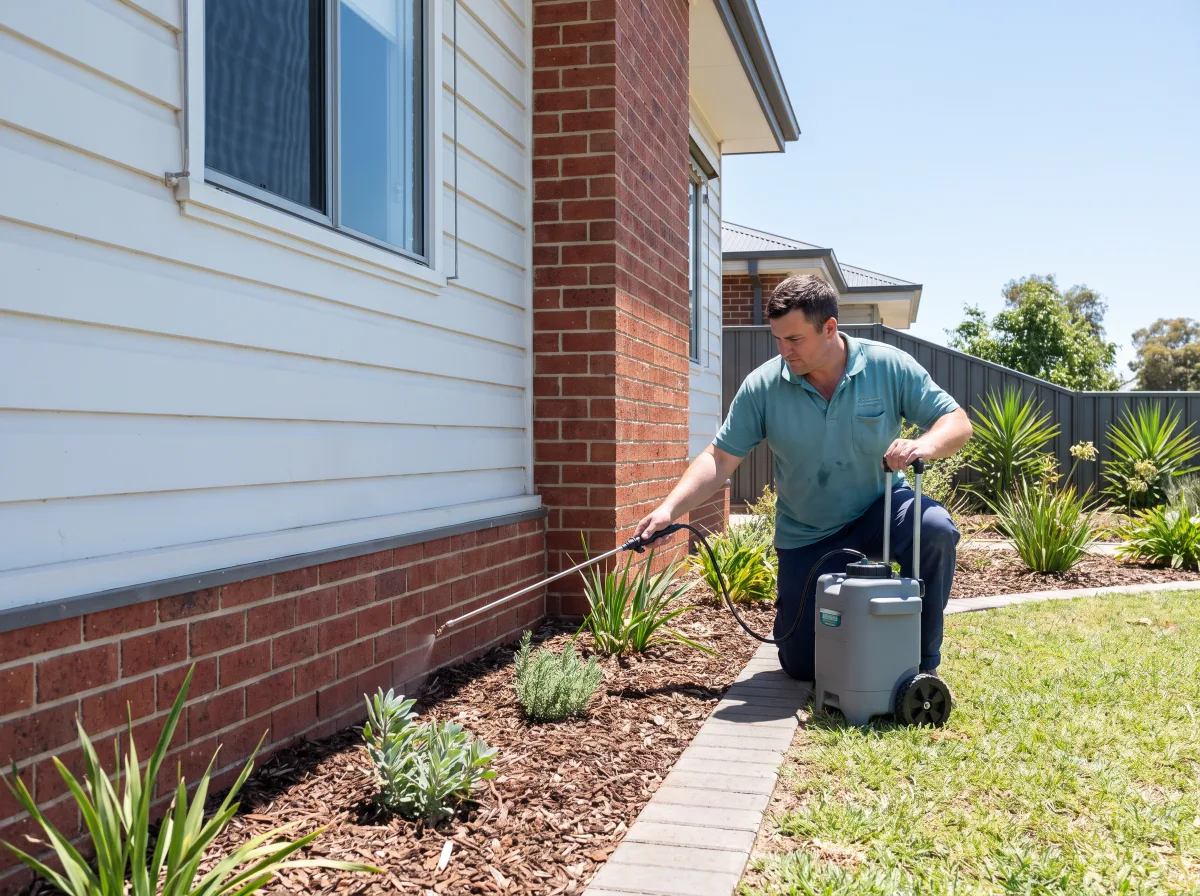
The general treatment does most of the seasonal work; the specific pests each have their own page if you want the detail on cockroaches, rodents, ants or spiders. The termite inspection is the other half, and it's the reason the round exists at all: general pest work you'd notice was overdue; termites you wouldn't. How the inspection works.
How the service runs
Two ways to work with us
Some people want a job done once and will call again when they need to. Others would rather never have to remember. Both are fine; the work is the same standard either way.
A pest that's turned up, a home you've just moved into, or a spring clean-up you'll repeat when you notice.
Per visit, confirmed with you before it's booked. The termite inspection carries its own set price.
The calendar. We treat, we write it up, and it's on you to call again.
Anyone who'd rather the inspection and treatment just happened on time, year after year, without chasing it.
Each part priced and confirmed before it's booked. No lock-in, no surprise on the doorstep.
The calendar. We note when your window falls due and get in touch ahead of it.
The annual round is the honest version of "set and forget": nothing is set-and-forget in pest control, but the remembering can be. You still see every visit written up, and you still say yes to each one. What changes is that the calendar stops being your problem. Not sure which fits your place? The pest year planner works it out from four questions.
The record is the point
One file, building year on year
A single inspection tells you the state of a home on one day. A file of them tells you the story: the conducive condition you fixed two years ago and never saw again, the moisture reading that's been creeping up, the "nothing active" that has held for four inspections running. That history is worth more than any one visit, and it only exists if someone keeps it.
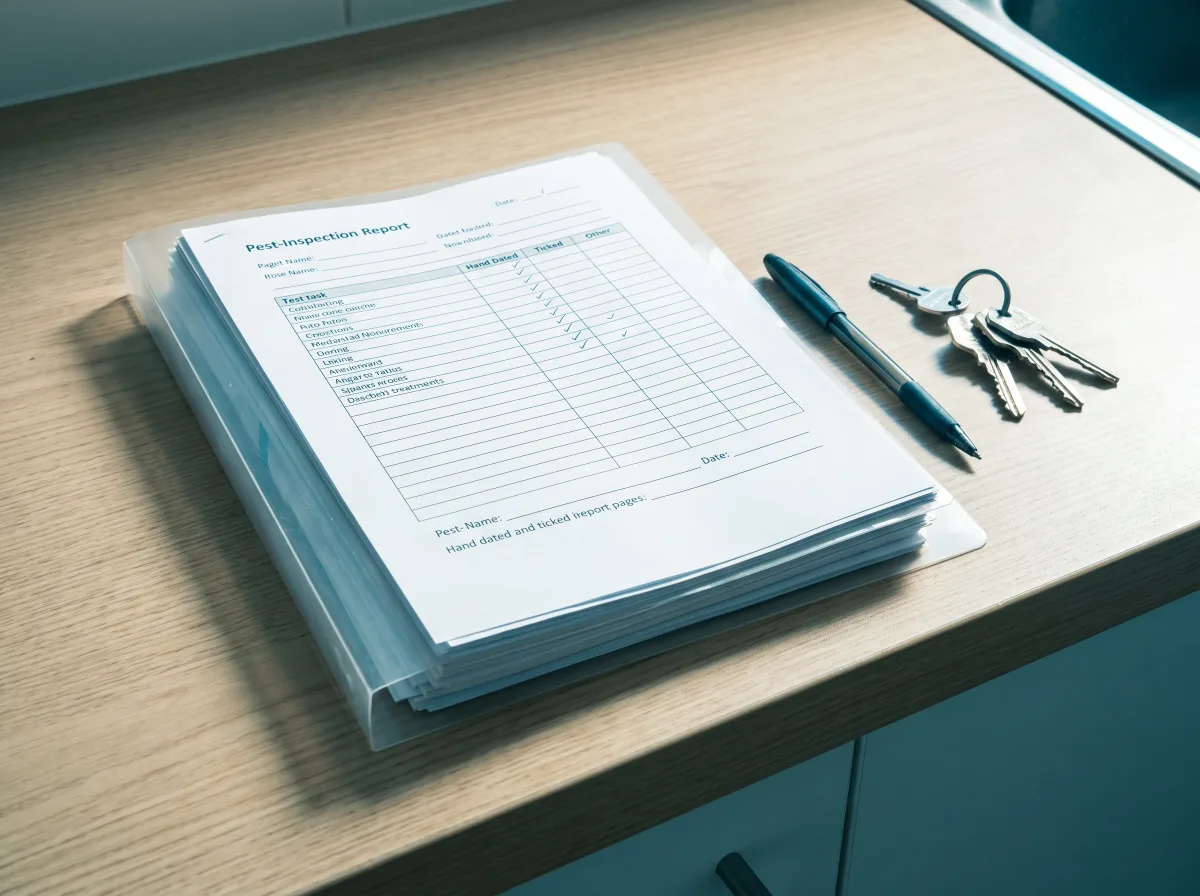
We keep it. Every treatment and every inspection goes into the same record, dated and plain, so you can pull it out and read your own home's pattern, hand it to a conveyancer when you sell, or compare this year against last. It's the thing the field mostly doesn't lead with, and it's the thing that actually protects the asset.
If you're reading an inspection report and want to know what each section is for, how to read a timber pest report pulls it apart properly.
Landlords and property managers
When the paperwork is the product
For a rental, the treatment matters and the record matters more. An owner or agent needs to show the property was looked after, on time, by a licensed technician, with something in the file to prove it. That's exactly what the standing round produces anyway.
Pest work on a rental tends to follow the tenancy, not the season: a report at changeover, a treatment when a tenant raises something, an inspection when the managing agent's compliance rhythm calls for one. We fit around that, and we send the documentation to whoever needs it on file, owner or agent.
What we won't do is tell you where the line sits between a landlord's obligation and a tenant's under the Residential Tenancies Act, or who pays for what. That's a tenancy-law question, and NSW Fair Trading is the right source for it (linked below). What we can do is turn up, do the work properly, and put a dated, plain-language report in your hands that a file, or a tribunal, can read without translation.
Tell us it's a rental in the enquiry, and whether we're dealing with you or the managing agent, and we'll set the reporting up to suit.
What was inspected or treated, where, and when, in plain language.
Any activity found, any conducive conditions, and what was recommended.
The work carried out by a licensed pest technician, as NSW law requires.
To the owner, the agent, or both, so the record sits with whoever holds the tenancy file.
We won't hand out a blanket "safe for kids and pets" promise, because safety depends on the product and how it's applied. Before any treatment on an occupied rental we set out what's being used, where, and what tenants should do while it settles, so the agent can pass it on. Ask about a specific situation in the enquiry.
Why a home here runs on a calendar
The pressure doesn't take a season off
Lake Macquarie is coastal NSW, squarely inside the high termite-hazard band: pressure all year, never just a summer visitor. Layer on the district's housing, street after street of established timber-framed subfloor homes through Charlestown, Cardiff, Toronto, Belmont and Swansea, and a humid lakeside climate that lands somewhere near 1,200 mm of rain in a typical year, and you have a place where a home genuinely benefits from being on a schedule rather than waiting for trouble.
That's the whole logic of the round. The general pests turn with the seasons and you'd notice them; termites hold steady all year and you wouldn't. A yearly rhythm covers both without you having to think about either. The evidence behind it lives in why termites are a year-round threat here, and the pest year, month by month, is in the full calendar.
One honest caveat holds across all of it: a hazard band speaks for the district, never for your particular house. What's actually at your place takes an inspection to establish, which is exactly why the inspection leads the round.

Straight answers
Questions homes ask
What's the difference between a one-off treatment and the annual round?
The work is identical. The difference is who holds the calendar. A one-off is booked when you decide you need it; the annual round means we track when your inspection and treatment windows fall due and get in touch ahead of them, so nothing lapses. You still see every visit written up and still approve each one. There's no lock-in either way.
Do I still need a termite inspection if I get the general pest treatment?
Yes, and they're not the same job. A general treatment targets cockroaches, ants, spiders and the like at the surfaces and harbourage where they live. A termite inspection is a separate, detailed visual inspection, carried out by a technician with the timber-pest endorsement, reading the subfloor, roof void and wall lines for something the general treatment never touches. On this coast both belong in the year, which is why the round carries both.
How does the pricing work?
A termite or timber pest inspection is a set fee. General pest treatments are priced per visit, or bundled into the annual program so the round stays booked without you chasing it. Termite management, if an inspection ever calls for it, is quoted from the findings, because an honest price depends on what's actually there. Every price is confirmed with you before the work goes ahead.
We've just moved into an older home here. Where should we start?
With the termite inspection. It gives you the true baseline for the home you've bought, active termites or none, old damage or none, the conducive conditions you've inherited, and it starts the written record that every visit after builds on. A general treatment can go on the same visit if the place needs settling in. Tell us the property type in the enquiry and we'll sort the order.
I manage rentals. Can you deal with the agent instead of the owner?
Yes, that's routine. Tell us in the enquiry whether we're dealing with the managing agent, the owner, or both, and where the reports need to go. We'll set the documentation up so the dated report lands with whoever holds the tenancy file after every visit.
Are the treatments safe around children and pets?
Safety depends on the product and how it's applied, so we won't hand out a blanket promise. What we will do, before we start, is tell you exactly what we're using, where, and what to do while it settles. If you've got a particular concern, a baby, an aviary, a fish tank, an unusually curious dog, put it in the enquiry and we'll factor it in.
Why is there no phone number on the site?
Start with the enquiry form; it is watched closely, and it captures the details that matter, suburb and property type included, with nothing going missing in a voicemail. We come back to you with a time.
Sources worth your time
- NSW EPA: pesticide and pest management licensing. Pest control is licensed trade work in NSW, and termite work carries its own endorsement. The regulator that administers it.
- NSW Fair Trading: renting. The right source for what a landlord and a tenant are each responsible for under the Residential Tenancies Act, including where pest treatment sits. We do the work; this explains the obligations.