
Areas · between the highway and the rail
Pest control in Cardiff
Cardiff sits in the working middle of the district: streets of established timber homes wedged between the Pacific Highway and the rail line, with an industrial and trade fringe running alongside. That mix, older subfloor houses next to warehouses and workshops, is exactly the kind of patch a standing round is built to keep on schedule, house by house and unit by unit.
What the work looks like here
Established homes, real subfloors
Cardiff's houses were built to last and built off the ground: a deep stock of mid-century weatherboard and brick homes on timber floors, sitting up on brick piers with a subfloor underneath. That is the kind of construction a termite inspection reads most closely, so on a typical Cardiff job the first twenty minutes aren't inside the house at all. They're under it.
Down there the story is written on the piers and the ground around them. We check the ant caps, the metal shields capping each brick pier that force any workings out into the open where they can be seen. We follow the pier and bearer lines, read the subfloor ventilation and the moisture the ground holds, and we look hard at the garden line, where beds, pavers, paths and stored timber meet the base of the house. None of that means termites. Every bit of it counts as a conducive condition, the kind of detail the inspection records and the report spells out, so what needs watching between visits is clear.
An older Cardiff home is a good thing for an inspection, not a bad one: decades of settling give the timber, the drainage and the garden plenty to say, and a home that has plenty to look at is a home an inspection can read honestly. The one caveat that always holds: a coastal district on the high termite band describes the risk, never your house. Only the inspection establishes what's actually there.
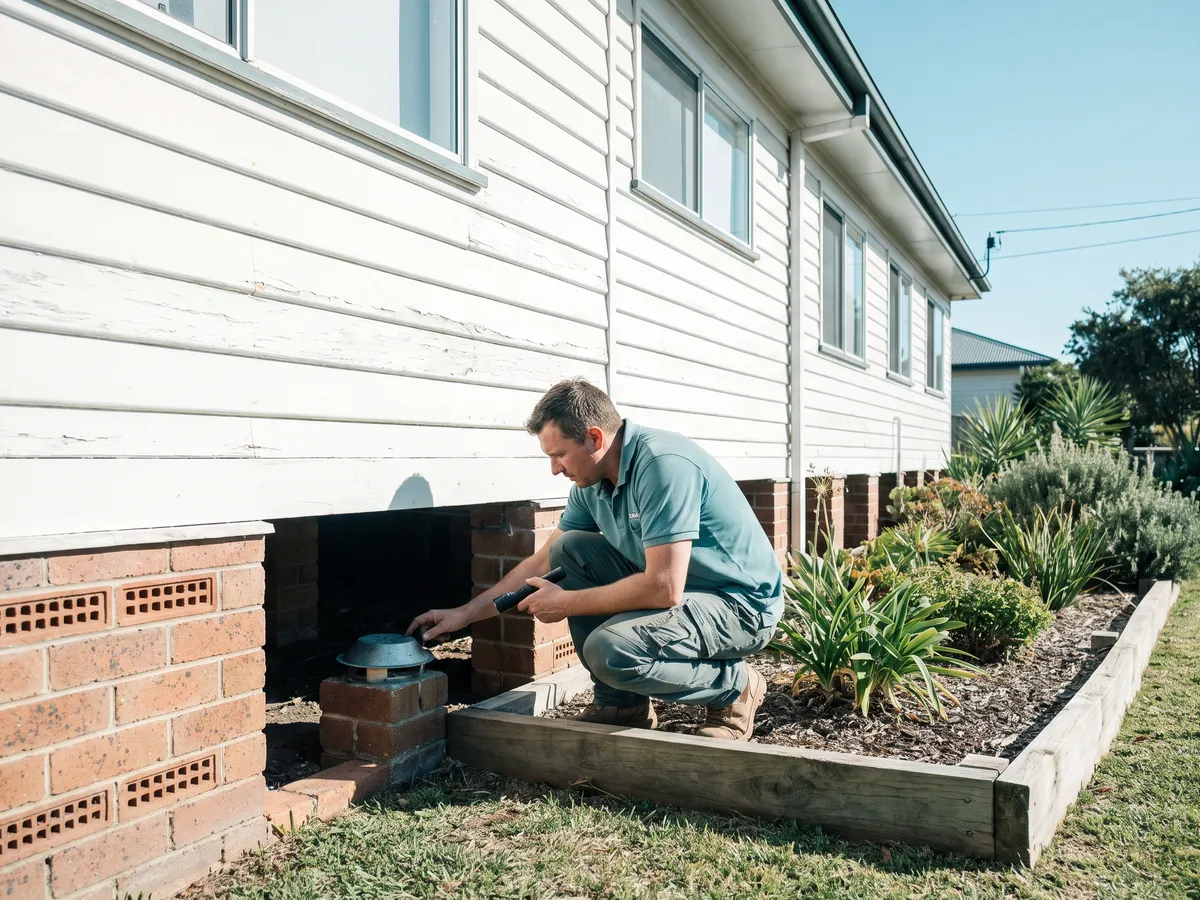
The metal shields between pier and bearer. Intact, they push any mud leads into view; bridged or missing, they're the first thing the report flags.
Sounded and sighted along its length for workings, damage, and where old timber meets damp ground.
Cross-flow through the subfloor vents. A closed or blocked subfloor holds the moisture termites want.
Where water sits after rain and where it drains: read with a moisture meter, not a guess.
Beds crept over weep holes, pavers laid to the wall, timber edging against the base: the classic conducive conditions.
Woodpiles, offcuts and forgotten stacks under the house or beside the shed: a colony's front door, and a free fix.
The industrial and trade fringe
The other half of Cardiff, off the highway
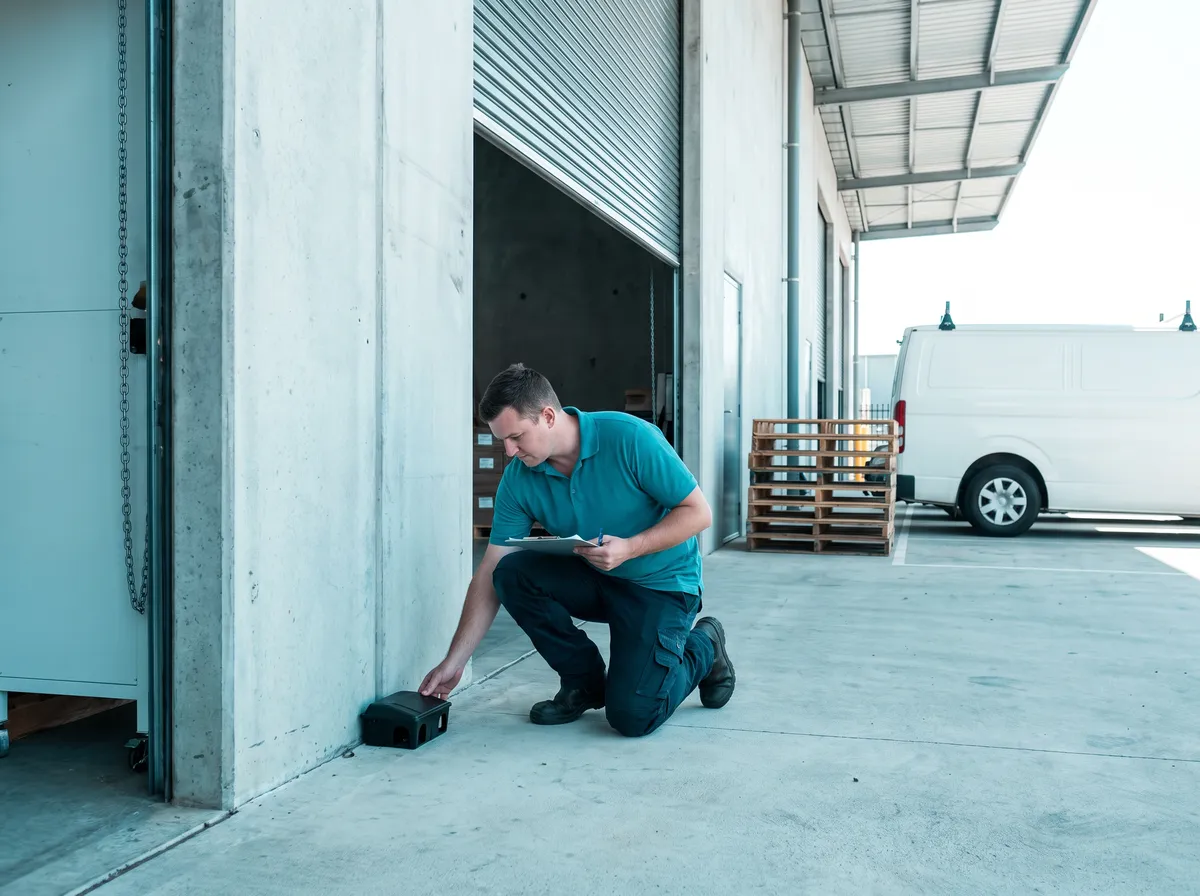
Cardiff isn't only houses. Along the highway and the rail line runs a genuine industrial and trade fringe: warehouses, workshops, factory units, mechanical trades and the suppliers that sit beside them. Pest work in that setting is a different job to a home round, and worth understanding on its own terms.
The scale changes the method. Large floor areas, roller doors and loading docks that never quite seal, high storage and packaging, and, in a food or produce operation, the stock itself, all of it makes for rodent and cockroach pressure that belongs to the building rather than to one corner of it. So the work is a plan, not a spray: monitoring set where the traffic runs, proofing where the doors and services let pests in, and a service interval that suits how the premises actually operates.
For a business that gets audited, the paperwork is half the point. A scheduled program, documented after every visit, means the pest file is ready when a food-safety auditor, a landlord or a franchisor asks for it. That is what our commercial and industrial work amounts to: no dramatics, no urgency selling, the round kept and written up.
The LGA's north, honestly
Inside the funnel-web's range, without the scare
Cardiff sits in the LGA's north, close enough to Newcastle to fall inside one specific fact worth knowing: the Newcastle funnel-web's entire documented range fits inside about 25 kilometres of Newcastle, and Cardiff, along with Charlestown and Speers Point, falls inside it. Better to say it plainly, we reckon, than let it turn into a scare or sit as a secret.
The short of it: a real and recently described species, bigger than its Sydney cousin, with a bite that is serious untreated; antivenom works, and no Australian funnel-web death has been recorded since it came in. Encounters climb after rain, when wandering males end up in sheds, garages and yards. We will never claim your home has them; that cannot be known from a distance. A treatment's honest job is to strip back the sheltered spots spiders favour around a property so the odds of meeting one near the house drop.
The full species detail, the first aid, and the district picture, redbacks and webbing spiders included, live on our spider work page. This is the note; that is the whole story.
On the register here
What Cardiff books us for
-
01
Termite inspections, and management where findings justify it
Cardiff's yearly habit for its subfloor homes, and the booking that matters before a renovation opens up a wall, or soon after you take the keys to one.
the service → -
02
The annual home round
Pest work on the seasonal beat: cockroaches and ants before summer, rodents as autumn pushes them indoors, and the yearly termite inspection riding along on the same schedule.
the service → -
03
Commercial and industrial premises
The warehouses, workshops and trade units off the highway: service on a plan with monitoring where it earns its place, and every visit written into the audit file.
the service → -
04
Rodents where the trade estate meets the homes
Autumn work in a suburb where warehouse storage and older housing sit side by side: proofing the entry points in weatherboard and brick rather than baiting and hoping.
the service →
Asked in Cardiff
Local questions
Our place is an older weatherboard on piers. Is that a problem or a plus for an inspection?
A plus, honestly. A home up on brick piers gives an inspector real access to the subfloor, which is where the story usually starts, and decades of settling give the timber, the drainage and the garden line plenty to say. The section above walks through exactly what the torch stops on down there. It is more to look at, and more to look at is a good thing.
We run a workshop off the highway. What does a pest program actually involve?
An interval that suits how the premises runs, monitoring set where the traffic and the storage are, proofing at the roller doors and services where pests get in, and a written record after each visit so an audit, a landlord or a franchisor has the file on request. Tell us it's a commercial or industrial site in the enquiry, and roughly what's stored there, and we'll build the plan around the operation rather than against it.
Is it true there are funnel-webs around Cardiff?
Yes, Cardiff falls within the Newcastle funnel-web's territory, which is worth having straight rather than worrying over. The males move after rain; that is when sightings happen. Nobody can honestly call your yard from a distance and we won't pretend to, but the harbourage around a home can be treated and the facts given as they are. Our spider work page has the species detail and the first aid.
What does an inspection cost, and how soon can you come?
An inspection carries one flat price, told to you upfront when the booking is confirmed. Termite management, where the findings call for it, is priced from what the report actually shows, not guessed at from the driveway. And we book inspections rather than promise a same-day rush, because a thorough inspection takes as long as it takes. Send the enquiry form and we'll get back to you with a time that suits.
Sources worth your time
- Australian Museum: Newcastle funnel-web spider (Atrax christenseni). The species description, its range around Newcastle, and how it differs from the Sydney funnel-web. The source for the awareness on this page.
- NSW EPA: pesticide and pest management licensing. Pest management is licensed trade work in NSW, and termite work carries its own endorsement. This is the regulator that administers it.