
Areas · the southern townships
Pest control in Morisset
Morisset sits at the southern neck of the lake, on the genuine bush fringe: eucalypt country runs right up to the back fences, and the town is growing into it, new estates going in beside the old lake villages and the acreage blocks toward Cooranbong and Martinsville. The bush edge is where the pest work here starts, and it runs on one standing round with everywhere else we service.
What the work looks like here
Where the bush meets the back fence
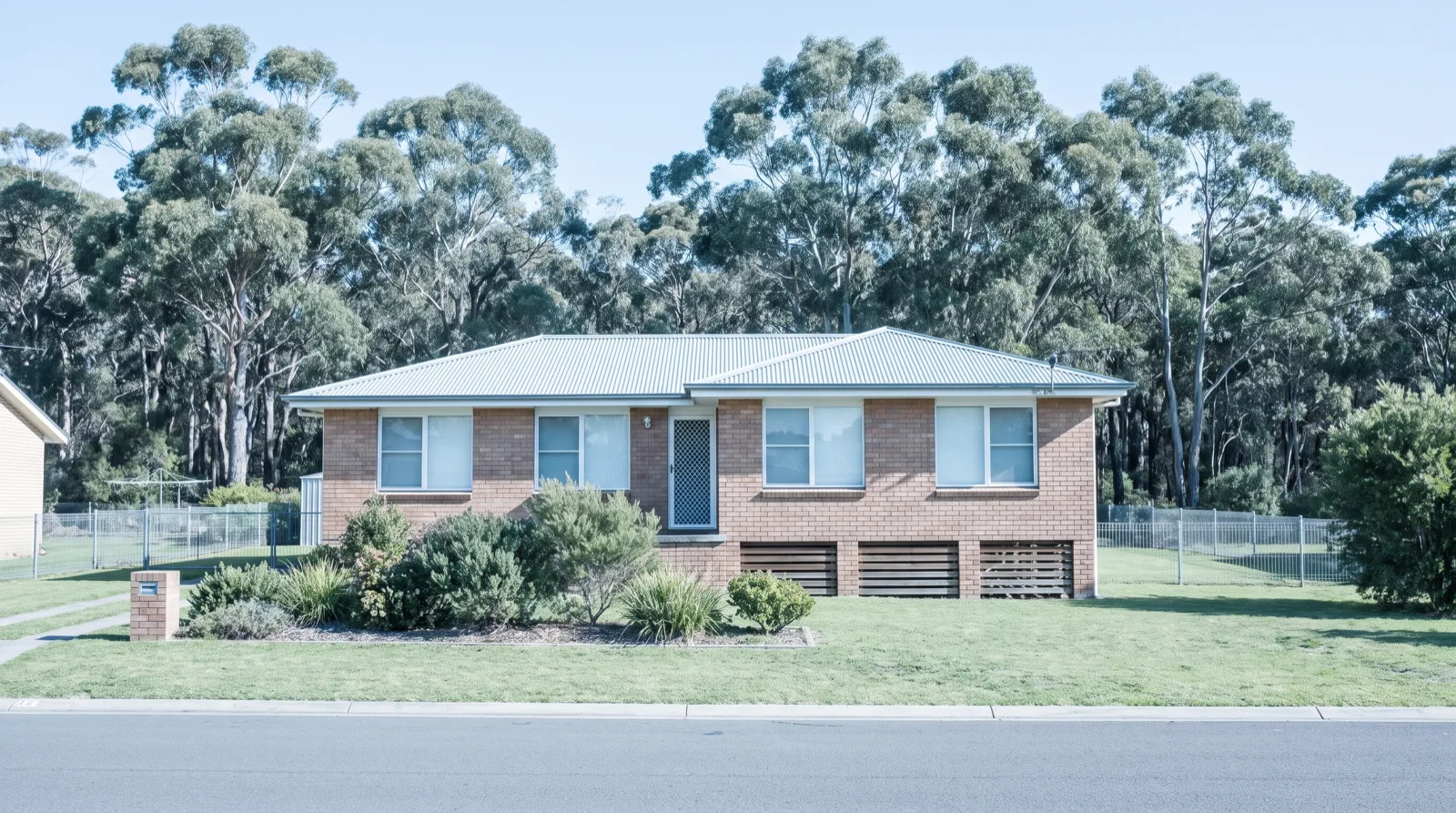
Most of Morisset's homes have bushland on at least one boundary. The town borders the Watagans and the lake-fringe scrub, and that setting is the single biggest thing we read on a job here. Eucalypts drop bark and leaf litter, tree roots hold moisture in against the piers, and a timber-framed home on a damp, shaded block is exactly the kind of place termites work quietly for a season before anyone notices.
It is also a wet, humid patch: about 1,140 mm of rain a year, lake-and-bush air rather than salt, and a subfloor that stays damp longer than an open suburban one. So on a Morisset job the first twenty minutes are usually under the house, torch and moisture meter, reading ant caps, pier lines, ventilation and the ground against the walls. The pressure here is the ordinary year-round kind the whole coast carries, just with more of the conducive conditions that make a home an easy target.
None of it calls for alarm, and we won't write it that way. It does call for keeping the inspection on a rhythm, because a bush-fringe home gives termites more to work with than a home on an open block, and the honest answer to that is a look under the house every year, not a scare in the letterbox.
Conducive conditions
What the bush edge invites, and the free fixes
A conducive condition is anything that makes it easier for termites to reach and stay in a home: moisture, timber, and a covered path from the soil to the frame. On the bush fringe there are more of them than usual, and most cost nothing to put right. This is what we look for on a Morisset block, and what we will point out in the report whether or not there is any activity.
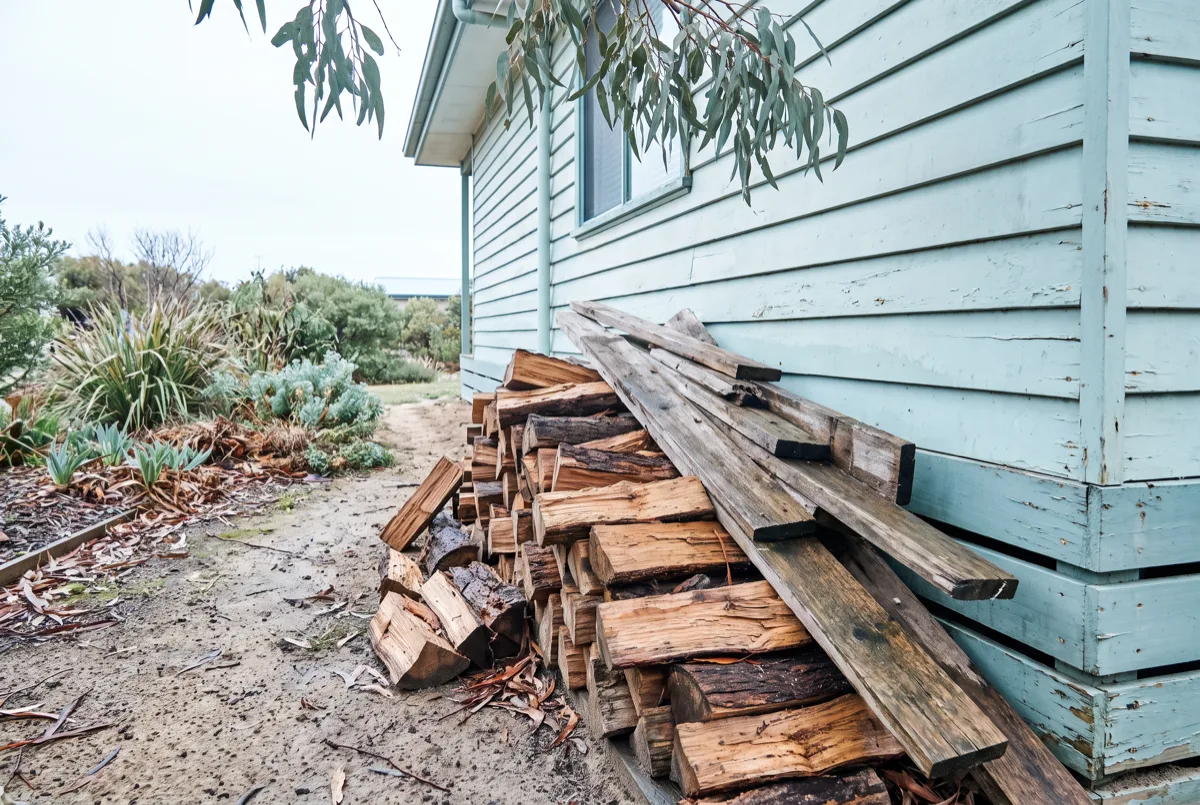
Split wood and offcuts stacked against the wall, on the ground, are a food source and a bridge in one. Off the ground, off the wall, is the whole fix.
Garden beds, mulch and dense planting held up against the weep holes and cladding give termites a hidden, damp run at the frame.
Deck posts, sleepers, fence returns and steps in direct ground contact are a common entry point on bush blocks. A gap or a stirrup breaks it.
Shaded, tree-fed ground and blocked vents keep a subfloor damp. Clearing airflow and drainage is usually enough to change the reading.
Eucalypt litter banking up against the base of the walls holds moisture and hides the very ground line an inspection needs to see.
None of these are verdicts. Only an inspection establishes what is actually there, and we will never call activity from a photo or a phone call. What the list does is tell you where a bush-fringe home is giving termites an opening, so you can close it before the next look under the house.
A township still being built
Three kinds of home, one round
Morisset is one of the district's genuinely growing corners: construction is the top local industry and the population is still climbing. That shows up on the ground as three quite different sorts of home, and the work is a little different on each.
| Setting | What we find | What it books us for |
|---|---|---|
| The new estates | The display-home streets off Accolade, Alliance and Advantage Avenue: slab-on-ground builder homes, the earliest of them now reaching the age where the first proper inspection is due. | A first termite inspection, a handover check on a new build, and the annual look. A slab is not a termite-proof floor, it just changes where they get in. |
| The old lake villages | The established Morisset core and the peninsula villages, Bonnells Bay, Brightwaters, Dora Creek: timber-floored homes on piers, decades of subfloor, bush on the doorstep. | The annual subfloor inspection, and the conducive-conditions work above. This is the classic bush-fringe termite job. |
| Acreage & rural blocks | The larger blocks toward Cooranbong, Mandalong and Martinsville: sheds, stored timber, tree lines to the boundary, and more structure than one house. | The whole property read together, not just the house: sheds, firewood stores and outbuildings are usually where the story starts on a rural block. |
A growing township also means homes change hands. If you are buying in Morisset, book a pre-purchase inspector early enough for the report to land before cooling-off ends; on a bush block it is worth knowing. Once the place is yours, the first yearly inspection sets the baseline, and the termite service covers how that runs.
The patch
The southern round, from Morisset
Morisset is a real base for the southern end of the lake, not a name on an "all areas" list. These are genuine drive times from the town centre, and the whole patch sits inside a quarter-hour, which is why we treat it as one tight round rather than a stretch.
| Locality | Drive | Note |
|---|---|---|
| Wyee | 5 min | rail-line village and rural blocks just south |
| Dora Creek | 9 min | lakeside village on the creek, older cottage stock |
| Bonnells Bay | 10 min | the peninsula's lake-village core, bush on the boundary |
| Brightwaters | 10 min | quiet peninsula streets, bushland close by |
| Cooranbong | 11 min | the growth end of the corridor, new estates against the Watagans |
| Mirrabooka | 13 min | rural-residential lakeside acreage |
| Martinsville | 14 min | valley acreage under the Watagans, the corridor's far end |
Bonnells Bay, Brightwaters, Cooranbong and Martinsville all carry the same bush-fringe conditions as Morisset itself, so the conducive-conditions work on this page reads the same across the round. Dora Creek sits a little more open. Tell us your street in the enquiry and we will know the setting before we arrive.
On the register here
What Morisset books us for
-
01
Termite inspections, and management where findings justify it
The reason most Morisset homes call us, and the annual habit worth keeping on a bush-fringe block. Detailed visual inspections, in writing.
the service → -
02
The annual home round
Seasonal treatment for the whole home: cockroaches and ants ahead of the humid summer, rodents as autumn moves them indoors, one rhythm for the lot.
the service → -
03
Spiders around a bush block
Bushland on the boundary means a busier spider season: webbing spiders under the eaves, and redbacks in the firewood, sheds and stored timber where they harbour. Treated at the harbourage, not just sprayed at the wall.
the service → -
04
Rodents in the sheds and roof voids
Autumn work on acreage and older homes: proofing the entry points on sheds, outbuildings and roof voids properly, instead of baiting and hoping.
the service →
Asked in Morisset
Local questions
We've just built in one of the new estates. Do we even need a termite inspection yet?
Yes, and sooner than most people think. A new slab home isn't termite-proof, it just narrows where they can get in, usually at the slab edge, service penetrations, or anywhere landscaping later bridges the barrier. A handover inspection checks the build was done right, and then an annual look keeps it honest. On the bush fringe the first few years are exactly when good habits pay off.
We stack firewood against the house. Is that really a problem?
It's the most common conducive condition we find in Morisset. Firewood and stored timber against the wall, on the ground, is both a food source and a covered path straight to the frame, and it hides the ground line an inspection needs to see. You don't have to stop keeping wood, just get it off the ground and away from the walls. It's a free fix that genuinely lowers the risk.
There's bush right behind us. Does that mean we'll get termites?
It means the conditions are more favourable than on an open block, not that activity is a given. Plenty of bush-fringe homes never have a problem, because the owners keep the conducive conditions down and the inspection on a rhythm. What the bush edge changes is how much a lapse costs you, which is the honest case for the annual look rather than a reason to worry.
Do we have funnel-webs out here?
The Newcastle funnel-web's known range fits within about 25 km of Newcastle, taking in the LGA's northern suburbs, not the southern townships like Morisset, so it isn't the spider to think about here (the Australian Museum has the range if you want the detail). What the bush edge does bring is more webbing spiders under the eaves and redbacks in the firewood, sheds and stored timber. A redback bite needs first aid and attention, which is a good reason to clear the harbourage the spiders like.
We're on acreage toward Cooranbong. Do you cover the sheds too?
We read the whole property, not just the house. On a rural block the sheds, outbuildings and stored-timber piles are often where the story starts, so they're part of the inspection and the treatment. Tell us it's acreage in the enquiry so we allow the time for it.
When in the year should the annual inspection happen out here?
A year on from your last inspection, wherever in the calendar that sits. Termites here keep no off-season, so the month that matters is the one that gets booked. If you're starting fresh, late winter into spring books well, ahead of the swarming season. The planner will pin yours down.