
Guides · the free fixes
Conducive conditions: what we look for around your home
Most of what invites termites to a house costs nothing to fix. It's a garden bed built up over the weep holes, a tap that drips onto bare soil, firewood stacked against the wall. These are the first things an inspector reads, and the ones you can clear this weekend. Here's the whole list, plainly, and the one thing clearing it still can't tell you.
The report's own words
What "conducive conditions" actually means
Conducive conditions is the exact phrase a timber pest inspection uses, and it has its own section in every report we hand over. It doesn't mean termites are there. It means the situation around the house is inviting them: somewhere damp, somewhere the frame timber can be reached without crossing open ground, somewhere the barrier a builder put in has been quietly bridged.
Termites want two things a home can accidentally offer, moisture and concealed access to timber. Nearly every conducive condition is one or the other, and nearly all of them are yours to fix for nothing. That's why we tell people the same thing across the counter: the one genuinely useful thing you can do yourself is clear these. Not spray, not bait, not buy anything. Clear the conditions and you've done the part that's actually in your hands.
On this coast it matters more than most places. Lake Macquarie sits in the high termite-pressure band with activity all year, and its established timber-framed homes on subfloors give termites exactly the timber they're built for. The conditions below are where that pressure finds a way in.
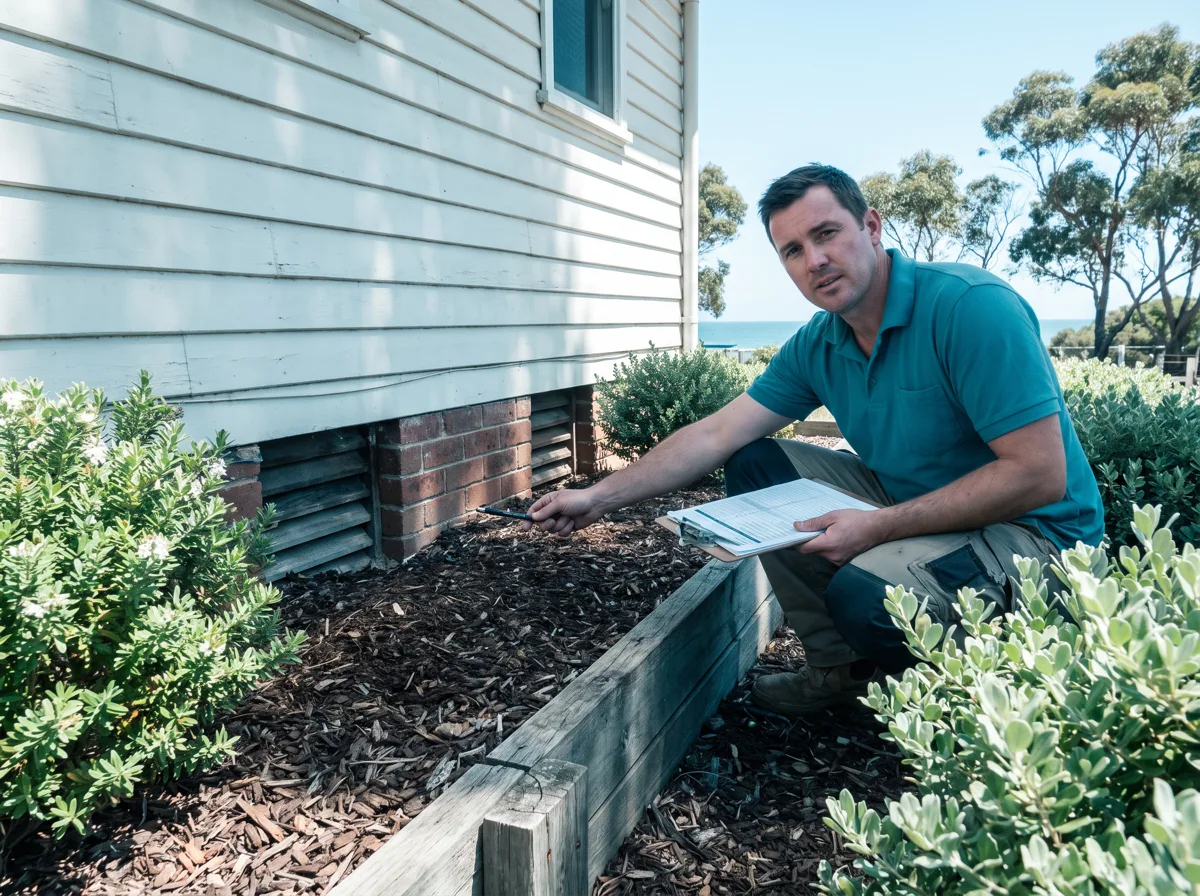
If you clear a woodpile or a garden bed and find mud tracks, hollow-sounding timber or live insects, stop there. Don't spray it, don't pull it apart to see better, don't knock the mud away. Disturbed termites just abandon the workings and re-route, which makes them harder to trace. Leave it exactly as it is, keep everyone off it, and book an inspection.
The walk-around register
The free-fix checklist, top to bottom
Walk the outside of the house with this in hand. Every row is something you can put right yourself, no licence and no product needed. It's the same list we read, in roughly the order we read it.
| Around the house | Why it invites termites | The free fix |
|---|---|---|
| Soil or garden beds piled high enough to bury the weep holes and subfloor vents | Buries the gap that lets a bricklayer's weep holes and the subfloor breathe, and hands termites a covered path straight up behind the brickwork, out of sight. | Rake the level back down so the weep holes and vents sit clear above the soil, a good hand-span of brick showing. |
| Mulch and garden beds hard against the wall | Holds moisture against the base of the house and gives termites cover right where the frame starts. | Pull beds back off the wall and keep a clear, dry inspection strip you can actually see along. |
| A leaking tap, downpipe or air-con drain wetting the ground by the house | A reliable damp patch is a reliable water supply, and moisture is half of what termites are looking for. | Fix the drip and run the water away from the house. This one fix removes more risk than most. |
| Blocked or too few subfloor vents | A stuffy, damp subfloor stays inviting all year. Poor ventilation is the condition that quietly feeds all the others. | Clear anything covering the vents; if the subfloor still smells damp, mention it and we'll note whether more airflow is warranted. |
| Timber touching soil: fence posts, steps, deck and pergola posts, old form-work | Any timber that runs from the ground up to the house is a bridge, and untreated timber in the dirt is a first meal on the way. | Sit posts and steps on metal stirrups or masonry, not straight in the ground; pull out any offcuts or form-work left buried. |
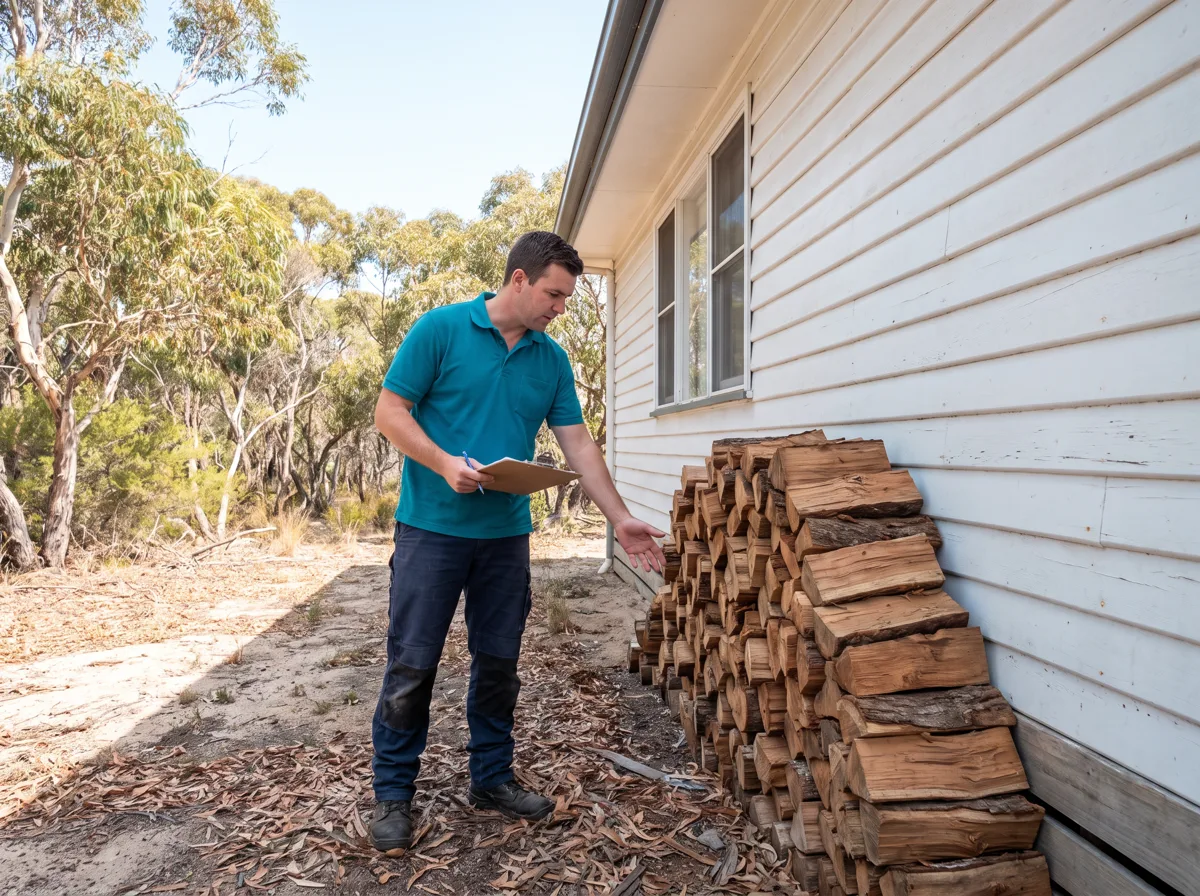
| Firewood, offcuts or stored timber against the wall or under the deck | A woodpile on bare ground against the house is a termite colony's ideal address, warm, hidden, and touching the building. | Store timber up off the ground and away from the wall, and have a look through the bottom of the stack when you move it. |
| Slab edge or weep holes hidden by paths, paving or a rendered step | A concealed slab edge lets termites cross into the house unseen. Slab homes are not off the hook; the entry just hides differently. | You can't always undo paving yourself, so flag it. The fix may be keeping the edge exposed where new work is done. |
| Tree stumps, dead roots and old timber left in the ground nearby | An untreated stump is a food source and a staging post a few metres from the house, feeding a colony that then goes looking. | Grind or dig out old stumps and roots rather than leaving them to rot in the ground. |
None of that is a treatment, and none of it is a guarantee. It's the honest, unglamorous groundwork that makes a home a poorer target, and it's free. The three conditions worth understanding a little deeper are below.
Half of what they're after
Moisture is the one that matters most
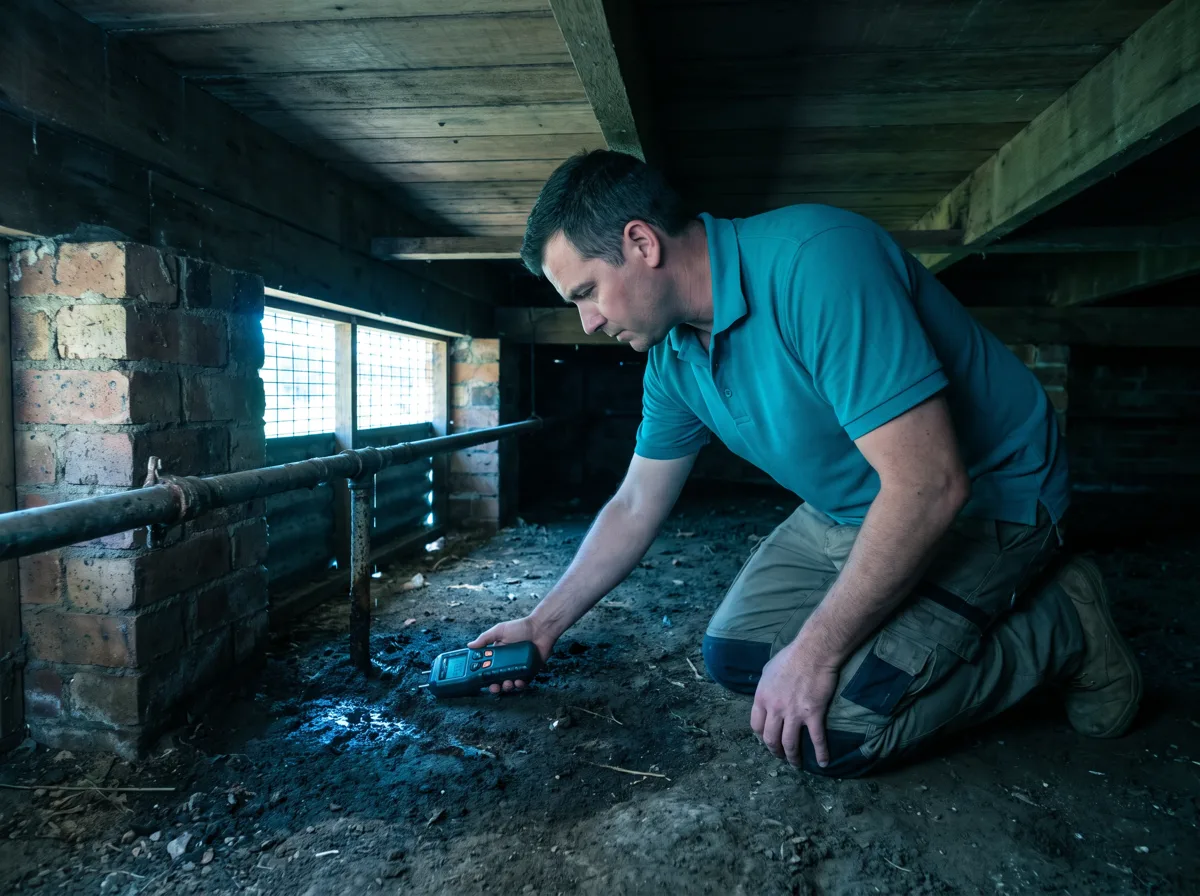
If you only fix one thing, fix the water. Termites need moisture as much as they need timber, and a subterranean colony will follow a damp trail toward a house the way anything does. A slow leak under the kitchen, a downpipe emptying against the slab, an air-conditioner draining onto the same patch of soil every summer day: each one keeps the ground by the house wet enough to be worth the trip.
Under the floor it compounds. A subfloor that can't dry out, because the vents are blocked or there were never quite enough, holds that dampness against the bearers and joists and the piers. On a humid lakeside year of eleven-hundred millimetres of rain, the outside air is doing you no favours, so the ventilation and the drainage you can control matter more, not less.
The free fixes here are the highest-value ones on the whole list: mend the drip, move the water away, and keep the subfloor breathing. Where a moisture reading says the airflow itself needs work, we'll say so in writing rather than sell you a fan from the driveway.
The other half: a way in
Timber to the ground, and the woodpile
The second thing termites want is timber they can reach without crossing open, exposed ground where they'd be seen and dry out. Anything that connects soil to the house does that job for them. A fence that butts into the wall, a garden step sitting in the dirt, a deck post straight into the ground, form-work a builder never pulled out: each is a covered bridge from the colony to the frame.
The woodpile is the one we point at most, and on the bush fringe it's the one that bites. Around Morisset and the Cooranbong to Martinsville corridor, where houses meet the eucalypt, a stack of split firewood piled against the weatherboards on bare ground is close to a purpose-built termite habitat: dark, damp underneath, timber on timber, and touching the building. It's also the easiest thing on this page to put right.
Lift stored timber up off the ground and out from the wall, and give the bottom of the stack a look whenever you move it, because that's where you'd see the first mud. Steps and posts belong on stirrups or masonry, not in the soil. None of it needs a tradesman; it needs an afternoon.
Place inside the work
What the inspector reads first
These aren't extras we get to at the end. Conducive conditions are the map that tells us where to look hardest, so we read them before anything else, in a set order. On a subfloor home in Cardiff or Belmont, that walk goes like this.
-
The wall line, right around
The first lap is the perimeter, reading where the ground meets the weatherboard: the height of the garden beds against the wall, the weep holes and vents, the paths and steps that could bridge the barrier. The conditions here tell us where a termite would try to get in, so it's where the close look starts.
-
Under the house
Then into the subfloor: ant caps on the piers, the pier lines and bearers, and above all the moisture, the drip that never quite dried, the corner that doesn't breathe. On the district's established homes, moisture is the usual opening chapter, and the damp is what points us to the timber worth sounding.
-
The grounds, and the bush fringe
Out again to the fences, retaining walls, stumps and stored timber, and on a bush-fringe block the firewood stack against the wall. These are the staging posts, the food and cover a few steps from the house, and they shape how much closer we look at everything else.
-
Then, and only then, inside
What we found outside decides where the indoor look presses hardest: the wet areas beneath that leaking tap, the skirting behind that built-up bed. The conducive conditions outside are what make the inside inspection targeted rather than a hopeful wander.
The honest part
Clearing these lowers the odds. It can't clear the house.
Here's the line we won't blur to win the job. Fixing every condition on this page makes your home a worse target, sometimes a much worse one, and it's absolutely worth doing. What it cannot do is tell you whether termites are already at work in the frame, the subfloor or a wall nobody has opened.
Conducive conditions are risk, not a finding. A tidy, dry, well-ventilated home with the woodpile moved can still have an active colony that arrived before you did, and a home with three of these conditions might have nothing at all. The only way to know which house is yours is to have it read properly.
That's a detailed visual termite inspection, in writing, and on this year-round coast the sensible rhythm is annual. It's the same walk described above, done thoroughly and documented, with the conducive conditions written into the report so you know exactly what to clear. What the inspection involves covers the day itself; the termites page covers what happens if something's found.
Spot and clear every condition on this page: drainage, garden lines, ventilation, stored timber. Free, and worth doing today.
See whether termites are already active in the frame, the subfloor, or a wall you can't open. Clearing conditions doesn't clear a house.
Establishing what's actually there takes a detailed visual inspection, reported in writing. Nothing less settles it.
Straight answers
Questions about the free fixes
If I fix all of these, do I still need an inspection?
Yes. Clearing conducive conditions lowers the chance of a new attack, but it can't see inside the frame or under the floor, and it does nothing about a colony that's already in. On the high-pressure Lake Macquarie coast the honest rhythm is an inspection every twelve months regardless, with the fixes making the home a poorer target between visits.
How often should I walk around and check?
A slow lap of the outside every few months is plenty, plus a look at the base of the woodpile whenever you move it and a glance at any spot that stays damp. You're not diagnosing anything, just keeping the conditions cleared and noticing if something changes, so you can mention it when the annual inspection comes due.
We're on a concrete slab. Do conducive conditions even apply to us?
They do, just differently. Slab homes get attacked through the edge of the slab, expansion joints and service penetrations, and the classic conducive condition is a path, paver or garden bed built up over the slab edge so termites can cross it unseen. Keep the slab edge exposed and visible where you can, and fix the same drainage and stored-timber issues everyone else does.
Is a damp subfloor always a termite problem?
No. Moisture is a conducive condition, not a finding, and plenty of damp subfloors have no termites. But damp is the single strongest invitation on the list, and it also feeds timber rot in its own right, so it's worth fixing whether or not anything is active. What the moisture means for your home specifically is what the inspection reads.
I moved the firewood and found what might be mud tracks. Now what?
Leave it exactly where it is and don't disturb it further, no spraying and no breaking it open. Note the spot, keep it undisturbed, and book an inspection. Undisturbed workings are far easier to trace and treat than scattered ones, so the most useful thing you can do is nothing, and then call.
Can I just treat the conducive conditions with a spray and skip the rest?
A retail spray kills the few termites you can see and scatters the thousands you can't, which usually makes real treatment slower. The genuinely useful DIY here is physical, not chemical: move the water, move the timber, keep the subfloor breathing. Termite treatment itself is licensed work under NSW law, and it's quoted from an inspection's findings, never from the footpath.
Sources worth your time
- Standards Australia. The AS 3660 series (termite management) treats conducive conditions, moisture and timber-to-ground contact, which this guide describes in plain terms.
- CSIRO. Australia's long-running research base on subterranean termite biology and behaviour, including why moisture and concealed timber drive where colonies forage. The biology under the building advice.
- NSW EPA: pesticide and pest management licensing. Why the DIY line falls where it does: clearing conditions is yours to do, but pesticide and termite management work is licensed trade work in NSW.