
Guides · the autumn work
Rodent-proofing an older Lake Macquarie home
From about April, when the nights cool off, the rats and mice come indoors. On the district's older weatherboard and brick homes, the answer that lasts isn't another bucket of bait, it's finding where they get in and closing it. Here's where they actually enter, what you can seal yourself this weekend, and why proofing beats baiting on repeat.
Why autumn, and why here
The indoor season runs April to August
Rodents don't arrive with the heat. They arrive when it leaves. Once autumn arrives and the nights drop away, the rats and mice that passed summer in the garden, along the bush edge and down the lake's stormwater lines begin moving indoors, looking for the warm, dry, undisturbed space an older home hands them. The pressure builds through April and May and holds right through winter.
This coast keeps them comfortable. A humid climate of eleven hundred to twelve hundred millimetres of rain a year, wettest from autumn into June, means damp subfloors and softened timber, and a deep run of established homes through Charlestown, Cardiff, Toronto, Belmont and Swansea gives them decades of gaps to choose from. So the timing of the work matters: proofing finished before winter is what separates one autumn job from a problem that returns every year.
If you'd rather see the whole pest year at a glance, the pest year planner sets your own place against the calendar, and the year-round calendar writes each phase up month by month.
Loose bait scattered in the roof is the move that backfires. It sends poisoned rats off to die in a wall cavity, where the smell is yours for a fortnight, while the gap that let them in stays wide open, so next autumn's rats walk the same road. Make a note of where the noise is loudest and roughly when you hear it, keep any bait out of reach of pets and native animals, and start with the way in, not the poison. If it's already busy up there, book an inspection.
Where they actually get in
The entry points on weatherboard and brick
An older home collects gaps the way it collects coats of paint, and rats and mice read them better than we do. Where you look depends on which one you've got and how the house is built.
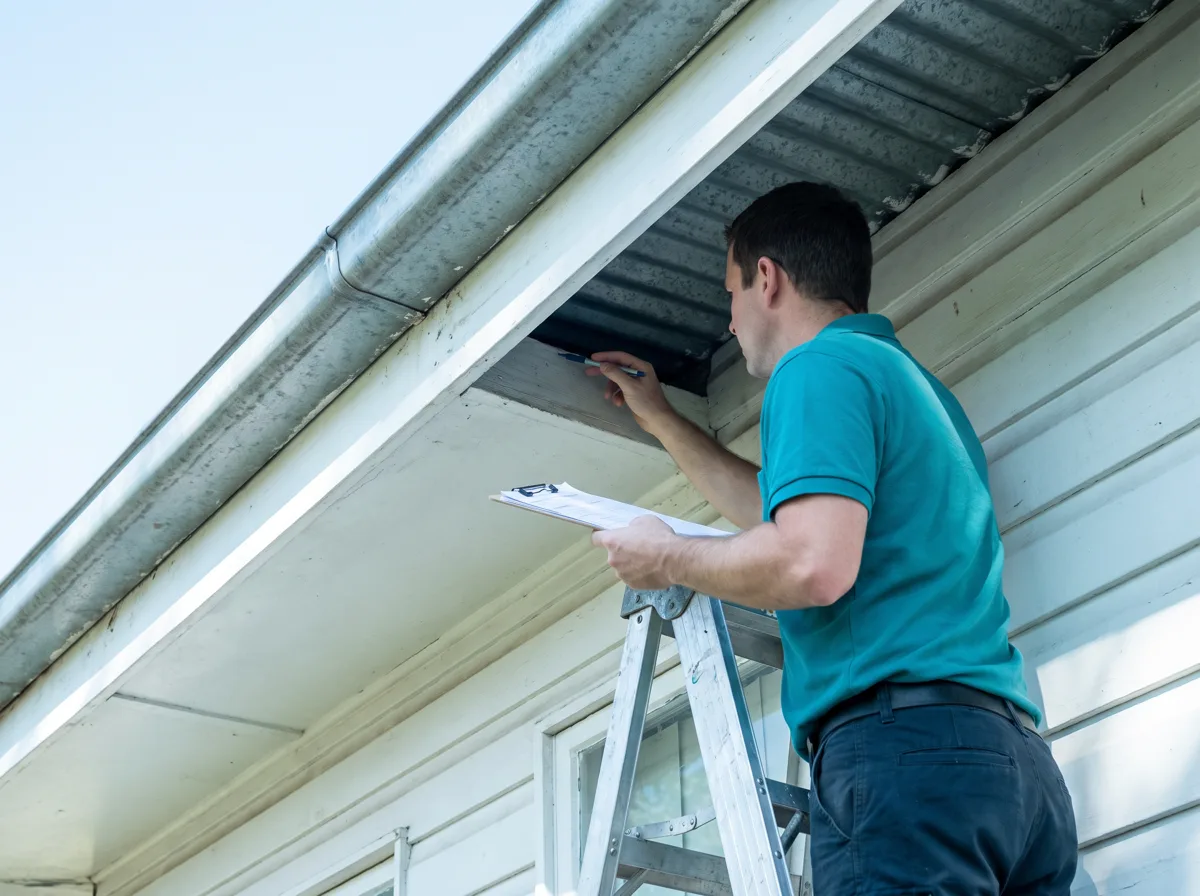
Two things decide where the traffic goes: the rodent and the construction. A black rat, the roof rat behind most "noise in the ceiling" calls here, is a climber, so it works the roofline down, up a fence or an overhanging branch and in through the eaves. A brown rat burrows and stays low, into the subfloor, along drains and the lake-edge stormwater lines. A house mouse needs a gap no wider than a pencil, roughly six millimetres, so on an old home almost nothing is too small for it.
Weatherboard and brick fail differently. A weatherboard home gaps at the eaves and where cladding has shrunk or lifted, and it usually sits on a brick base course with the original subfloor vents. A brick home lets them in at perished mortar and weep holes low down. Both leak around every pipe, waste and cable ever run through a wall. The map below is what gets read on a typical established house, roofline to threshold.
| Where on the house | What you'd see | Weatherboard, brick or both | Who uses it |
|---|---|---|---|
| Roofline and eaves | Gaps at the roof-sheet-to-wall junction, a lifted tile, a broken bargeboard, daylight in the roof void. | Both, worst on weatherboard eaves | Black rat |
| Overhanging branches and fence lines | Not a gap but the road in: a branch touching the roof, a fence run to the wall, a climber up a downpipe. | Both | Black rat |
| Gaps under lifted weatherboards | Cladding that has shrunk, cupped or lifted at a corner, leaving a slot behind the boards. | Weatherboard | Mice, black rat |
| Subfloor vents | Original terracotta or timber-slat vents in the base course, perished and gapping with age. | Both | Brown rat, black rat |
| Weep holes and perished mortar | Open weep holes and crumbled mortar joints low in the brickwork. | Brick | Mice, brown rat |
| Pipe and cable entries | The gap around water, gas, waste and cabling where it passes through a wall or floor. | Both | Mice, at a pencil's width |
| Doors and thresholds | A worn door sweep, a gap under an external door, a perished seal you can see light through. | Both | Mice |
None of that is a diagnosis called from the driveway. The map matters because the fix follows the rodent: the black rat points you at the roofline, the brown rat at the drains and subfloor, the mouse at the small gaps everyone else walks past.
Your weekend, or a trade's
What you can close up yourself
A fair slice of proofing is honest weekend work with a caulking gun and a screwdriver, and everything else gets easier once it's done. A few jobs are worth handing to a trade, either because they're at height or because getting them wrong costs you the airflow an old home needs. Here's the split, plainly.
Start with the two halves of the problem together. A rodent needs a way in and a reason, so take the reason away while you close the doors: the pet food left out overnight, the bird seed, the boxes and stored timber stacked against the wall, the branch resting on the roof. Every one of those is free to fix and it does real work.
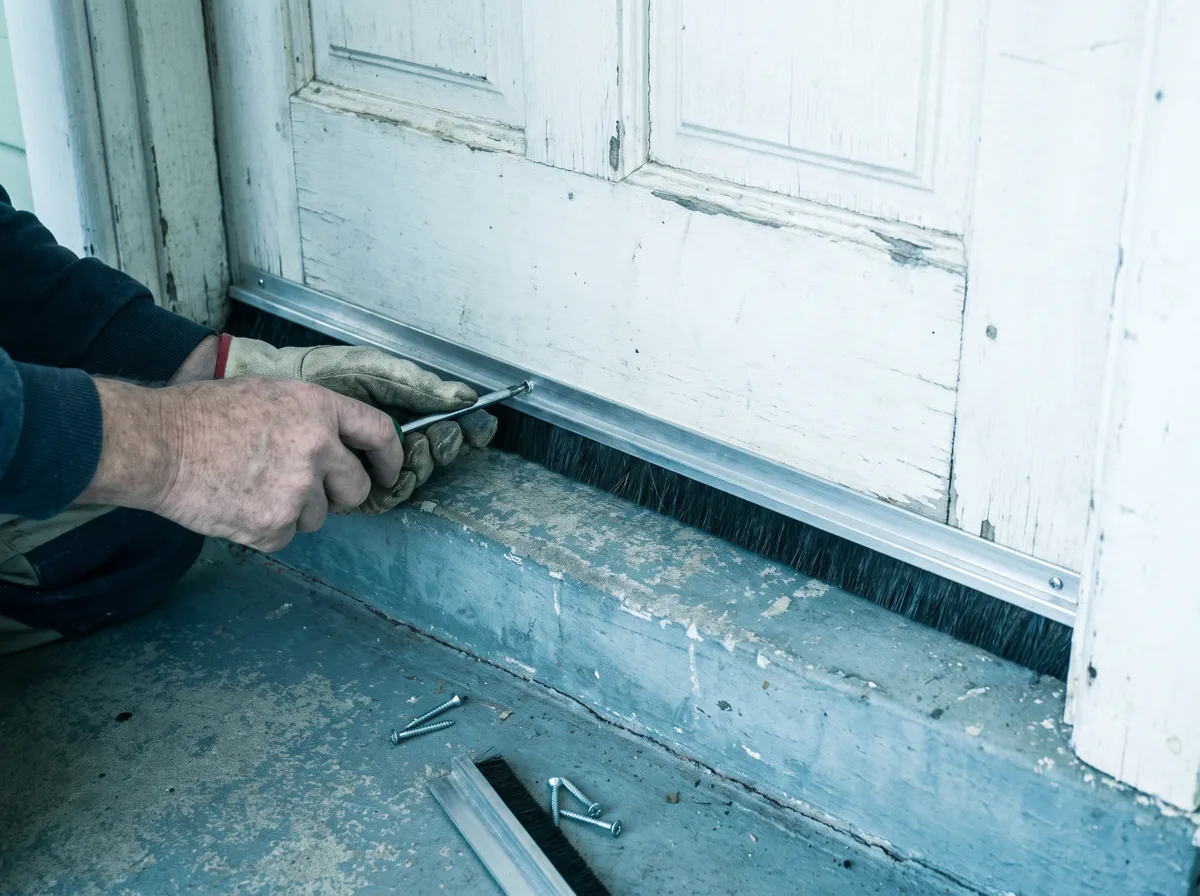
Then the gaps you can safely reach. A brush-strip sweep on an external door shuts the commonest mouse door in the house; perished seals get replaced; the gap around a pipe gets sealed tight to the service. What's left for a trade is the height and the airflow: the roofline done safely, and subfloor vents meshed so rats are stopped without smothering the ventilation the subfloor lives on. Get that last one wrong and you trade a rodent problem for a damp one.
| The gap or the draw | The fix | You, or a trade |
|---|---|---|
| A branch touching the roof | Cut it back a good metre clear of the roofline, so the black rat loses its bridge. | You |
| Pet food, bird seed, open compost | Store feed in sealed bins, feed pets by day and lift the bowl at night, close the compost. | You |
| Boxes, timber and clutter on the walls | Lift stored gear off the ground and pull it off the wall, so there's no harbourage against the house. | You |
| The gap under an external door | A brush-strip door sweep, screwed on. The single highest-value gap a mouse uses. | You, a weekend job |
| Perished door and window seals | Replace the seals where you can see light through them. | You, mostly |
| Gaps around pipes and cables | Sealed tight to the service with a durable filler, not expanding foam a rat chews straight back out. | You, or a trade if it's under the floor |
| Perished or gapping subfloor vents | Galvanised mesh fitted behind the vent so airflow is kept and rats are stopped. The airflow is the catch. | A trade |
| Roofline and eave gaps, lifted tiles | Sealed and closed at height, done safely and without trapping moisture in the void. | A trade |
| Bait, if it's needed at all | A registered product in locked, tamper-resistant stations placed on the runs. Applying it commercially is licensed work in NSW. | A trade |
Why the order is the whole thing
Proofing first, bait second
Bait is the tool everyone reaches for first, and on its own it's the exact reason rodents feel like a yearly subscription. You thin the numbers, the survivors breed back over summer, and the gap they came through is still sitting open when the nights cool off again. The products aren't the problem. The order is.
Turn it around and it holds. Read the house, close the ways in the inspection actually found, take away the food and the harbourage, with bait placed only where it earns a spot, in locked stations on the runs. Now the door is shut, so there's no fresh supply walking in behind the ones you've dealt with. That middle step, the proofing, is the one a bait-only job skips, and it's precisely why those don't last past one season.
It's also why the honest DIY here is physical, not chemical. Moving the water, the timber and the food and closing the gaps is work anyone can start; it's the part genuinely in your hands, and it makes everything a technician does afterwards hold.
Thins this autumn's numbers; the survivors breed back and the next season's rodents ride in by the same open route. A subscription, not a fix.
Close the ways in and take away the draw, then bait only where it's justified. The gap is shut, so the result holds through the next cold snap.
Bait kills rodents; it never closes a door. Proofing is the step that turns a treatment into something lasting, and it has to come first.
The honest part
Proofing lowers the pressure hard. It can't promise an empty house.
That line does not get blurred here to win a job. Doing everything on this page, closing the reachable gaps and clearing the draw, makes your home a far poorer target, and it's absolutely worth doing whether or not anyone ever hears a scratch. What a walk-around can't do is find every entry point an old home has hidden, seal the roofline safely, or settle whether there's already a nest in the void behind the noise.
That's where a proper proof-and-control job earns its place: the whole house read, the entry points the inspection finds sealed in durable materials, the airflow kept, and bait used responsibly only where it's needed, with what was done written up so you and any agent or strata manager can see it. On this coast the sensible time to book it is late summer into early autumn, ahead of the April move-in, so the house is closed before the season starts.
The full method, the species differences and how the baiting is done are set out on the rodent control page. When you're ready, or if it's already busy up there, book an inspection and we'll read the house before anything is laid.
Straight answers
Questions about proofing an older home
What's the smallest gap I actually need to seal?
A house mouse gets through about six millimetres, roughly the width of a pencil, and a young rat through about twice that. The rule of thumb is simple: if a pen fits in the gap, so can a mouse. When you're not sure, err on the smaller side, because on an old home the tiny gaps outnumber the obvious ones and they're the ones people walk past.
If I mesh my subfloor vents, won't I block the airflow the house needs?
Only if it's done badly. The vents are there to keep the subfloor breathing, and an old timber-floored home genuinely needs that airflow, so the mesh goes behind the vent in a way that keeps the ventilation and just stops the rats. Getting that balance right is exactly why it's on the trade side of the list: seal a vent solid and you can swap a rodent problem for a damp, rot-prone subfloor.
Our old weatherboard has gaps everywhere. Where do I even start?
Start high and start with the food. The black rat, the one you hear in the ceiling, comes in along the roofline, so cut the branches back off the roof and close the reachable eave and door gaps first, then take away the pet food and the clutter on the walls. A rodent needs a way in and a reason; take the reason away while you shut the top, and the base course and the trade jobs come next.
Do I still need bait if I proof the house properly?
Often not, or only as a short backstop while the sealing takes effect and any rodents already inside are dealt with. Proofing removes the reason they keep coming, which is the thing bait can never do. Where bait does earn a place it belongs in locked stations on the runs, as the backup to the proofing, never the whole plan and never scattered loose.
When's the best time to do the proofing?
Late summer into early autumn, ahead of the April move-in, so the house is closed before the season starts. That said, any time beats baiting on repeat: if it's already noisy in the roof the season has begun, and closing the entry points is still the move that ends it rather than thinning the numbers and waiting for the next lot.
Is proofing a one-off, or something I keep having to do?
Done in durable materials it's largely a one-off, but an old home keeps quietly making new gaps: mortar perishes, weatherboards lift, a seal wears through. A slow lap of the outside each autumn, a look along the roofline and the base course, keeps the proofing holding without starting again. It's the same rhythm as an annual inspection, and it pairs naturally with one.
Sources worth your time
- Australian Museum. The natural-history reference behind the species notes here: the black rat, brown rat and house mouse, how they climb or burrow, and the gaps they use to get inside.
- NSW EPA: pesticide and pest management licensing. Why the DIY boundary sits where it does: closing gaps and clearing the draw is yours to do, but applying rodenticides commercially is licensed trade work in NSW.
- APVMA. Australia's pesticides and veterinary medicines regulator; it registers the rodenticide products used in this work. "Registered" means assessed for a defined use, which is why placement and containment aren't a free-for-all.