
Guides · the evidence file
Why termites are a year-round threat in Lake Macquarie
The habit of "we'll look at it in spring" comes from somewhere colder than this. On the Lake Macquarie coast there is no termite off-season to wait for, and the reason isn't a sales line: it's the hazard band, the housing stock and the weather, read together. Here is the file.
Termites are not a spring visitor here. The picture of a swarm that arrives in the warm months and clears off for winter is a temperate-climate picture, true enough of Melbourne or the Southern Highlands. This is coastal New South Wales, and the pressure barely dips. Waiting for spring doesn't lower your risk. It just adds a few more quiet months of a colony working timber you can't see.
Three plain facts, and each one earns its own section below. None of them tells you what is happening under your particular house. Only an inspection does that, and this whole page is really an argument for doing that inspection on a yearly rhythm rather than a hunch.
The hazard band
This coast sits in the high band, all year
Australia's termite hazard map splits the country into bands by how active termites stay through the year. Coastal NSW sits in the high band: year-round, or near enough to it. The line that shapes a southern homeowner's habits, quiet in winter, busy in summer, is the wrong line for this postcode.
- This coast, year-round
- Inland / temperate NSW
The map isn't ours. It's the national hazard banding the industry works to, and it puts coastal NSW a full step above the temperate cities where the "termite season" idea took hold.
| Band | Where | Activity |
|---|---|---|
| Highest | Tropical QLD, NT | Year-round foraging |
| High | Coastal NSW, SE QLD | Year-round or near it |
| Moderate | Sydney metro, VIC, SA | Spring through autumn; quieter in winter |
| Lower | Tasmania, alpine | Cool climate slows activity |
A band describes a region, never a single house. It's the reason we never phone a verdict from the map. What it does tell you is which habit to keep, and on this coast the habit is a yearly look, not a seasonal one.
The housing stock
The district is built the way termites like
A hazard band is the climate. The house is the invitation. Lake Macquarie's stock is 85% detached, and a deep share of it is the established, timber-framed home on a subfloor, exactly the construction subterranean termites move through most easily.
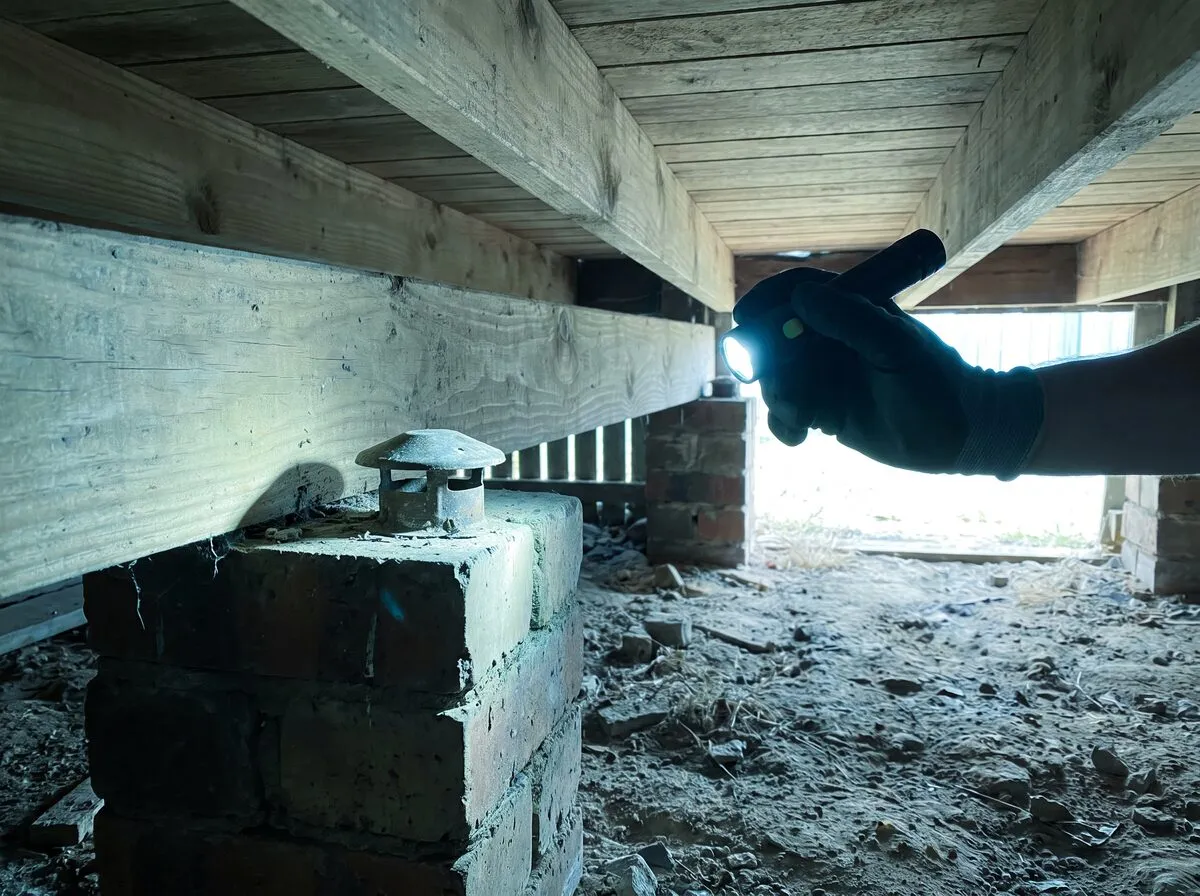
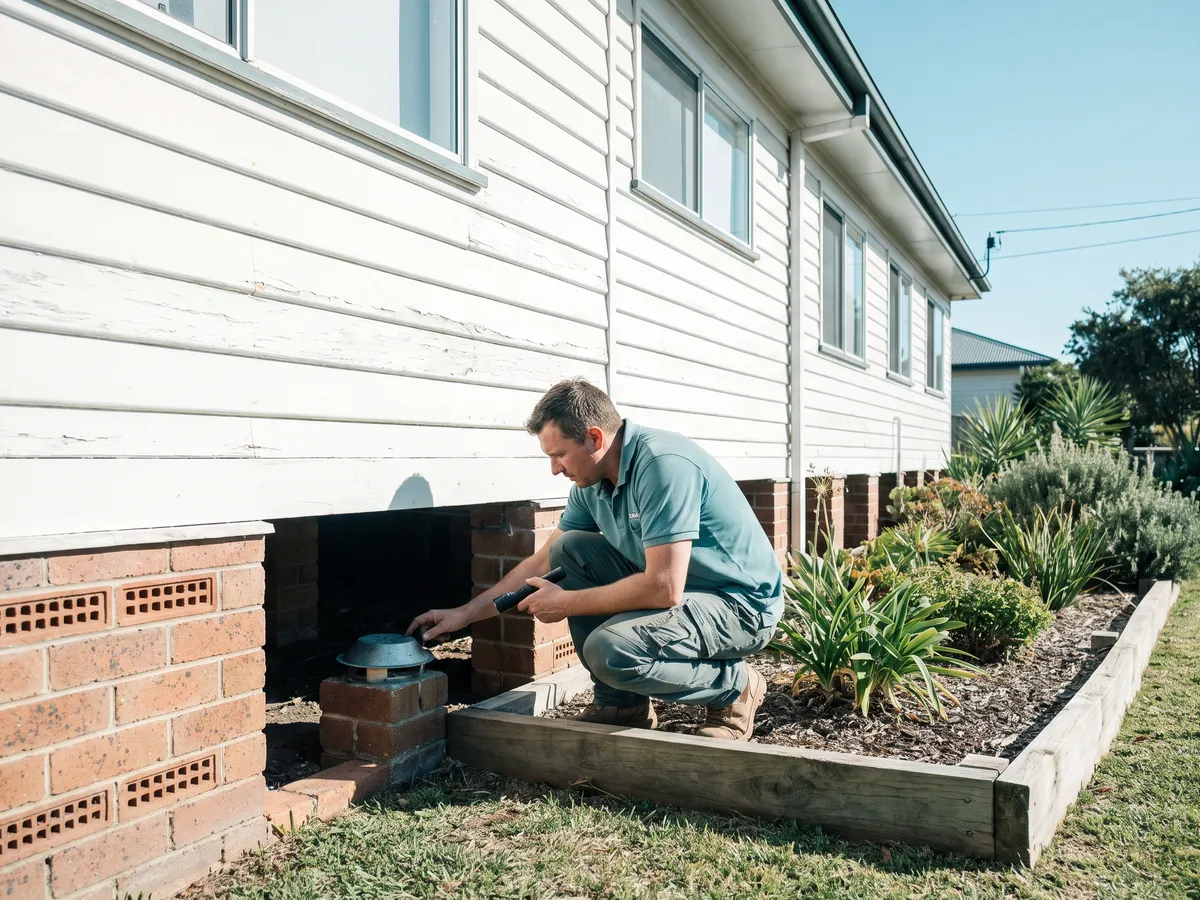
Walk the older streets of Charlestown, Cardiff, Toronto, Warners Bay, Belmont and Swansea and you're walking past decades of timber-floored homes sitting up on brick piers, with a ventilated void underneath. That subfloor is warm, dark and often damp, and it's where the story usually starts. On a job like that the first twenty minutes go under the house: the ant caps on the piers, the bearer and joist lines, the ventilation, and any mud lead bridging brick to timber.
The bushland-fringe pockets add their own conducive conditions. Out through the Whitebridge to Redhead corridor and the Cooranbong to Martinsville edge around Morisset, gardens run up against the timber of the house and firewood stacks lean on the walls. Timber against the frame, in contact with soil, is a standing invitation, and it doesn't care what month it is.
Newer estates aren't exempt, they just read differently. A slab home is entered through expansion joints, cracks and service penetrations rather than a subfloor. The pressure is the same; it's the entry points that move. Which is the whole reason the inspection, not a guess about the build type, is what settles it.
The weather
A humid year, wettest when you'd least expect
This is a humid coastal climate: roughly 1,100 to 1,200 millimetres of rain a year, mild-warm, and not the kind that dries out and shuts down over winter. The heaviest months run from autumn into June, so the ground goes into winter already soaked.
That matters because moisture is what keeps a subfloor hospitable and a colony fed. The season a southern homeowner treats as the safe gap, deep winter, arrives on this coast with the ground already carrying the autumn-to-June soak, and steady rain keeps topping it up. There is no dry, dormant window that quietly does your pest control for you.
It shows up in the ordinary readings. On an established Cardiff or Belmont home the moisture meter has plenty to say in July: drainage sitting against the piers, a garden bed holding water over the weep holes, a subfloor that never quite airs out. Those are the conducive conditions a report writes down, and they're live all year, not just when the jacarandas are out.
The honest fix for a lot of it is free and it's yours: sort the drainage, pull the garden line and the firewood back off the wall, keep the subfloor breathing. We write those into the report too. What the weather takes off the table is the idea of a season when none of it is worth checking.
What it adds up to
Annual is the floor, not the spring chore
Put the three together, a high hazard band, the timber-framed stock, a humid year with no dormant gap, and the conclusion is unglamorous but firm. On this coast a termite inspection is a yearly habit, and twelve months is the longest a home should go between looks, not a target to aim past.
That isn't our house rule, it's the standard's. AS 3660.2 calls for an inspection at least once every twelve months in termite areas, and more often when the risk or the construction asks for it. On the Lake Macquarie coast, "termite area" is simply the address.
The cost of the spring-only habit isn't dramatic, and that's exactly the problem. Termites work quietly and slowly. A colony that got going after a "she'll be right, we'll check it when it warms up" doesn't announce itself; it just keeps eating structural timber through the months nobody looked. By the time it's visible, the conversation has moved from a straightforward inspection to repairing a bearer. A year is the difference between catching it early and inheriting damage.
You don't have to hold the date in your head. That's the point of a standing service: your next window is noted here, and the nudge comes to you ahead of it. If you'd rather work it out yourself, the year-round pest calendar lays the whole year out, and the pest year planner turns your own place into a schedule in about two minutes.
Termites are a warm-months problem; winter is a safe gap.
High hazard band, activity near year-round; subfloor moisture holds through winter.
Months of concealed feeding in timber you can't see, before anything shows.
An inspection at least every twelve months, sooner where findings say so.
Leave it exactly as it is. Don't spray it, don't break the mud leads open, don't peel the timber back. Disturbed termites abandon the workings and re-route, which makes them harder to trace and treat. Note the spot, keep everyone off it, and book the inspection. Only an inspection establishes what is actually there.
Straight answers
The questions this raises, answered plainly
Isn't there a termite season, though?
There's a swarming season, when winged termites leave a mature colony to start new ones, and on this coast that's mostly the warmer, humid months. But swarming is when you might see termites, not when the colony is active. An established colony feeds all year here. Basing an inspection habit on the few weeks you might spot a swarm is exactly the trap this page is about.
It's winter. Can the inspection wait until spring?
There's no reason to wait, and a real reason not to. Winter arrives here with subfloors still holding the autumn-to-June soak, so the conditions termites rely on are live. An inspection in July reads a house just as well as one in October, and it's three months less for anything to progress unseen.
We're out at Morisset, more bush than beach. Does the coastal band still apply?
Yes, and the bush edge adds its own conducive conditions on top: gardens and stored timber against the house, tree lines close to the frame. The southern and western parts of the district aren't a milder termite zone, they're the same year-round pressure with a few extra invitations. The inspection scope just pays those corridors particular attention.
Nothing's happened in the ten years we've owned it. Why start now?
Ten quiet years is genuinely good news, and it's also exactly how the expensive cases begin: a stretch of nothing, then a colony that found its way in and worked undisturbed. A yearly inspection is how you keep the good news true. A clear report this year is worth the same next year, and no more.
Our home is brick, or on a slab. Are we out of it?
No, though plenty of owners assume so, and the assumption costs some of them dearly. Brick veneer still carries a timber frame behind the brick, and a slab home is entered through expansion joints, shrinkage cracks and service penetrations, unseen until something visible is reached. The inspection simply reads other evidence: slab edges, wall lines, wet areas, moisture patterns.
So does my house have termites, or not?
This page can't tell you, and neither can anyone who hasn't been under the house. A hazard band and a housing type describe a risk, not a finding. The only thing that establishes what's actually at your address is a detailed visual inspection, carried out by a licensed technician, reported in writing. Here's exactly what that involves.
Sources worth your time
- Termite hazard map of Australia. The national hazard banding this page draws on, placing coastal NSW in the high, near-year-round band above the temperate cities.
- Standards Australia. AS 3660.2 (management and inspection of existing buildings) is the standard named here, including the at-least-annual inspection recommendation for termite areas.
- CSIRO. Australia's long-running research base on subterranean termite species and behaviour, if you want the biology under the building advice.
- Bureau of Meteorology climate data. The source for the Hunter coast's humid, ~1,100 to 1,200mm rainfall year with a wetter cooler-months stretch.
- NSW EPA: pesticide and pest management licensing. Pest management is licensed work in NSW; termite work carries its own endorsement. This is the regulator that administers it.