
Areas · above Charlestown
Pest control in Mount Hutton
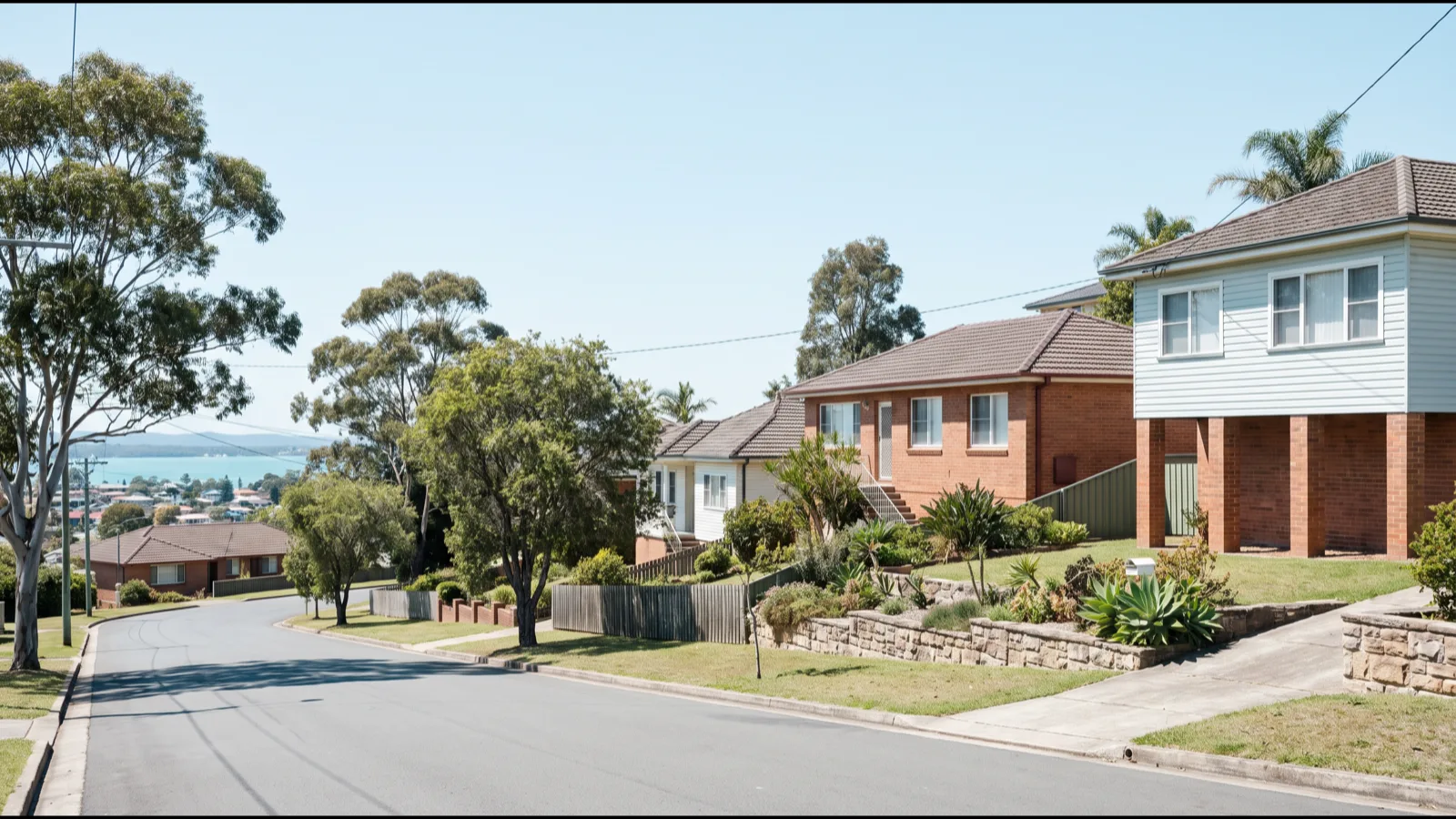
Mount Hutton is the hillside above Charlestown: established detached homes stepped up the slope, most of them on real subfloors, a fair share benched into cut-and-fill blocks. That slope is the whole local story. Where the ground falls, the drainage, the retaining walls and the terraced gardens become the conducive conditions an inspection reads hardest, and a standing round exists to keep watch on exactly that.
What the work looks like here
Homes stepped up the hill
Mount Hutton sits high on the ridge behind Charlestown, and its houses show it: established detached homes on sloping blocks, a deep stock of brick and weatherboard on timber floors, plenty of them cut into the hillside and propped up on piers to get a level floor out of an uneven site. That is the construction a termite inspection studies hardest, so a typical Mount Hutton job starts with a long stretch under the house.
The slope changes what the subfloor looks like. On the downhill side the floor sits well clear of the ground on taller piers, so the void is deeper and there is more of it to inspect, more ventilation to check, and a low corner where moisture likes to gather. On the uphill side the ground crowds in close behind a cut bank, and the space to work gets tight. We read both ends of the same house differently, because the ground under them is different.
None of that is cause for alarm. It is the local condition and nothing more: something the inspection measures and the report sets out, so you know where the pressure sits from one visit to the next. The one caveat that always holds on this coast: a high termite-hazard district describes the risk, never your house. Only an inspection establishes what is actually there.
The slope is the story
Reading a hillside block
Put a home on a slope and water becomes the main character. It sheds off the high ground, gets held back by walls, and finds the low corner of the subfloor if nothing carries it away. Here is the cross-section an inspection walks through on a benched Mount Hutton block, and the four places the torch slows down.
- 1The cut batter behind the house.
Benched blocks leave a face of cut soil and rock close behind the home. Rain runs off it toward the walls, and where an ag drain does not carry that water away it keeps the back wall and the subfloor damp. We read the batter, the drain and the wall line as one thing.
- 2The high-set subfloor.
On the downhill side the floor stands well above the ground on taller piers. That is a bigger void to inspect and more ventilation to check, and the low corner is where moisture, and any mud leads, tend to collect first.
- 3The retaining walls.
A sloping block is held up by walls, and where they are timber sleepers that is timber-in-soil contact at the scale of a whole wall. Sound and clear of the frame, they are fine; failing, or built hard against the house, they are a conducive condition worth flagging.
- 4Terraced beds and stored timber.
Terraces put garden beds, sleeper edging and often a stacked woodpile on level shelves down the yard, several timber-to-soil lines instead of one. Each is easy to read, and most are free to fix once you know they are there.
The benched-block read, point by point
What we check on a Mount Hutton slope
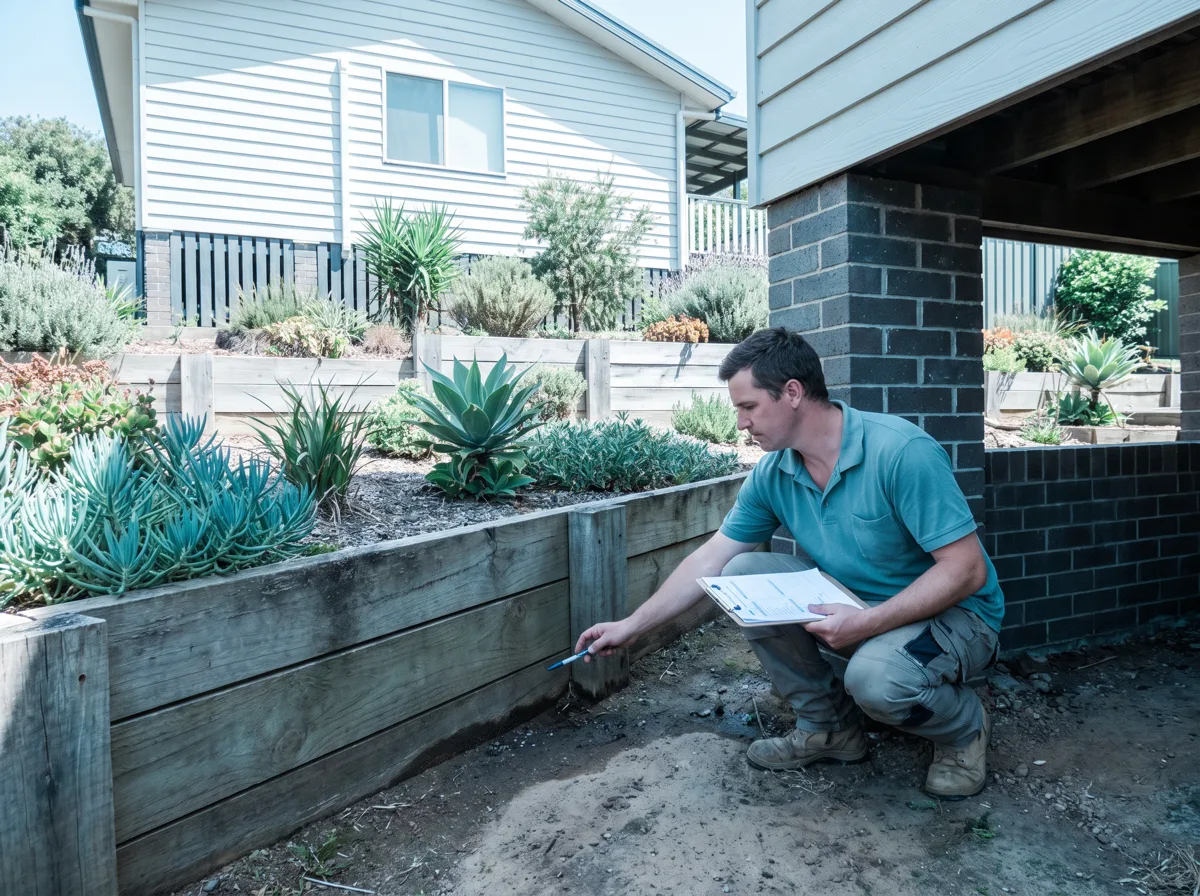
The tools are the ordinary ones, a torch, a moisture meter and a technician who knows what a sloping block does with water. What changes on a hillside is the order things get read in and where the job slows down. This is the shape of it under a benched Mount Hutton home.
Sleeper, block or stone, checked for timber-to-soil contact, condition, and anywhere a wall is built hard against the frame.
Where the slope sheds its water, and whether the ag drain and downpipes carry it clear of the subfloor rather than into it.
The taller void on the downhill side: ventilation, moisture, the pier and bearer lines, and the low corner where mud leads gather.
Stepped beds and sleeper edging built up against walls, and firewood or offcuts stacked on the level shelves.
Where the downpipes and slope drains actually let out, because a pipe that dumps beside a pier just moves the damp.
Steps, split levels and a high-set subfloor can make access its own job; we note what could not be reached.
Most of what turns up on a slope is a conducive condition, not a colony, and a good share of it is yours to fix cheaply: pull garden beds clear of the weep holes, break the timber-to-soil contact, get the drainage carrying water away. Conducive conditions walks the free fixes through, and the termite work picks up the story where the findings ask for more.
The LGA's north, honestly
Rockeries, retaining walls and the funnel-web note
Mount Hutton sits in the LGA's north, well within the roughly 25 kilometre radius of Newcastle that holds the Newcastle funnel-web spider's entire known range. On a terraced hillside block that is worth a plain word, because the very things a slope brings, low retaining walls, rockeries, stepped beds and cool damp corners close to the ground, are exactly the sort of harbourage a wandering spider heads for. After rain, when the males leave cover in search of a mate, a terraced garden is the kind of ground they cross.
What we will never do is claim your yard holds them, because nobody doing this work honestly can call it from the footpath. A spider treatment goes after harbourage instead, the sheltered ground-level spots a terraced yard offers, and cuts the odds of meeting one close to the house. The species detail, the district picture and the full first-aid steps, redbacks and webbing spiders included, are all on our spider work.
The Newcastle funnel-web's bite is genuinely dangerous without treatment, and antivenom handles it well: there have been no funnel-web deaths in Australia since it became available. If anyone is ever bitten, keep them still, apply a pressure immobilisation bandage as you would for a snake bite, and call triple zero. That is general safety awareness, not a claim about any particular yard.
On the register here
What Mount Hutton books us for
-
01
Termite inspections, and management where findings justify it
For the hill's established subfloor homes, a yearly discipline read for the slope: the cut batter, the drainage, the retaining walls. The booking to make before a renovation opens up a wall.
the service → -
02
The annual home round
General pest treatment that follows the season's beat: cockroaches and ants before the heat arrives, rodents once autumn bites, the yearly termite inspection riding the same rhythm.
the service → -
03
Spiders, funnel-web included
Redbacks and webbing spiders wherever the terraces shelter them, plus the straight funnel-web word for the north: the ground-level harbourage a hillside yard offers, treated at the source.
the service → -
04
Rodents up in the roof voids
Autumn work among established homes: entry points on weatherboard and brick found and sealed first, bait only where it still earns a place.
the service →
Asked in Mount Hutton
Local questions
Our block slopes and the house is up on tall piers at the back. Is that a problem for an inspection?
More of a plus than a problem, honestly. A high-set subfloor gives a technician real room to get in and read the pier and bearer lines, the ventilation and the ground, which is where the story usually starts. The two things the slope adds to the list are the low corner, where moisture likes to gather, and the drainage that decides whether that corner stays wet. The diagram above sets out exactly what the torch stops on.
We have timber sleeper retaining walls. Should we worry about termites in them?
A timber sleeper wall is timber in contact with soil across its whole length, so it is worth an honest look, but a sound wall standing clear of the house is not a crisis. What the inspection checks is its condition and, more importantly, whether it meets the frame of the home or bridges anything that lets workings travel undetected. If it is failing or built hard against the wall, the report will say so and why. A retaining wall is never a verdict on the house by itself; the verdict only ever comes from the inspection.
There's a cut bank right behind the house. Does that change anything?
It changes where the water goes, which is most of the game on a slope. A cut batter close behind the home sheds rain straight at the back wall, so what matters is the drainage: an ag drain and downpipes that carry it clear, not into the subfloor. A damp back wall and a poorly drained batter are exactly the conditions an inspection lingers on, and often the fix is drainage rather than chemistry.
What does the inspection cost, and can you be here today?
Expect a set price for the inspection, confirmed at booking, and a management quote only once the report exists; nobody can price a hillside job from the footpath. We won't promise a same-day dash either, because doing the inspection properly takes time, and a high-set subfloor on a slope usually takes a little longer. Open with the enquiry form and we'll come back with a time.
Sources worth your time
- Australian Museum: Newcastle funnel-web spider (Atrax christenseni). The species description, its range around Newcastle, and how it differs from the Sydney funnel-web. The source for the awareness on this page.
- NSW EPA: pesticide and pest management licensing. Pest management is licensed trade work in NSW, and termite work carries its own endorsement. This is the regulator that administers it.