
Areas · the northern tip
Pest control in Speers Point
Speers Point sits where the lake turns north, its streets running down to the foreshore parkland at the very top of Lake Macquarie. It is established weatherboard and brick country, timber floors and shady gardens in humid lakeside air, and near enough to the Newcastle line to fall inside the north's funnel-web range. All of it is ordinary work for a standing round, kept on the calendar.
What the work looks like here
Weatherboard streets by the water
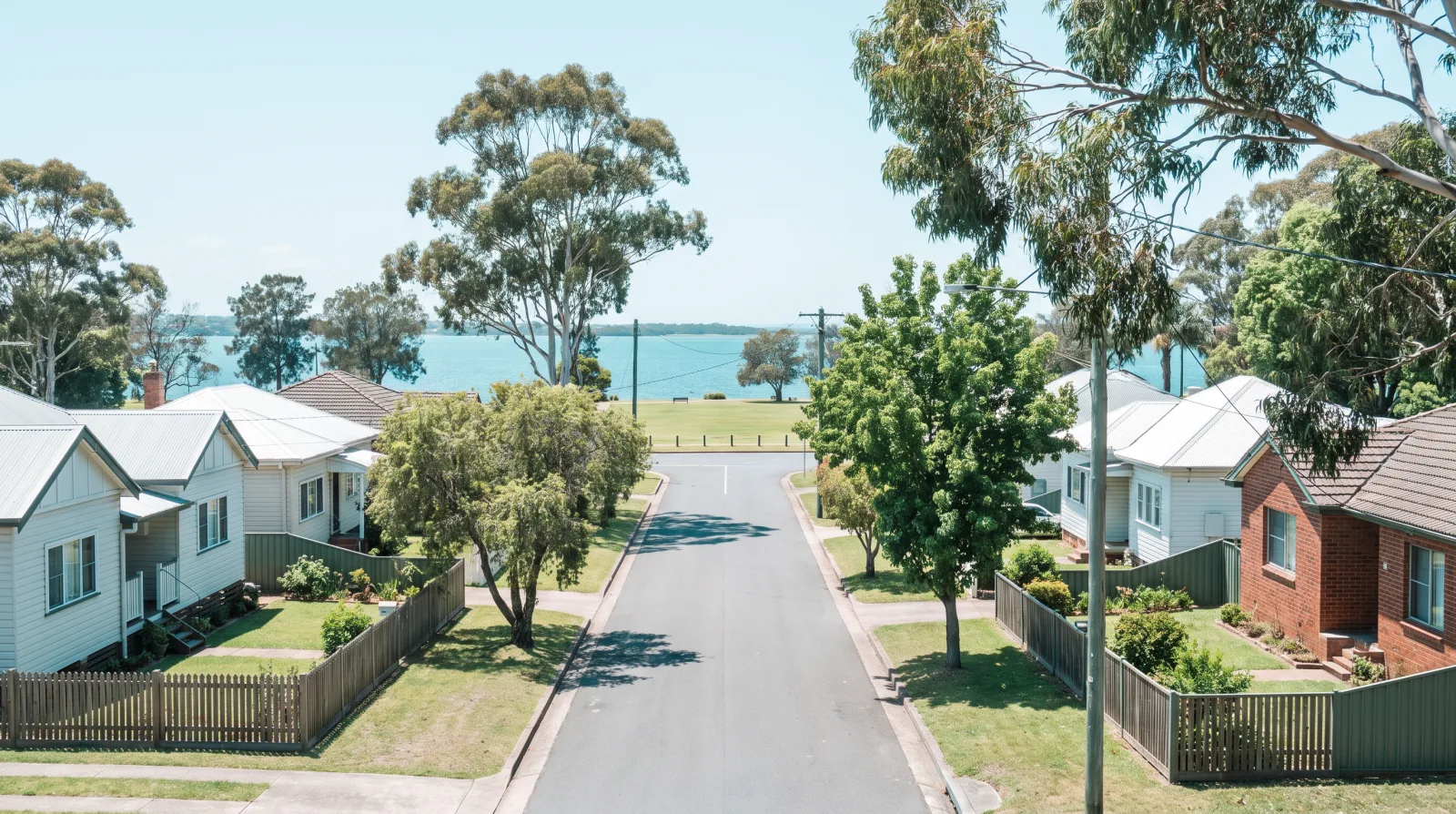
The streets that fall away toward the foreshore, around The Esplanade and the roads behind Speers Point Park, are lined with established homes: weatherboard and brick, a good share of them timber-floored on subfloors, and most of them old enough to have settled into their gardens. That is precisely the stock that rewards a careful termite inspection, so a Speers Point job usually starts in the dark under the floor: ant caps, bearer and joist lines, the airflow through the subfloor vents, and the damp that a block this close to the water hangs onto.
The water is the reason for the moisture. A home a short walk from the lake, with mature trees shading the yard, holds its damp longer than a house on an open block, and a humid coastal year keeps feeding the subfloor. None of that is alarming on its own; it is simply the local condition, the thing the inspection measures and the report explains, so you know where the pressure sits between visits.
Speers Point is a residential suburb first, not a shopping precinct and not a growth estate, so the work here is the standing-home kind: the yearly inspection on an established weatherboard, the general round through the warm months, and rodents finding their way into an older roof as autumn closes in. Steady, scheduled, nothing dramatic.
The parkland edge
Where the garden meets the wall
The thing that makes Speers Point Speers Point, the parkland and the foreshore, is also the thing an inspection here looks at hardest. Green, shady, timber-edged gardens close to the water are lovely to live beside and are, in the plainest terms, a set of conducive conditions worth keeping an eye on.
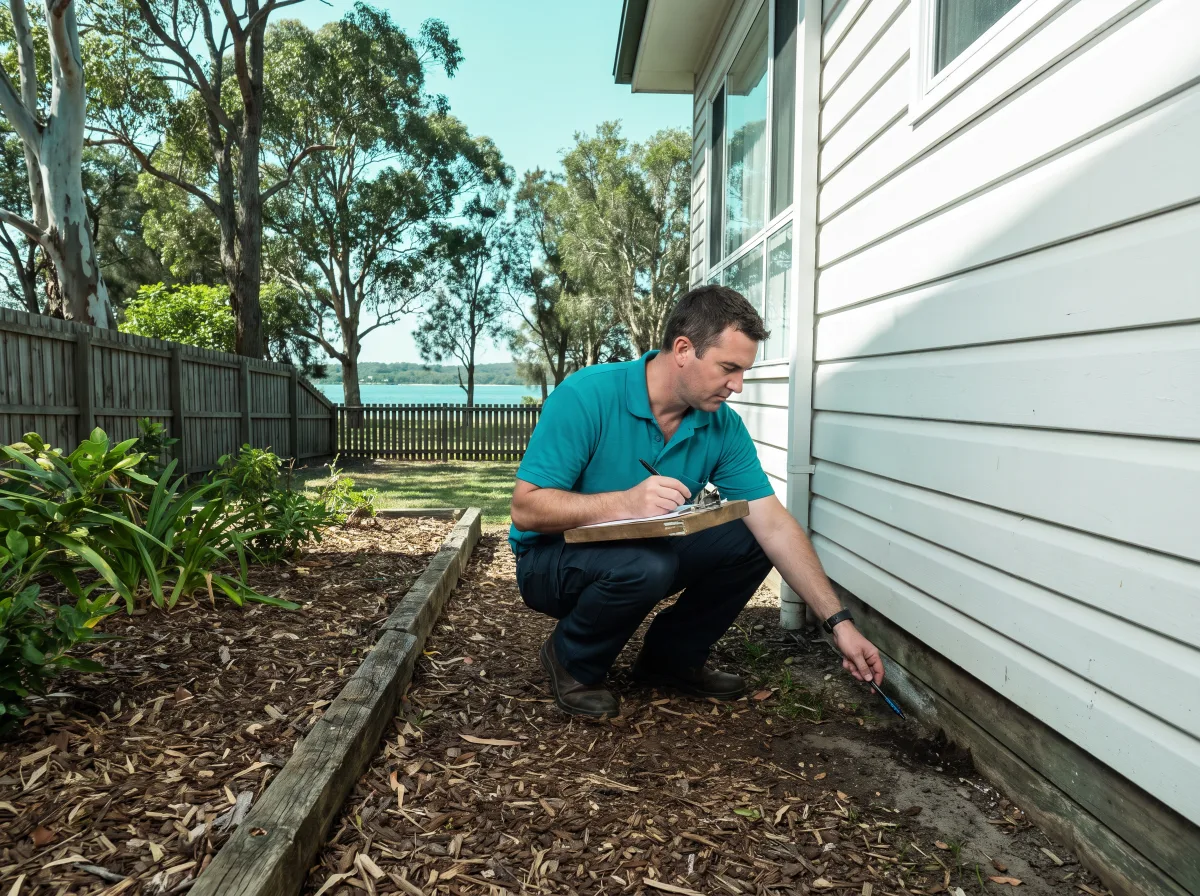
A conducive condition is not a termite. It is a condition that makes trouble more likely, or makes it harder to spot, and near the foreshore they tend to arrive together: a garden bed mulched up over the weep holes, timber sleeper edging laid against the wall, a shady corner that stays damp, and the leaf litter and stumps that a mature tree line drops along the boundary. The good news is that most of them are yours to fix, cheaply, once you know they are there.
So the report you get here does two jobs. It tells you whether anything is active, and it lists the conditions to change so the odds swing back your way: pull the mulch and beds back off the weep holes, clear the timber-to-soil contact, move the firewood off the ground and away from the shed. Conducive conditions walks the free fixes through in full, and the termite work covers what happens when the findings ask for more.
Mulched beds and timber sleeper edging built up against the weatherboard, often burying the weep holes that let the wall breathe.
A tree-canopied yard near the water holds its damp; the subfloor and the soil line against the piers stay wetter than an open block ever would.
Leaf litter, old stumps and root timber along a parkland boundary give termites the timber-in-soil contact they travel through.
Firewood, offcuts and sleepers stacked on the ground beside a shed: a food source parked right where nobody looks.
A completed inspection is the only thing that establishes what is actually at a property; a garden line describes a risk, never a verdict. But it is a good honest place to start, and it is the reason a home near the parkland earns its yearly look.
The LGA's north, honestly
Funnel-webs, answered straight
Speers Point sits at the lake's northern tip, close to the Newcastle boundary, which puts it inside the Newcastle funnel-web spider's known range: the whole of it sits within roughly 25 kilometres of Newcastle, and the LGA's northern suburbs fall inside that circle. It is worth knowing plainly, which is neither a secret nor a reason to lie awake.
Here is the plain version. The Newcastle funnel-web is its own species, described only recently, and a bigger animal than the Sydney funnel-web most people picture. A bite is serious and needs hospital care. The reassuring half of the same fact is that the antivenom is effective and has been for decades: no one has died of a funnel-web bite anywhere in Australia since it became available. For a northern-tip suburb the practical point is seasonal, not constant. The spiders that show up are almost always males on the move after wet weather, out looking for a mate, and a shaded yard on the parkland edge is the sort of damp ground they travel across on the way.
We will not tell you your home has them; nobody honest can from the footpath. What we can do is go after the harbourage around the house to keep the odds down, and give you the facts straight rather than a fright. The species notes, the full first-aid steps and the picture across the rest of the LGA are set out on our spider work, which handles redbacks and webbing spiders everywhere alongside the funnel-web note for the north.
A wandering male drops in and cannot climb the smooth sides out; check before you reach in.
Cool, ground-level cover close to the house is exactly what they head for overnight.
Along the damp garden line and under stored timber, the same ground the termite inspection reads.
This is general awareness, not a claim about your yard. If a spider is on your mind at your place, book the look; you will hear exactly what we find, no more, no less.
On the register here
What Speers Point books us for
-
01
Termite inspections, and management where findings justify it
A yearly rhythm for the suburb's established weatherboard and brick homes, and the sensible booking before any renovation opens a wall. In a lakeside suburb where good homes change hands with little fuss, the first look after you move in sets the baseline.
the service → -
02
The annual home round
A general round paced by the calendar: cockroaches and ants before summer arrives, rodents as the nights cool, and the yearly termite inspection held to the same beat.
the service → -
03
Spiders, funnel-web included
Webbing spiders and redbacks across the yard, with the funnel-web handled honestly for the LGA's north: harbourage treated, the facts given straight, the first aid laid out.
the service → -
04
Rodents in the older roofs
Autumn work in a suburb of established homes: the entry points proofed properly on weatherboard and brick, with bait as the follow-up rather than the whole plan.
the service →
Asked in Speers Point
Local questions
Our place backs onto the parkland. Does that make termites more likely?
It makes the conditions worth watching, which is not the same as making termites certain. A parkland boundary tends to bring the classic conducive conditions together: timber-to-soil contact along the tree line, leaf litter and old stumps, and a shady, damp garden edge. The inspection reads all of it and the report tells you which fixes are yours to make. What it will never do is turn a green backyard into a verdict on your house; only the inspection itself does that.
We have a mulched garden bed built up against the weatherboard. Is that a problem?
It is one of the most common things we flag here, and one of the easiest to fix. Beds and mulch heaped against the wall bury the weep holes the wall needs to breathe and hold damp right where the frame is, and timber sleeper edging adds a timber-to-soil bridge on top. Pulling the level back off the weep holes and clearing the timber contact are exactly the free fixes the report will list.
Is it true there are funnel-webs around here?
Yes, in the sense that matters: Speers Point falls inside the Newcastle funnel-web's documented range, a fact worth having rather than a reason to worry. The spiders move after rain, and a male can end up in a pool filter box, a shed or against the house overnight. We cannot say your particular yard has them, and we will not pretend to. What we can offer is harbourage treatment and the real first-aid steps, which our spider page spells out.
Is there a right month for the annual inspection?
Count twelve months from your last one, wherever that lands. On this coast no month is wrong, so the best one is whichever gets booked; starting fresh, late winter and spring fill early, ahead of the swarming season. The pest year planner will pin yours down in a couple of minutes.
What does an inspection run to, and can you come today?
The inspection is a set fee you hear upfront when the booking is confirmed. If the findings call for termite management, that part is quoted from the report rather than guessed on the doorstep, because the honest number depends on what is there and how the home is built. And we book a proper time rather than promise to appear the same day, since doing the inspection properly is the whole point. Start with the enquiry form and we will sort a time with you.
Sources worth your time
- Australian Museum: Newcastle funnel-web spider (Atrax christenseni). The species description, its range around Newcastle, and how it differs from the Sydney funnel-web. The source for the awareness on this page.
- NSW EPA: pesticide and pest management licensing. Pest management is licensed trade work in NSW, and termite work carries its own endorsement. This is the regulator that administers it.