
Guides · g-04 · reading the paperwork
How to read a timber pest report
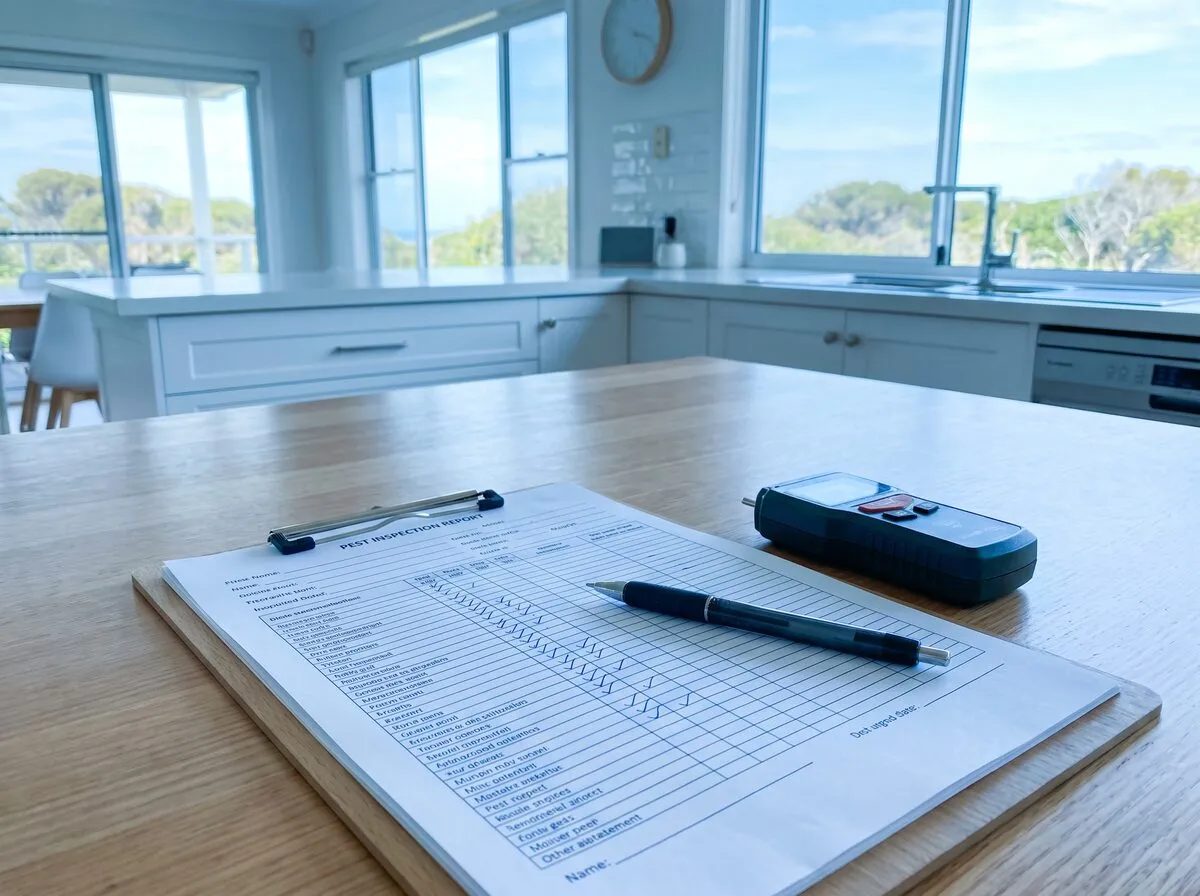
The report lands at a tense moment: mid pre-purchase, or the week after you booked an inspection because something didn't feel right. A few pages of headings, ticks and trade words, and the urge is to skim to the last line for a verdict. There isn't one. Here is how to read all of it.
A timber pest report doesn't pass or fail a house. It describes its condition on the day it was inspected, and it does that in four working parts that appear, in the same order, in every report written to AS 4349.3, the national standard for a timber pest inspection.
The value is in reading all four, and in reading the exact words rather than the summary line at the top. A report is only as good as the inspection behind it, and most of what people misunderstand comes from skipping the section that says what the inspection could and couldn't see.
If you've got a report in front of you, use the index below to jump to the part you're stuck on. If you're waiting on one, this is what will be in it.
The shape of it
Four sections, always in this order
Every timber pest report carries the same four parts. Read them in the order below to know what each one is for, then skip to whichever is troubling you.
-
§01
Findings
What was actually seen: live termites, old workings, damage, borer, decay, evidence of past treatment. Located and described, not just ticked.
jump ↓ -
§02
Conducive conditions
What invites trouble even where nothing is active yet: beds over the weep holes, damp subfloor soil, timber against soil. The most actionable section, and the one most often ignored.
jump ↓ -
§03
Limitations
What couldn't be seen, and why. The section that decides what every other section is worth. If it isn't there, be suspicious of the whole document.
jump ↓ -
§04
Recommendations
What to do next, on a scale from "sort the drainage and look again in twelve months" to a full management program. The re-inspection date lives here.
jump ↓
One thing up front, and it's the counter-intuitive bit: the best order to read them in isn't the order they're printed. Start with the limitations. We come back to why in read it in this order.
What was actually seen
Findings
This is the record of what the inspector observed at each accessible zone: the subfloor, roof void, interior, exterior and grounds. It should locate and describe what was found, not just tick a box.
What it's for. To tell you three separate things that are easy to blur together: whether anything is active now, whether there's old damage from before, and whether there's evidence the home has been treated or managed before. Those mean very different things, and a good findings section keeps them apart.
The part people skip. The line everyone hunts for is "no visible or accessible evidence of termite activity". It is the best result available, and it is worth having. But read the exact words: no visible evidence means none was found where the inspector could actually look. It is not a guarantee the house is clear, and on its own it means nothing until you read it next to the limitations section. Old damage with no live activity is common and is not the same as an active infestation; the report should say plainly which one it is.
No visible or accessible evidence of live subterranean termite activity at the time of inspection.
Minor old workings noted in an external fence post; no structural timber affected.
Durable notice indicating a previous chemical treatment; date and installer as recorded.
"No visible evidence" is not "no termites." It's an honest, accurate line that only holds meaning alongside a proper limitations section. A report that finds nothing everywhere and admits it couldn't reach anything is not the reassurance it looks like.
What invites trouble
Conducive conditions
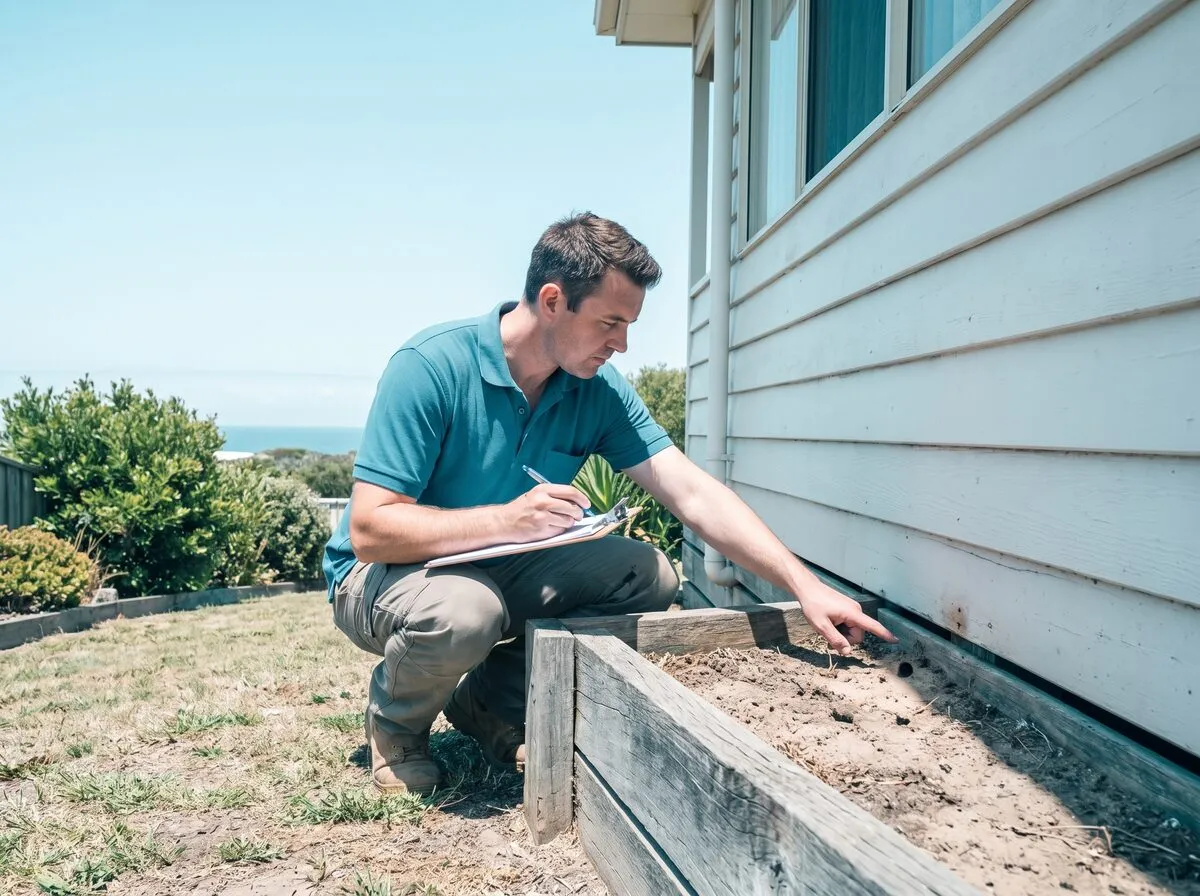
These are the conditions that make a home attractive or accessible to timber pests even where nothing is active yet: moisture, timber near soil, blocked ventilation, garden built up against the walls. On this coast, with year-round pressure, they matter more than most.
What it's for. To point at the things that tip the odds, so you can change them. It is the most actionable section in the whole report, and the one owners most often read as a list of nitpicks and file away.
The part people skip. Treating it as filler. It's a to-do list, and most of it is free or cheap. Fixing conducive conditions between inspections is the single highest-value thing you can do for the house without spending on treatment, and it's yours to do. We walk the full set through in conducive conditions: what we look for.
| What the report flags | Why it matters | The free or cheap fix |
|---|---|---|
| Garden bed banked over the weep holes or vents | Bridges the ant caps and blocks the subfloor breathing, hiding entry from view | Pull the soil and mulch back below the vents and weep holes |
| Subfloor moisture or poor drainage | Damp subfloors are exactly the conditions termites and decay want | Clear the vents, fix the dripping tap, direct stormwater away from the piers |
| Timber in contact with soil | A direct, concealed path from the ground into the structure | Lift stored or structural timber onto a base, off the dirt |
| Firewood or stored timber against the house | A food source and a bridge stacked on the wall line | Move it well away from the walls, up off the ground |
What couldn't be seen
Limitations
This section honestly records every area the inspector could not access or fully inspect, and why: furniture, stored goods, sealed walls, insulation, no subfloor access, a locked room, height. No inspection is X-ray, and the standard requires this section precisely so that "not inspected" is never mistaken for "clear".
What it's for. To draw the map of what still needs eyes on it. Every finding above only means what the limitations let it mean: "no evidence in the subfloor" is worth a lot if the subfloor was fully accessible, and worth almost nothing if it wasn't entered.
The part people skip. Reading a limited area as a cleared one. If the subfloor couldn't be entered, the subfloor is unknown, not fine. Check whether the report recommends returning to inspect whatever was blocked once it's accessible, and whether that changes what you can rely on today.
Rear section not entered: crawl height below the bearers restricted safe access. Not inspected.
Sections of wall and floor concealed by furniture and stored goods. Not moved.
Access partially restricted by insulation and low clearance over the hallway.
No limitations section at all? Be suspicious of the whole report. A document claiming a complete inspection with nothing obstructed is either extraordinarily lucky or not being straight with you. Real homes have furniture, insulation, tight subfloors and locked rooms. An honest inspector writes down where they couldn't look, every time. The limitations aren't the inspector covering themselves; they're the most useful section on the page.
What to do about it
Recommendations
This turns the findings into next steps, on a scale. It should be specific and tied to what was actually found, never a template paragraph pasted onto every report.
What it's for. To tell you what the findings justify and no more, from "correct the conducive conditions and re-inspect in twelve months" through targeted treatment of an active area, to a full termite management program designed to AS 3660. Which one fits depends on what was found and how the home is built. If management is recommended, barrier or baiting explains the two approaches plainly.
The part people skip. The re-inspection date. Even a completely clean report ends with one, usually twelve months out, and it's the most important date in the document. A house that was clear last year is clear last year, not forever. Diarise it before you file the report away.
Correct conducive conditions noted above: reduce garden levels, improve subfloor ventilation.
Where live activity is found: targeted treatment first, then a management decision from the findings.
Next timber pest inspection recommended within 12 months, or sooner if conditions warrant.
The trade words, decoded
What the report says, and what it doesn't mean
A report is written to a standard, not to be friendly, so it uses exact words that a homeowner reads through a different lens. Here are the ones that cause the most confusion.
| The report says | What it means | What it does not mean |
|---|---|---|
| No visible or accessible evidence | Nothing was found where the inspector could look | The house is guaranteed termite-free |
| Conducive conditions present | The setting makes trouble more likely over time | Termites are here now |
| Further invasive inspection recommended | An area needs opening up to be sure either way | They're just trying to sell you more |
| Workings, mud leads, galleries | The mud tubes and tunnels termites build to travel | The termites themselves, or live activity by default |
| Not inspected, inaccessible | The inspector could not see it this visit | It was checked and found clear |
| Evidence of previous treatment | The home has been managed for termites before | There is an active problem right now |
Five minutes, in the right order
Read it in this order
Not the order it's printed. Reading the limitations first tells you how much weight the rest of the report can carry, before you read a word of it.
-
Start with the limitations
Know what the inspection could and couldn't reach before you read what it found. Everything else is measured against this.
-
Then the findings
Active or old? Where, exactly? Read the precise wording, not the reassuring summary line at the top.
-
Then the conducive conditions
Make the to-do list. Most of it is free and yours to fix, and it's the best-value work you'll do between inspections.
-
Then the recommendations, and the date
See what the findings justify, then diarise the re-inspection date before you file the report away.
-
Anything unclear, ask
A good inspector will walk you through their own report. If a line doesn't make sense, that's a question worth asking, not a paragraph to guess at.
Reading one on a house you're buying
A pre-purchase report reads differently
On your own home, the report is a health check on a rhythm. On a purchase, it's information for the negotiating table, and it isn't a yes or no on the house. Active termites, old damage and conducive conditions each mean something different to the price and to what you'd be taking on, and that reading is yours to make with real facts under it.
One thing worth weighing: if the report came from the vendor's inspector, consider your own. Not because theirs is wrong, but because the person reading the subfloor should be working for you, and you want to control the limitations, the timing and the questions. The clock is the other half of it, and pre-purchase timing covers cooling-off and auctions, where the report has to come first.
If you've been handed a report and something in it doesn't sit right, the fastest way through is a straight conversation. Book your own inspection, or send the questions through and we'll talk it over.
Straight answers
Questions people ask about the report
My report says "no visible evidence". Am I in the clear?
It's the best result available, and worth having. But it's a point-in-time reading of the accessible areas, so read it next to the limitations section to see how much of the house that actually covered, then diarise the re-inspection date. "Clear on the day, where we could look" is the honest way to read that line.
Does a timber pest report cover borer and decay, or just termites?
Timber pests broadly. AS 4349.3 covers subterranean termites, borers and wood decay fungi, so the four sections apply to each of them, not just termites. If your report only mentions termites, that's worth a question.
It recommends "further invasive inspection". Do I have to do it?
It isn't an upsell. It means an area couldn't be cleared without opening it up, so the inspector is telling you honestly that they can't sign it off from the outside. Whether you act depends on the stakes: on a pre-purchase, usually yes; on your own home, it's a call you make knowing the area is unknown until it's done.
Can I just read the vendor's report instead of getting my own inspection?
Reading it closely is smart, and this guide is built for exactly that. But a report is only as good as the inspection and the limitations behind it, and on a purchase the person in the subfloor should be working for you. Treat the vendor's report as useful information, not as your inspection.
How long is a timber pest report good for?
It's a snapshot of one day. On this coast, where pressure runs year-round, twelve months is the standard re-inspection interval, and sooner where there's activity or a higher-risk setting. That's why the re-inspection date in the recommendations matters more than people think.
A line in my report doesn't make sense. Who can I ask?
Us, even if we didn't write it. Send the enquiry with the wording that's tripping you up and we'll read it plainly. If it points to something worth a proper look at your place, we'll say so, and only an inspection settles what's actually there.
Sources worth your time
- Standards Australia. AS 4349.3 sets the scope, method and reporting for a timber pest inspection, including the requirement to record limitations. The standard is published commercially, but the four-part shape described here is what it requires.
- NSW EPA: pesticide and pest management licensing. Timber pest inspection and termite work are licensed trade work in NSW, carried out under a specific endorsement. This is the regulator that administers it.
- CSIRO. The long-running Australian research base on subterranean termite biology and behaviour, if you want the science under the terms your report uses.