Guides · g-05 · buying on a deadline
Pre-purchase inspections on a contract clock
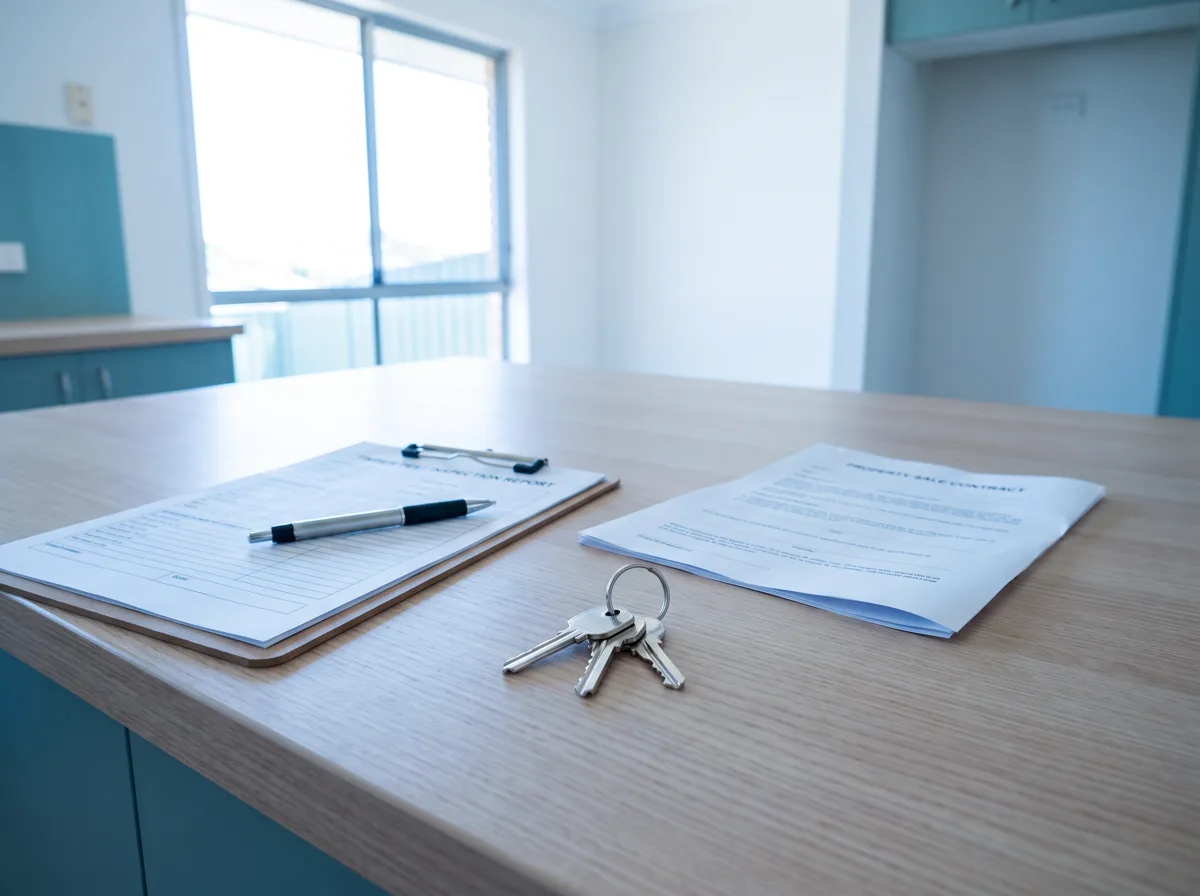
A pre-purchase timber pest inspection is a timber pest inspection with a deadline bolted to it. Whether that deadline is a cooling-off period ticking down or an auction on Saturday, the whole game is getting the report into your hands while it can still change what you do. Here is how the timing actually works in NSW.
The thing that governs everything
You are on one of two clocks
Before anything else, work out which one you are on. It decides when the inspection has to happen, and getting it wrong is the one mistake there is no fixing after the fact.
Buy a home in NSW by private treaty, the ordinary way, and once contracts are exchanged you get a short cooling-off period: a window in which the inspection can happen and, if the report gives you a reason, you can still walk away. The clock runs, but you are inside it.
Buy at auction, and there is no cooling-off period at all. The fall of the hammer binds you on the spot. There is no window afterwards to inspect, think, or change your mind. So the inspection has to come first, on a house you do not own yet and might be outbid on.
Same inspection, same report, completely different timing. The rest of this page is really just those two clocks worked through in detail. If you already know which one you are on, give your inspector that date first and plan backwards from it.
| Buying by private treaty | Buying at auction | |
|---|---|---|
| Cooling-off period | Five business days after contracts are exchanged | None. You are bound the moment the hammer falls |
| When to inspect | As soon as you can after exchange, well inside the five days | In the days before auction, before you bid |
| If the report is bad | You can rescind inside the cooling-off period | No exit. The information had to come first, or not at all |
| The risk you carry | A small forfeit if you pull out (see below) | The inspection fee on a home you might not win |
Private treaty
Work backwards from the cooling-off date
On a private-treaty purchase the cooling-off period is your inspection window. It is short, it runs on business days, and it ends at a fixed time, so the only safe way to plan is backwards from the last day.
In NSW, the standard cooling-off period is five business days. It starts the moment contracts are exchanged and ends at 5pm on the fifth business day after the day of exchange. Business days, not calendar days, so a long weekend or a public holiday quietly stretches the calendar but not the number of days you actually get.
Everything that has to happen, the inspection booked, the property accessed, the report written and read, and a decision made, has to fit inside that window. That is why the day contracts exchange is the day to book, not the day you get around to it. Leave it to day three and a busy week can eat the rest.
You can also change the window by agreement: a section 66W certificate, signed by your solicitor or conveyancer, waives the cooling-off period entirely, and the period can be shortened or extended in writing with the vendor. Those are legal calls for your conveyancer. Book the inspection early so it is never the thing holding you up.
Contracts exchanged. The clock starts. This is the day to book the inspection, not later.
Inspection carried out. Access to the home is arranged through the agent; you do not need to be there.
Written report delivered, and a straight conversation about what the findings mean for the purchase.
The window closes. Any decision to rescind has to be made and acted on before this.
Pulling out during cooling-off is not free, but it is cheap insurance. If you rescind inside the five days, the law sets a forfeit of a quarter of one per cent of the purchase price, kept by the vendor. Set against buying a home with an active termite problem you did not know about, that is a small price for the right to walk. The inspection is what tells you whether you would ever want to.
At auction
The report comes before the paddle
There is no cooling-off period when you buy at auction. Win it and you are bound, contract signed on the day, deposit down, no window to inspect or reconsider. So the inspection has to be done, and read, before you raise your hand.
This is the part that catches people out. The cooling-off protections that make a private-treaty purchase feel safe simply do not exist at auction, and they also do not apply if you exchange contracts on the same day as an auction after the property is passed in. Once you are the successful bidder, the condition of the home is no longer a question you get to ask. It is a thing you already own.
So the timber pest inspection moves to the front. On a home you are serious about, you book it in the days before auction, on a property you do not yet own and might be outbid on. That means paying for an inspection you might, in the end, not need, and it is genuinely the cost of bidding with your eyes open. Most buyers only do it on the one or two homes they would actually go hard for, which is the sensible way to run it.
Give your inspector the auction date first. Access is arranged through the agent, the same as any pre-purchase inspection, and the report needs to land with time for you to read it and decide your limit before the day.
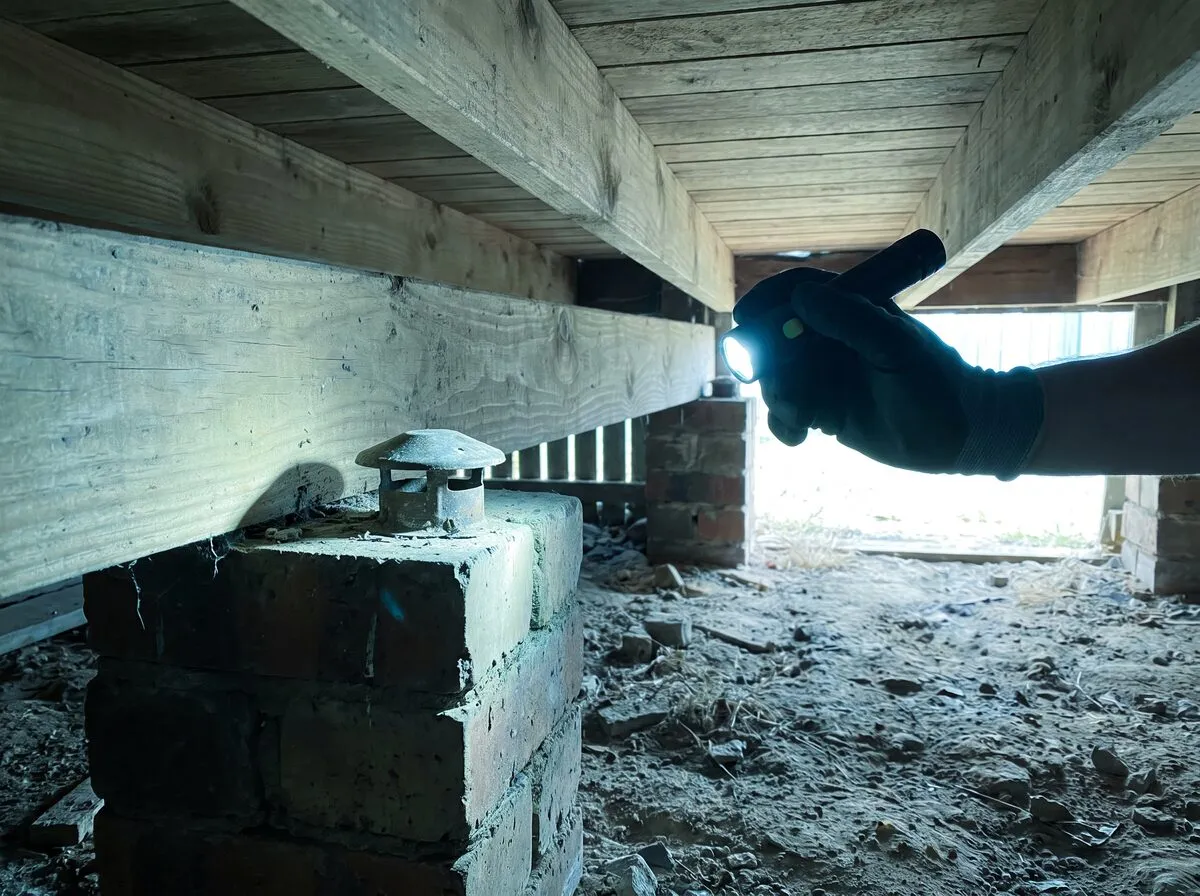
At auction, the hammer is the deadline, and there is nothing after it. A private-treaty buyer who forgets to inspect has a cooling-off window to fall back on. An auction buyer who skips it is committed to whatever the subfloor was hiding. If the home is going under the hammer, the inspection is not a step you can slot in later. It comes first, or it does not happen.
Who orders what
Whose inspection, and which report
Two things trip buyers up here: mixing up the different reports a purchase can involve, and leaning on a report the vendor arranged instead of one that answers to you. Both are worth getting straight before you spend a dollar.
The reports are not all the same. A building inspection looks at the structure, the roof, the wet areas and the general condition. A timber pest inspection is written to AS 4349.3 and covers subterranean termites, borers and wood decay fungi. They are two different inspections by two different specialists, and on a house they are often booked together as a combined building-and-pest. Buying a unit? The equivalent due-diligence is usually a strata records inspection, which reads the building's paperwork, though a ground-floor or older block can still warrant a timber pest look at the accessible timbers.
Get your own, not the vendor's. A report the agent hands you can be useful reading, but the person in the subfloor should be answering to you. Your own inspector controls the timing, records the limitations honestly, and answers your questions rather than the seller's. On a purchase, that independence is most of what you are paying for.
Termites, borers, decay, to AS 4349.3. Order your own, on any home with timber in it.
Structure and condition, a separate specialist. Commonly combined with the pest inspection on a house.
For a unit or apartment: the building's paperwork, arranged through a strata search, not a pest inspection.
Landing it in time
How to get the report while it still matters
A report that arrives after the window has shut is just paperwork. Timed right, it is the most useful thing on your desk. The difference is in a few practical steps, and they all start with one date.
-
Give the deadline first
The contract exchange date, or the auction date. That single fact sets everything else, so give it to your inspector first and plan the inspection backwards from it.
-
Access goes through the agent
On a home you do not own yet, entry is booked with the selling agent. You do not need to be there, and it is a normal part of a pre-purchase inspection, so it rarely holds anything up.
-
Ask when the written report lands
You want a full written report, not a verbal "looks fine", and you want to know before you book when it will arrive, because on a deadline a slow report is a useless one.
-
Then ask what it means
Ask the inspector to walk you through what was found in plain words, while there is still time to act on it. If a line in the report needs explaining, that is a question worth asking rather than a paragraph to guess at.
When you get it, read the whole thing, not just the summary line. Our guide to reading a timber pest report walks through the four sections and the one people skip, which matters even more on a purchase than on your own home.
Reading it at the negotiating table
What the findings can mean for the deal
A pre-purchase report does not pass or fail a house, and it will not tell you to buy or walk. It tells you the true condition of the home, and what that is worth to the purchase is your call to make, with real facts under it instead of hope.
Three findings sit at very different points, and it helps to keep them apart. Active termites mean a live problem you would be taking on, with treatment and management to price in. Old workings with no live activity are common and often already dealt with, but it tells you where the home has been vulnerable before. Conducive conditions, the garden banked on the wall, the damp subfloor, the timber against the soil, are things that tip the odds over time and are mostly cheap to fix; the whole list is walked through in conducive conditions.
None of those is automatically a reason to walk, and none is nothing. What they change is your information, and sometimes your number. If management is recommended, our termite inspection and management page explains what that involves, and barrier or baiting covers the two approaches plainly, so you can weigh the real cost of the work before you decide what the home is worth to you.
Live termites present. A real problem to price and manage, not a reason to panic. It changes the number, or the decision.
Past workings, nothing live now. Tells you the home's history; worth a re-inspect date and honest questions.
Conditions that invite trouble later. Mostly cheap fixes, and a to-do list you would be inheriting.
Buying here in particular
Why it matters on a Lake Macquarie home
This is a coastal district in a high-termite band, with year-round pressure rather than a season that switches off, and a large share of established timber-framed homes on subfloors, from Charlestown and Cardiff to the lakeside suburbs of Toronto, Belmont and Warners Bay. That combination is exactly the one a pre-purchase timber pest inspection is built for: an older weatherboard or brick-veneer home with a subfloor you cannot see into is where a purchase most needs eyes on the timber before you commit.
It is also why "the vendor said it was fine" is worth so little here. On this coast, a home that was clear a year ago is clear a year ago, not today. If you want the background, why termites are a year-round threat in Lake Macquarie lays out the climate and the housing stock behind it. For the purchase in front of you, the answer is simpler: book the inspection to the deadline, and read the whole report.
Straight answers
Questions buyers ask on the clock
Can I get the inspection during the cooling-off period?
Yes, and that is exactly what the window is for on a private-treaty purchase. Book it the day contracts exchange so the inspection, the report and your decision all fit inside the five business days. Leave it late and a normal busy week can run you out of time before 5pm on the fifth day.
The property is going to auction. When do I inspect?
Before the auction, without exception. There is no cooling-off period when you buy at auction, so winning binds you on the spot with no window to inspect afterwards. Give your inspector the auction date so the report reaches you in time to set your limit before you bid.
Can a house I do not own yet be inspected?
Yes. That is what a pre-purchase inspection is. Access is arranged through the selling agent, you do not need to be there, and it is a routine request that agents deal with all the time.
Can I just use the report the agent gave me?
Read it, by all means, but treat it as information rather than as your inspection. On a purchase, the person reading the subfloor should be on your side, controlling the timing, recording the limitations honestly and answering your questions. Getting your own is most of the value.
Do I need a building inspection as well, or just the pest one?
They are two different reports. The timber pest inspection is written to AS 4349.3, covering termites, borers and decay; a building inspection covers the structure and condition and is a separate specialist. On a house they are commonly booked together as a combined building-and-pest. For a unit, a strata records inspection usually does the equivalent job.
Do you do pre-purchase inspections?
No. We do termite inspections and management for homes and businesses that are already yours, so for a pre-purchase report, book a pre-purchase inspector and give them your contract or auction date first. Once the home is yours, the first yearly inspection gives you a baseline for every report after it.
What does a pre-purchase timber pest inspection cost?
It depends on the home: its size, the access, and whether there is a subfloor and roof space to enter. Ask the inspector for the fee upfront, against a described scope, before you book.
Sources worth your time
- NSW Government: contracts and deposits when buying property. The authority on the five business day cooling-off period, when it does and does not apply, the forfeit for rescinding, and section 66W. Auction purchases carry no cooling-off period.
- Standards Australia. AS 4349.3 sets the scope and reporting for a timber pest inspection; AS 4349.1 covers the separate building inspection. The standards are published commercially.
- NSW EPA: pesticide and pest management licensing. Timber pest inspection and termite work are licensed trade work in NSW, carried out under a specific endorsement. This is the regulator that administers it.
This guide explains how the timing works; it is not legal or conveyancing advice. For the cooling-off period on your own contract, and for a section 66W certificate, take your solicitor or licensed conveyancer's advice.